









Below is our review of the top 10 No Dealing Desk (NDD) forex brokers. We tested each broker at WR Trading based on factors such as reliability, trading platforms, spreads, execution speed, and customer support.
NDD brokers stand out because they route orders directly to liquidity providers and do not trade against their customers, which eliminates conflicts of interest and ensures that pricing reflects the actual market. The following reviews offer a detailed look of what each broker has to offer.
1. StarTrader
StarTrader is our best NND forex broker at WR Trading with a high score of 5/5, as it’s a strong choice for traders who want the transparency and efficiency that comes with a No Dealing Desk model. The broker routes orders directly to liquidity providers, eliminating the conflicts of interest found in market maker setups, and ensures that pricing is based on genuine market conditions.
Spreads start from 0.0 pips and commissions range from zero to $6 per lot, depending on account type. However, spreads can widen considerably during volatile periods, making it more costly to trade without using a no-spread account.
We liked the platform diversity as StarTrader supports trading on MetaTrader 4, MetaTrader 5, and WebTrader, each providing access to advanced charting tools, customizable indicators, and automated trading capabilities. More than 80 currency pairs and over 500 tradable instruments are available to trade, allowing traders to build diverse strategies across forex and other markets. Leverage of up to 1000:1 is also available, giving traders the flexibility to scale positions according to their risk appetite and market outlook.
StarTrader is regulated by multiple tier-1 authorities, including the FCA, ASIC, and FSCA, which gives us confidence that user funds and trading conditions are safe. Traders also benefit from responsive customer support available five days a week, along with access to webinars, trading guides, and market insights designed to improve trading decision-making.
| Feature | Information |
|---|---|
| No Dealing Desk | Yes |
| Spreads and Commission | Varies based on account: Spread – from 0.0 pips Commission – from 0% to $6 per lot |
| Trading Platforms | Web Trader, MetaTrader 4, and MetaTrader 5 |
| Asset Types | Forex, commodities, indices, shares, crypto |
| Currency Pairs | Over 80 |
| Tradable Assets | Over 500 |
| Leverage | Up to 1000:1 |
| Customer Support | 24/5 phone, email, and live chat |
| Demo Account | Yes |
| Educational Content | Trading guides, webinars, and market insights |
| Regulation | FCA, ASIC, CMA, FSCA, and VFSC |
2. Vantage
Vantage Markets is our 2nd top choice at WR Trading for traders who prioritize tight pricing and reliable execution under an NDD model. Orders are routed directly to liquidity providers, allowing for spreads as low as 0.0 pips and commissions starting from $3 per lot, which helps reduce costs for high-volume strategies.
We found their leverage cap of up to 500:1 more than enough for most trading styles, and access to more than 40 currency pairs provided enough variety. Vantage Markets offers MetaTrader 4, MetaTrader 5, the Vantage mobile app, and ProTrader, each equipped with advanced charting tools, automated trading features, and fast order execution.
The combination of platforms supports algorithmic traders as well as those who rely on detailed technical analysis. We highly recommend this broker for traders looking to learn, as it offers courses, webinars, and e-books that can strengthen skills and trading discipline. The main drawback is that some advanced analytical tools are only available on ProTrader, which requires a higher learning curve for those new to it.
| Feature | Information |
|---|---|
| No Dealing Desk | Yes |
| Spreads and Commission | Varies based on account: Spread – from 0.0 pips Commission – From $3 per lot |
| Trading Platforms | Vantage App, MetaTrader 4, MetaTrader 5, and ProTrader |
| Asset Types | Forex, stocks, indices, commodities, bonds, and ETFs |
| Tradable Assets | Over 1,000 |
| Currency Pairs | Over 40 |
| Leverage | 500:1 |
| Customer Support | Email, live chat, and phone support |
| Demo Account | Yes |
| Educational Content | Courses, webinars, and ebooks |
| Regulation | ASIC and CIMA |
3. RoboForex
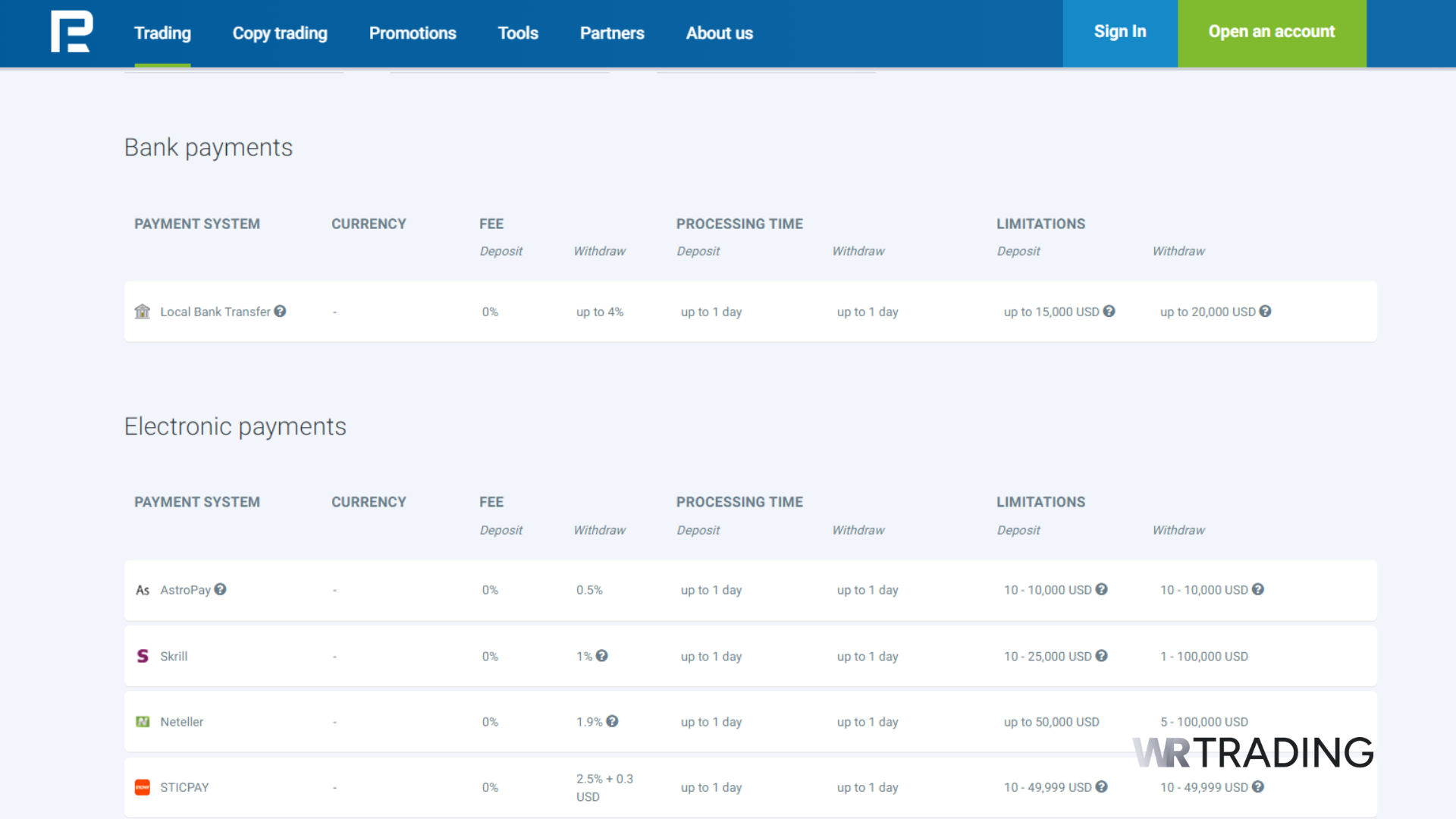
RoboForex offers a comprehensive NDD trading experience with over 50 Forex pairs, making it our 3rd preferred choice for currency traders at WR Trading. The broker’s NDD model ensures no conflict of interest, providing tight spreads from 0.0 pips and leverage up to 2000:1. This high leverage is appealing to traders looking to maximize their market exposure with smaller capital investments.
The broker’s diverse range of platforms, including MetaTrader 4, MetaTrader 5, and R Trader, suits different trading needs and preferences. RoboForex is regulated by the FSC in Belize, which provides operational oversight but is less stringent than tier-one regulators. However, traders looking for strict top-tier regulation may find RoboForex’s oversight less strict compared to European or Australian brokers. The broker’s customer support, available 24/7, is well-liked by us for its responsiveness and efficiency in providing straightforward answers.
| Feature | Information |
|---|---|
| No Dealing Desk | Yes |
| Spreads and Commission | Varies based on account: Spread – from 0.0 pips Commission – from 10/ mio |
| Trading Platforms | MetaTrader 4, MetaTrader 5, and R Stocks Trader |
| Asset Types | Stocks, indices, futures, ETFs, commodities, and forex |
| Tradable Assets | Over 12,000 |
| Currency Pairs | Over 40 |
| Leverage | 2000:1 |
| Customer Support | Email, live chat, and phone support |
| Demo Account | Yes |
| Educational Content | None |
| Regulation | Financial Services Commission (FSC) of Belize |
4. Moneta Markets
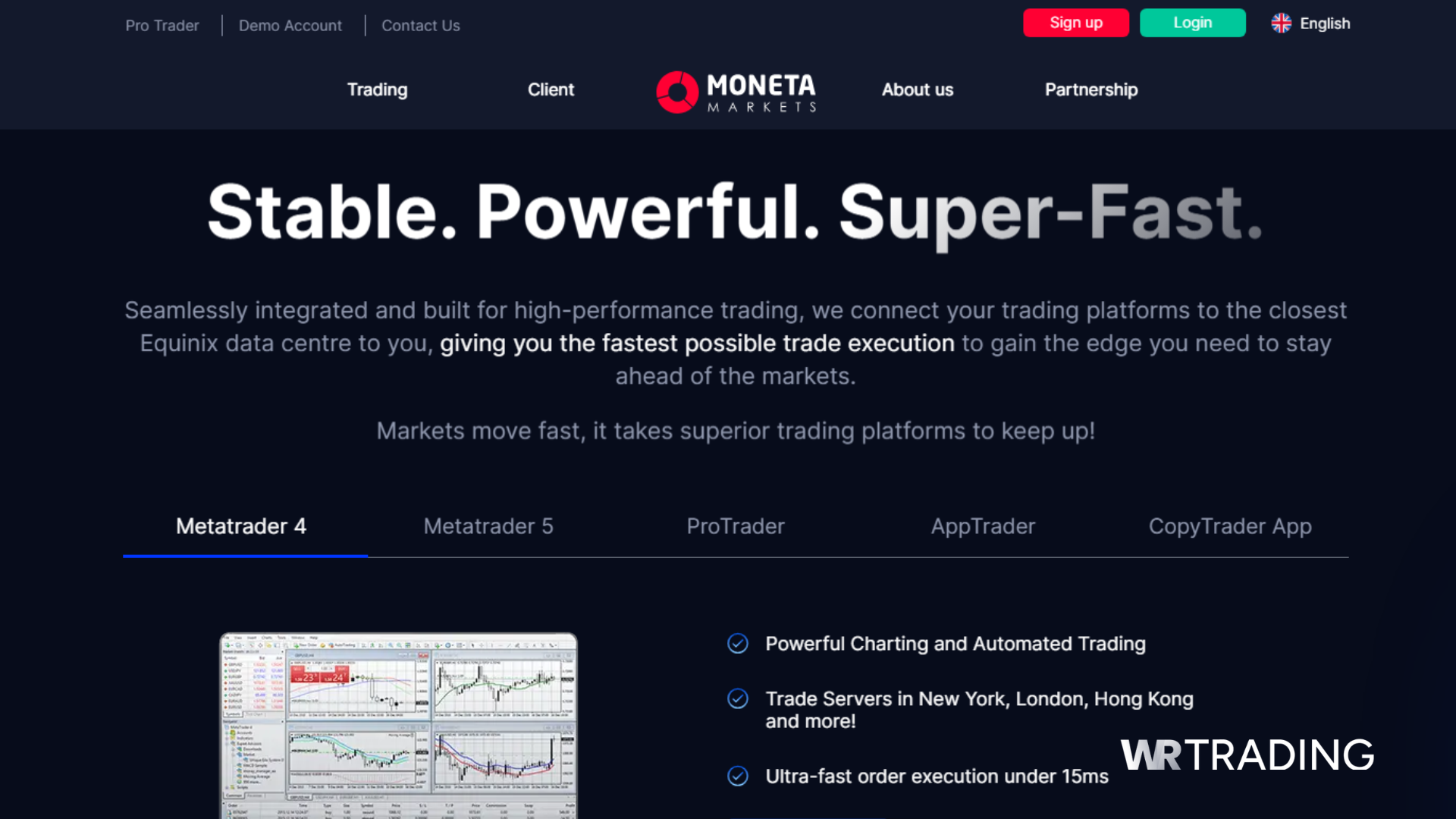
Moneta Markets is a top NDD forex broker that differentiates itself by its user-friendly trading platforms and competitive trading conditions. With spreads starting at 0.0 pips and leverage options up to 1000:1, Moneta Markets appeals to all traders. The broker offers over 45 Forex pairs, ensuring a wide range of trading opportunities. Moneta Markets’ focus on providing an intuitive trading experience is evident in its MetaTrader 4, MetaTrader 5, Pro Trader, and MT4 WebTrader platforms, which are accessible and easy to navigate.
Operating under the regulatory oversight of the Cayman Islands Monetary Authority and Financial Sector Conduct Authority, Moneta Markets provides a secure trading environment. The broker’s range of trading instruments includes Forex, commodities, indices, ETFs, bonds, and stocks. Traders appreciate the comprehensive educational resources and market analysis tools available, which help them make informed trading decisions. Customer support is available 24/5, ensuring timely assistance for traders.
| Feature | Information |
|---|---|
| No Dealing Desk | Yes |
| Spreads and Commission | Varies based on account: Spread – from 0.0 pips Commission – from no commission to $3 per lot |
| Trading Platforms | MetaTrader 4, MetaTrader 5, Pro Trader, and MT4 WebTrader |
| Asset Types | Forex, commodities, indices, ETFs, bonds, and stocks |
| Tradable Assets | Over 1,000 |
| Currency Pairs | Over 45 |
| Leverage | 1000:1 |
| Customer Support | Email, live chat, and phone support |
| Demo Account | Yes |
| Educational Content | Blogs and guides |
| Regulation | Cayman Islands Monetary Authority and Financial Sector Conduct Authority |
5. BlackBull Markets
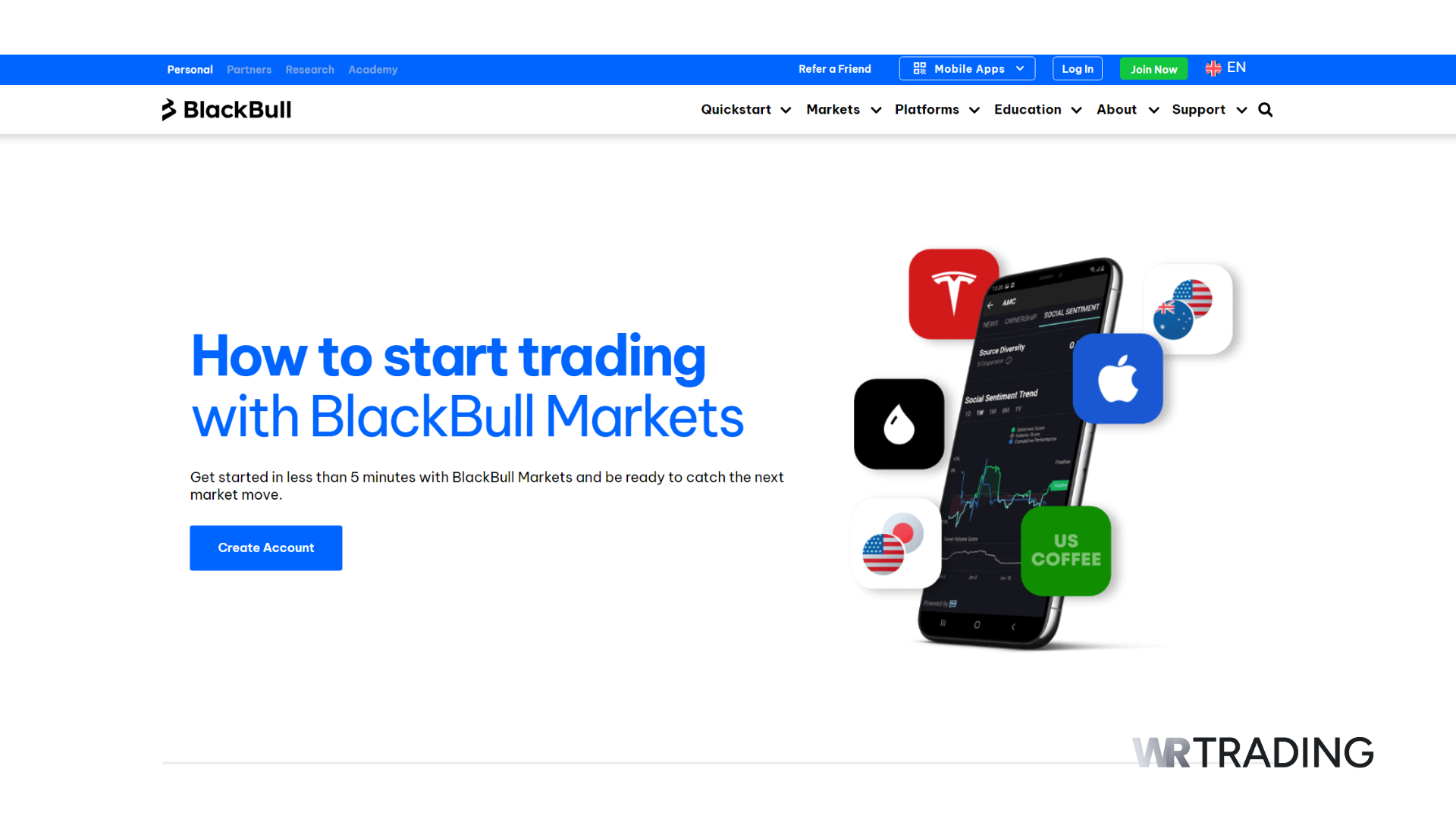
BlackBull Markets stands out as the fifth best NDD forex broker due to its institutional-grade trading conditions and high-speed execution. Offering over 60 Forex pairs, the broker ensures extensive trading opportunities with spreads starting from 0.0 pips. Leverage is available up to 500:1, catering to different trading strategies. BlackBull Markets utilises Equinix servers in New York and London, ensuring ultra-low latency and fast trade execution.
Regulated by the Financial Services Authority in Seychelles, BlackBull Markets is a secure platform for trading. The broker’s MetaTrader 4, MetaTrader 5, MetaTrader Web Trader, cTrader, TradingView, and BlackBull Trade are equipped with advanced charting tools and automated trading features. Therefore, if you’re looking for an advanced NDD broker, BlackBull Markets is an excellent choice for traders because of its suite of tools.
| Feature | Information |
|---|---|
| No Dealing Desk | Yes |
| Spreads and Commission | Varies based on account: Spread – from 0.0 pips Commission – From no commission to $6 per lot |
| Trading Platforms | MetaTrader 4, MetaTrader 5, MetaTrader Web Trader, cTrader, TradingView, and BlackBull Trade |
| Asset Types | Forex, commodities, indices, cryptocurrencies, futures, and stock |
| Tradable Assets | Over 26,000 |
| Currency Pairs | Over 70 |
| Leverage | 500:1 |
| Customer Support | Yes |
| Demo Account | Yes |
| Educational Content | Webinars, tutorials, and an education hub |
| Regulation | Financial Services Authority in Seychelles |
6. Pepperstone
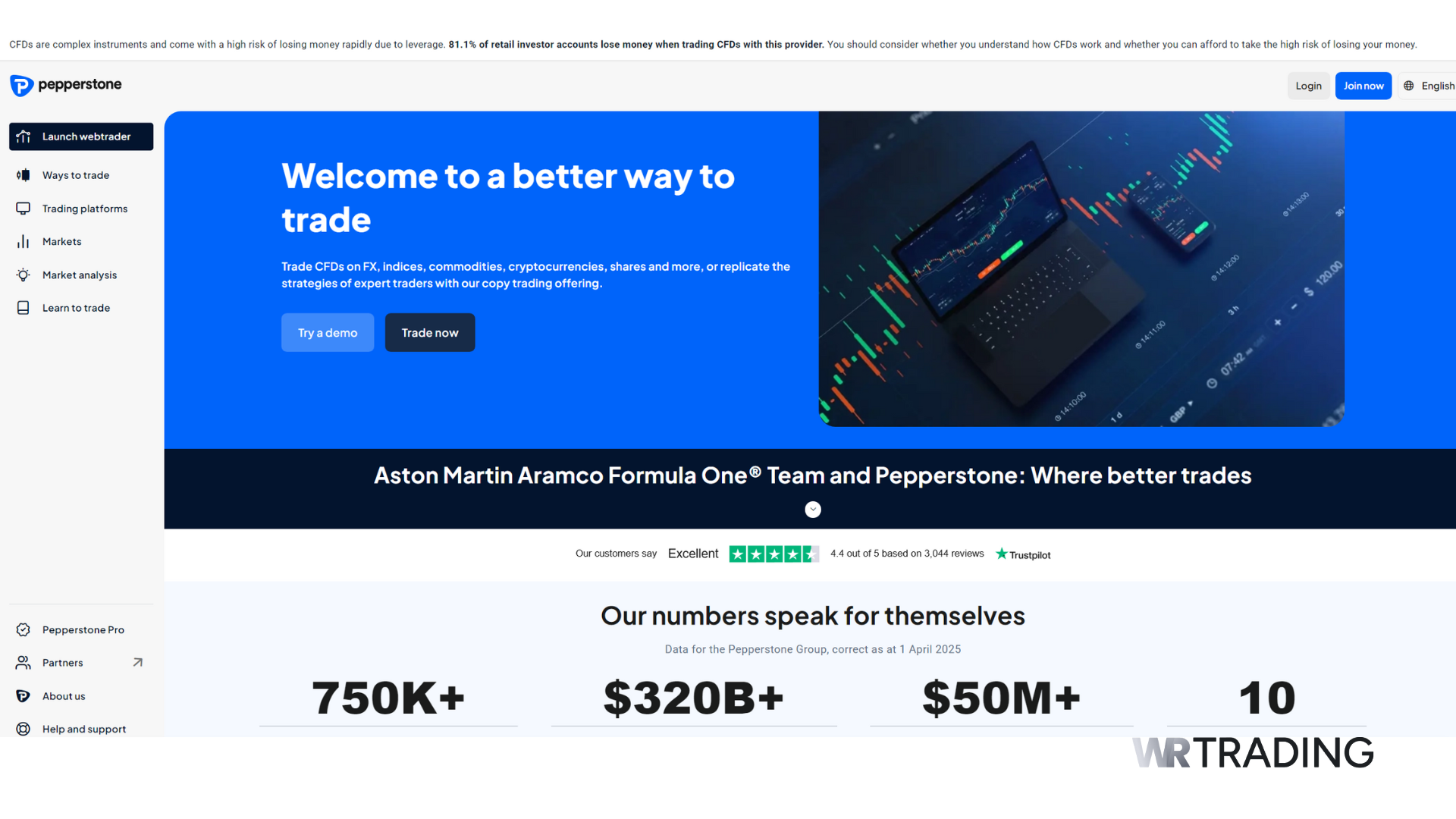
Pepperstone is a global leader in NDD forex trading, offering spreads from 0.0 pips and fast execution speeds of 30 ms. Commissions are competitively set at $3 per lot, making the broker ideal, in our opinion, for scalpers and algorithmic traders who require cost efficiency. With leverage of up to 500:1 and more than 90 forex pairs, Pepperstone offers traders of all levels the scale and flexibility they need.
The broker supports MetaTrader 4, MetaTrader 5, TradingView, and cTrader. Each platform provides advanced analytics, algorithmic trading capabilities, and real-time execution quality. Traders benefit from consistently tight spreads, thanks to Pepperstone’s liquidity connections, which ensure transparent pricing without conflicts of interest. However, some trading tools are only available to clients with larger balances, which can limit access for smaller accounts.
Pepperstone is regulated by the FCA, ASIC, and CySEC, among other authorities, which gives it a high degree of credibility. We recommend using this broker even if you are a complete beginner, as its educational webinars and trading guides further add to the trader experience.
| Feature | Information |
|---|---|
| No Dealing Desk | Yes |
| Spreads and Commission | Varies based on account: Spread – from 0.0 pips Commission – From no commission to $3 per lot |
| Trading Platforms | MetaTrader 4, MetaTrader 5, cTrader, and TradingView |
| Asset Types | Forex, commodities, indices, cryptocurrency, stocks, and ETFs |
| Tradable Assets | Over 1,200 |
| Currency Pairs | Over 90 |
| Leverage | 500:1 |
| Customer Support | Email and phone support |
| Demo Account | Yes |
| Educational Content | Webinars, educational videos, and trading guides |
| Regulation | FCA, CySEC, ASIC, BaFin, CMA, and DFSA |
7. IC Trading
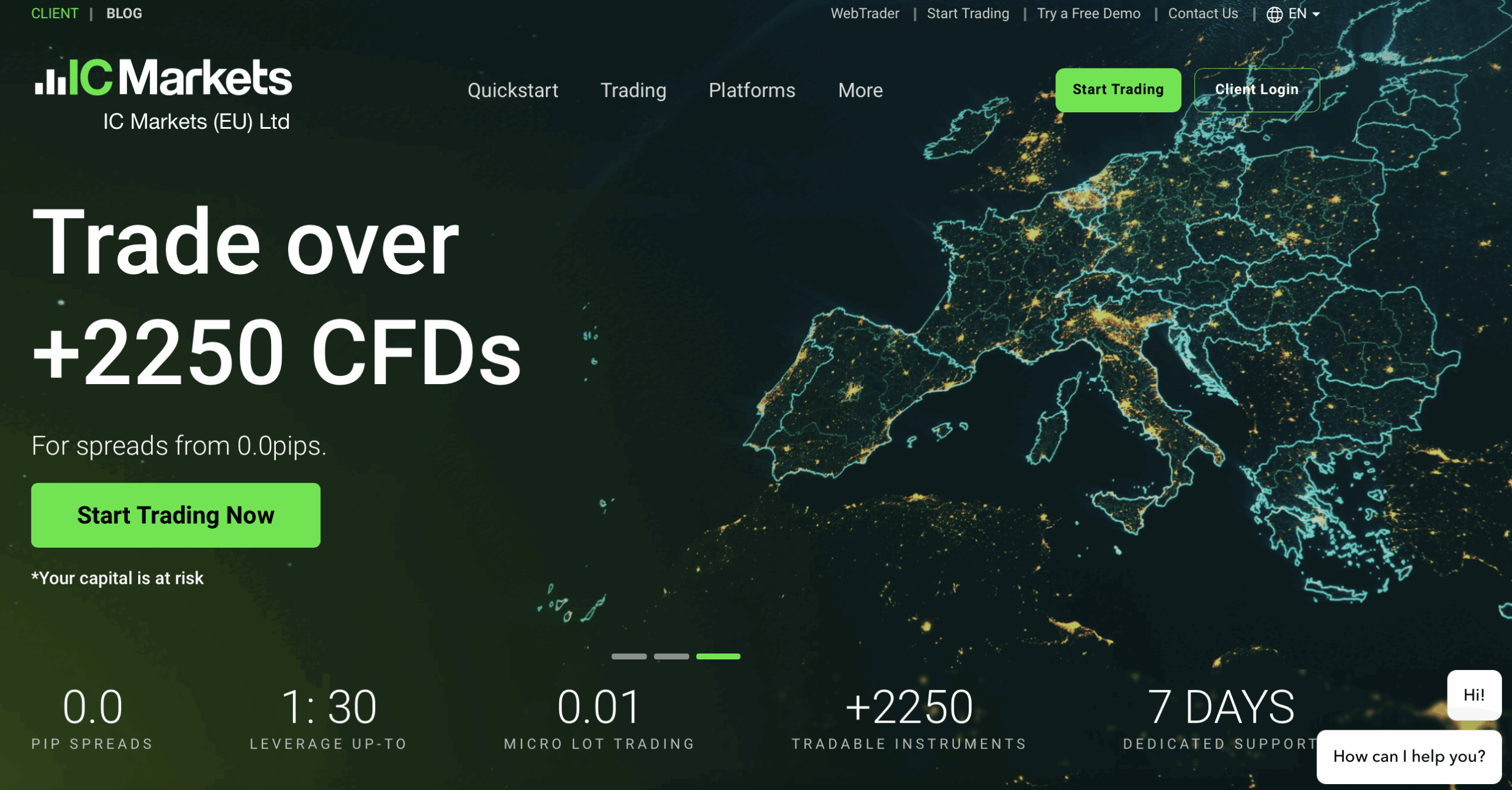
IC Markets offers some of the tightest spreads in the industry, starting from 0.0 pips, which appeals to traders looking to minimise costs. The NDD broker provides leverage up to 500:1 and access to over 60 forex pairs. IC Markets is recognised for its rapid execution speeds, facilitated by its NY4 and LD5 data centres, making it an ideal choice for high-frequency traders.
The broker’s MetaTrader 4, MetaTrader 5, and cTrader platforms are great for forex trading and come with analytical tools to help set positions. Customer support is available 24/7, ensuring that help is always at hand. The Financial Services Commission of Mauritius regulates IC Markets.
| Feature | Information |
|---|---|
| No Dealing Desk | Yes |
| Spreads and Commission | Varies based on account: Spread – from 0.0 pips Commission – From no commission to $3.50 per lot |
| Trading Platforms | MetaTrader 4, MetaTrader 5, and cTrader |
| Asset Types | Forex, commodities, indices, stocks, bonds, and cryptocurrency |
| Tradable Assets | Over 2,250 |
| Currency Pairs | Over 60 |
| Leverage | 500:1 |
| Customer Support | Email, live chat, and phone support |
| Demo Account | Yes |
| Educational Content | Tutorials and blogs |
| Regulation | Financial Services Commission of Mauritius |
8. FP Trading
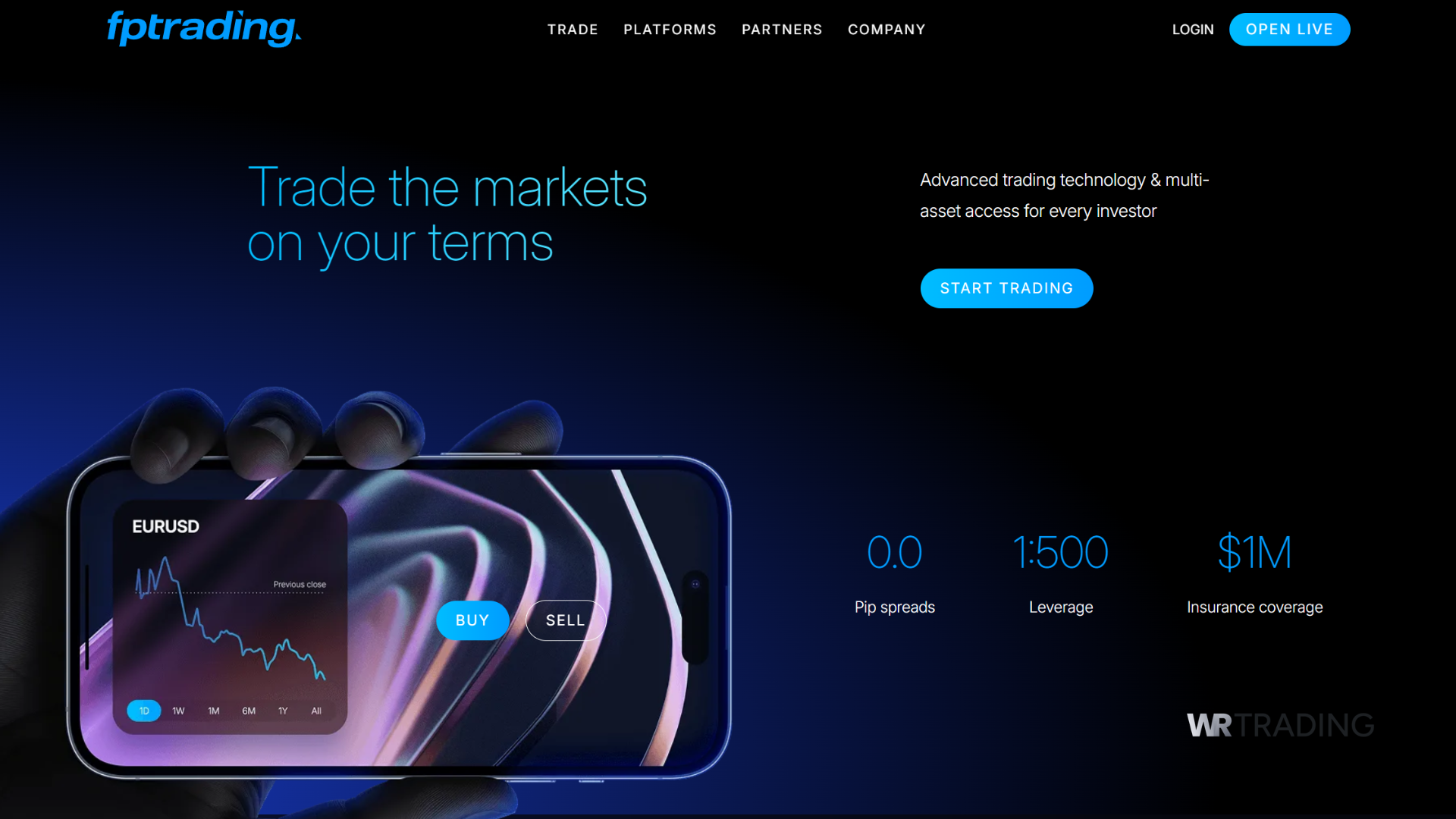
FP Trading is one of our most liked NDD Forex brokers, offering traders a premium experience with some of the industry’s most competitive spreads, starting at 0.0 pips. As a No Dealing Desk broker, FP Trading ensures that your trades are executed directly through the interbank market, eliminating any potential conflict of interest.
FP Trading offers a broad range of over 60 forex pairs and leverage up to 500:1. The platform’s robustness is evident in its support for multiple trading platforms, including MetaTrader 4, MetaTrader 5, cTrader, TradingView, WebTrader, and FP Mobile App. We appreciated the versatility these platforms offer, which suits the needs of beginners and advanced traders alike.
The brokers’ regulation by FSA, FSC, and FSCA also gives traders peace of mind about the security of their funds. Also, when we tested FP Trading’s customer support team, it was responsive and knowledgeable, adding to the overall positive experience.
| Feature | Information |
|---|---|
| No Dealing Desk | Yes |
| Spreads and Commission | Varies based on account: Spread – from 0.0 pips Commission – From no commission to $3 per lot |
| Trading Platforms | MetaTrader 4, MetaTrader 5, cTrader, TradingView, FP Trading App, and WebTrader |
| Asset Types | Forex, stocks, indices, commodities, cryptocurrency, and ETFs |
| Currency Pairs | Over 60 |
| Tradable Assets | Over 10,000 |
| Leverage | 500:1 |
| Customer Support | Email, live chat, and phone support |
| Demo Account | Yes |
| Educational Content | Video tutorials and trading glossary |
| Regulation | FSA (Saint Vincent), FSRA (Saint Lucia), FSC (Mauritius), FSCA (South Africa) |
9. FBS
FBS is an NDD broker we endorse for its very high leverage and account types. Spreads begin at 0.7 pips, and leverage reaches up to 3000:1, one of the highest available in the forex industry. Orders are executed directly to liquidity providers, ensuring transparent pricing and quick execution. While very high leverage is available, it significantly increases risk and may not be suitable for inexperienced traders.
The broker supports MetaTrader 4, MetaTrader 5, and the FBS Trader app, providing access to fast order routing and advanced charting. Traders can explore strategies across majors, minors, and select exotics, with more than 40 forex pairs available. FBS is regulated by CySEC, which adds oversight and operational security. It also provides webinars and structured learning through the FBS Academy.
| Feature | Information |
|---|---|
| No Dealing Desk | Yes |
| Spreads and Commission | Varies based on account: Spread – from 0.7 pips Commission – From no commission to $3.50 per lot |
| Trading Platforms | FBS app, MetaTrader 4, and MetaTrader 5 |
| Asset Types | Forex, stocks, indices, and commodities |
| Tradable Assets | Over 550 |
| Currency Pairs | Over 40 |
| Leverage | 3000:1 |
| Customer Support | Email, live chat, and phone support |
| Demo Account | Yes |
| Educational Content | FBS Academy |
| Regulation | CySEC |
10. VT Markets
VT Markets offers a superior NDD trading experience, with spreads starting at 0.0 pips and commissions varying between account types. Leverage reaches up to 500:1, and more than 40 forex pairs are available. This gives traders access to a well-rounded selection of major, minor, and exotic currencies.
The broker supports MetaTrader 4, MetaTrader 5, WebTrader, and its mobile app. Each platform provides customizable indicators, algorithmic trading support, and responsive execution, helping traders manage strategies efficiently. We liked how VT Markets emphasizes fast order routing, giving traders the ability to enter and exit positions with minimal slippage.
VT Markets is regulated by ASIC, FSCA, and the Mauritius FSC, providing oversight across multiple jurisdictions. Traders also benefit from structured learning resources through the VT Academy. A drawback we didn’t like is that its research content is less detailed than what some larger brokers provide, which may leave advanced traders looking for more depth.
| Feature | Information |
|---|---|
| No Dealing Desk | Yes |
| Spreads and Commission | Varies based on account: Spread – from 0.0 pips Commission – From no commission to $6 per lot |
| Trading Platforms | MetaTrader 4, MetaTrader 5, Webtrader, and VT Markets app |
| Asset Types | Forex, stocks, indices, ETFs, bonds, and commodities |
| Tradable Assets | Over CFDs 1,000 |
| Currency Pairs | Over 40 |
| Leverage | 500:1 |
| Customer Support | Email, help center, and live chat |
| Demo Account | Yes |
| Educational Content | VT Markets Academy |
| Regulation | ASIC, FSCA, and Mauritius FSC |
What Is a Dealing Desk on a Forex Broker?
A dealing desk, also known as a market maker, is a type of broker that acts as a counterparty to its clients’ trades. This means that when you place a trade, the broker itself takes the opposite side of your position. If you buy a currency pair, the dealing desk sells it to you, and vice versa. This setup allows the broker to control pricing and provide liquidity, ensuring that trades are executed even if there are no matching orders from other traders.
The primary advantage of a dealing desk is the assurance of liquidity. Traders can always find a counterparty for their trades, which can be beneficial during periods of low market activity. Additionally, dealing desks often provide fixed spreads, which can help traders more accurately predict transaction costs.
However, there are potential drawbacks. Since the broker is taking the opposite side of your trade, a conflict of interest may arise. If a trader profits, the broker incurs a loss, and vice versa. This can lead to concerns about the fairness of trade execution, with some traders fearing that their broker might manipulate prices to their disadvantage. Despite these concerns, dealing desks remain popular due to their ability to provide consistent trade execution and market stability.
What Is a No-Dealing-Desk Broker?
A No Dealing Desk (NDD) broker provides direct access to the interbank market without the intervention of a dealing desk. This type of broker routes clients’ orders directly to liquidity providers such as banks, financial institutions, and other brokers. NDD brokers facilitate transparent and efficient trading, as they do not take the opposite side of their clients’ trades.
The primary advantage of NDD brokers is the elimination of potential conflicts of interest. Since NDD brokers do not profit from clients’ losses, they are incentivised to provide fair and transparent pricing. Traders benefit from variable spreads, which can be tighter than fixed spreads, especially during times of high market liquidity. NDD brokers typically offer faster execution speeds due to their direct market access.
There are two primary types of NDD brokers: Electronic Communication Network (ECN) brokers and Straight-Through Processing (STP) brokers. ECN brokers connect traders to a network where they can trade directly with other participants, while STP brokers route orders to their liquidity providers for execution. Both models ensure that traders receive the best available prices in the market
What is the Difference Between a DD and an NDD Broker?
The difference between a Dealing Desk (DD) broker and a No Dealing Desk (NDD) broker is that DD brokers act as the counterparty and set their own pricing, while NDD brokers route orders directly to liquidity providers without trading against customers. Let’s explain each broker type in more detail:
No Dealing Desk (NDD) Brokers
No Dealing Desk (NDD) brokers provide direct access to the interbank market without intermediary intervention. Orders are routed directly to liquidity providers such as banks and financial institutions, ensuring transparent pricing and fast execution speeds. This model eliminates potential conflicts of interest since the broker does not take the opposite side of the trade.
Traders benefit from competitive and variable spreads that can be tighter during high liquidity periods. However, these spreads can widen during times of low liquidity or high volatility. NDD brokers often charge a commission on trades, which can add to overall trading costs.
Dealing Desk (Market Maker) Brokers
Dealing Desk brokers create a market for their clients by acting as the counterparty to their trades. This means that when a trader places an order, the broker takes the opposite position. Market Makers profit from the spreads between the buy and sell prices and can benefit when clients lose.
One significant advantage of Dealing Desk brokers is fixed spreads, which can offer cost predictability, especially during stable market conditions. They also ensure guaranteed liquidity, meaning trades are always executed, even in low liquidity periods.
However, this model can lead to potential conflicts of interest, as the broker may benefit from client losses. Furthermore, there is a risk of slower execution speeds and possible price manipulation, where the broker adjusts prices to their advantage. Despite these concerns, Market Makers often require lower initial deposits, making them more accessible to beginner traders.
| Feature | Dealing Desk (DD) Broker | No Dealing Desk (NDD) Broker |
|---|---|---|
| Execution Model | Broker is the counterparty (market maker) | Orders are routed directly to liquidity providers |
| Pricing | Fixed spreads, set by the broker | Variable spreads depend on market liquidity |
| Conflict of Interest | Yes, as the broker profits when traders lose | No, as the broker does not trade against customers |
| Order Fills | Requotes are possible during volatility | Market fills with some slippage possible |
| Trading Costs | Spread included, no separate commission | Tight spreads with commission per lot traded |
| Execution Speed | Slower as the broker may delay fills | Faster because of the direct access to liquidity providers |
| Slippage Risk | Lower risk since the broker controls pricing | Higher slippage risk due to real market conditions |
| Liquidity Source | Broker provides liquidity internally | Banks and financial institutions |
| Transparency | Transparency is lower as prices are managed by the broker | Transparency is higher because pricing reflects the interbank market |
Is an ECN Broker a No Dealing Desk Broker?
Yes, an ECN broker is a type of No Dealing Desk broker. ECN brokers operate by connecting traders to a network where they can interact with other market participants, including banks, hedge funds, and other traders. This setup promotes transparency and competitive pricing, as traders can view the market depth and the best available bid and ask prices. ECN brokers typically charge a commission on each trade, rather than marking up the spread, which aligns their interests with those of their clients.
Pros and Cons of NDD Brokers
Pros
- Transparent Pricing
- No Conflict of Interest
- Tighter Spreads
- Faster Execution
- Access to Interbank Market Prices
- Reduced Risk of Requotes
- Greater Price Transparency
- Suitable for Scalping and High-Frequency Trading
- Direct Market Access
- Competitive and Variable Spreads
- No Broker Interference in Trades
- Enhanced Market Depth
- Flexibility in Trading Styles
- Efficient Order Execution
- Multiple Liquidity Providers
Cons
- Variable Spreads
- Commission Fees
- Market Volatility
- Possible Slippage
- Complex Platform Interfaces
- Higher Minimum Deposit Requirements
- Potential for Wider Spreads in Low Liquidity
- Limited Trading Instruments
- Less Customer Support Focus
- Limited Educational Resources
- Dependence on High-Speed Internet
- Inconsistent Pricing During News Releases
- Requires Understanding of Market Dynamics
- Possible Data Feed Issues
- Higher Complexity for Beginners
NDD vs Market Maker Broker
When choosing a forex broker, one of the key decisions traders must make is whether to use a No-Dealing-Desk (NDD) broker or a Market-Maker broker. Each type of broker operates differently and offers unique advantages and disadvantages, which impact trading strategies and the overall trading experience.
No Dealing Desk (NDD) Brokers
No-Dealing-Desk (NDD) brokers offer direct access to the interbank market, eliminating intermediary intervention. Orders are routed directly to liquidity providers, including banks and financial institutions, ensuring transparent pricing and fast execution speeds. This model eliminates potential conflicts of interest since the broker does not take the opposite side of the trade.
Traders benefit from competitive and variable spreads that can be tighter during periods of high liquidity. However, these spreads can widen during times of low liquidity or high volatility. NDD brokers often charge a commission on trades, which can add to overall trading costs.
One significant advantage of Market Maker brokers is the provision of fixed spreads, which can offer cost predictability, especially during stable market conditions. They ensure guaranteed liquidity, meaning trades are always executed, even during periods of low liquidity.
Market Maker Brokers
On the other hand, Market Maker brokers create a market for their clients by acting as the counterparty to their trades. This means that when a trader places an order, the broker takes the opposite position to that trader. Market Makers profit from the spreads between the buy and sell prices and can benefit when clients lose.
Nevertheless, as mentioned previously, this model can lead to potential conflicts of interest, as the broker may benefit from client losses. Furthermore, there is a risk of slower execution speeds and possible price manipulation, where the broker adjusts prices to their advantage. Despite these concerns, Market Makers often require lower initial deposits, making them more accessible to beginner traders.
How We Tested No Dealing Desk Brokers
Testing No Dealing Desk (NDD) brokers involves a comprehensive evaluation process to ensure traders receive accurate and reliable information. Our testing methodology at WR Trading is designed to assess various aspects of NDD brokers, with a focus on factors that significantly impact the trading experience. Here’s how we conducted our tests:
- Account Opening Process: We began by evaluating the account opening process for each NDD broker. This involved checking the ease of registration, the time taken to verify documents, and the overall user-friendliness of the onboarding process. We prioritised brokers that provided a seamless and efficient account setup.
- Platform Performance: The performance of trading platforms is crucial for executing trades effectively. We tested the brokers’ platforms, including MetaTrader 4, MetaTrader 5, cTrader, and proprietary platforms. Our assessment covered platform stability, user interface, ease of navigation, and the availability of advanced trading tools and features.
- Spread and Commission Analysis: We analysed the spreads and commissions charged by each broker. This involved checking the typical spreads during various market conditions, including periods of high volatility and low liquidity. We examined the commission structure to determine the overall cost of trading.
- Execution Speed and Slippage: Execution speed is crucial for traders, particularly those employing scalping or high-frequency trading strategies. We measured the execution times for trades and monitored the occurrence and extent of slippage, comparing the actual execution price with the expected cost.
- Regulatory Compliance: The regulatory status of a broker is a crucial factor in ensuring trader safety. We verified each broker’s regulatory compliance with central financial authorities, including ASIC, FCA, CySEC, and others. Brokers with strong regulatory oversight were rated higher for providing a secure trading environment.
- Customer Support: Effective customer support can significantly enhance the trading experience. We tested the responsiveness, availability, and quality of customer support services through live chat, email, and phone. We assessed the helpfulness and knowledge of support representatives.
- Deposit and Withdrawal Processes: The ease and efficiency of deposit and withdrawal processes are crucial for managing trading funds. We evaluated the methods available for funding accounts and withdrawing profits, considering any associated fees, processing times, and overall convenience.
- Educational Resources: Access to educational materials can help traders improve their skills and make informed decisions. We reviewed the quality and availability of academic resources, including webinars, tutorials, articles, and market analyses, provided by each broker.
- Range of Trading Instruments: We assessed the variety of trading instruments offered by NDD brokers, including Forex pairs, commodities, indices, and cryptocurrencies. Brokers offering a broader range of instruments were considered more versatile and attractive to traders seeking diversification.
- User Reviews and Reputation: We considered user reviews and the overall reputation of each broker in the trading community. This involved analysing feedback from real users on various forums and review sites to gauge the general satisfaction and reliability of the brokers.
Are NDD Forex Brokers Suitable for Beginners?
Yes, NDD forex brokers are suitable for beginners, but the experience depends on what the trader values most. Beginners benefit from the transparency of NDD execution because prices are taken directly from liquidity providers, and the broker does not trade against customers.
This removes the conflict of interest with some market makers and gives new traders a fairer understanding of how the market works. However, variable spreads and commissions can be confusing at first, so beginners need to take time to learn how these costs affect trading.
Furthermore, NDD brokers are our preferred choice at WR Trading, as well as for professional and advanced traders, for multiple reasons. Direct market access, faster execution, and tighter spreads during liquid sessions create conditions that are well-suited for high-frequency, algorithmic, or large-volume trading. Advanced traders also require the accuracy of pricing and a zero chance of broker manipulation, which enables them to trust the execution quality of their strategies.
Costs and Fees When Trading With NDD
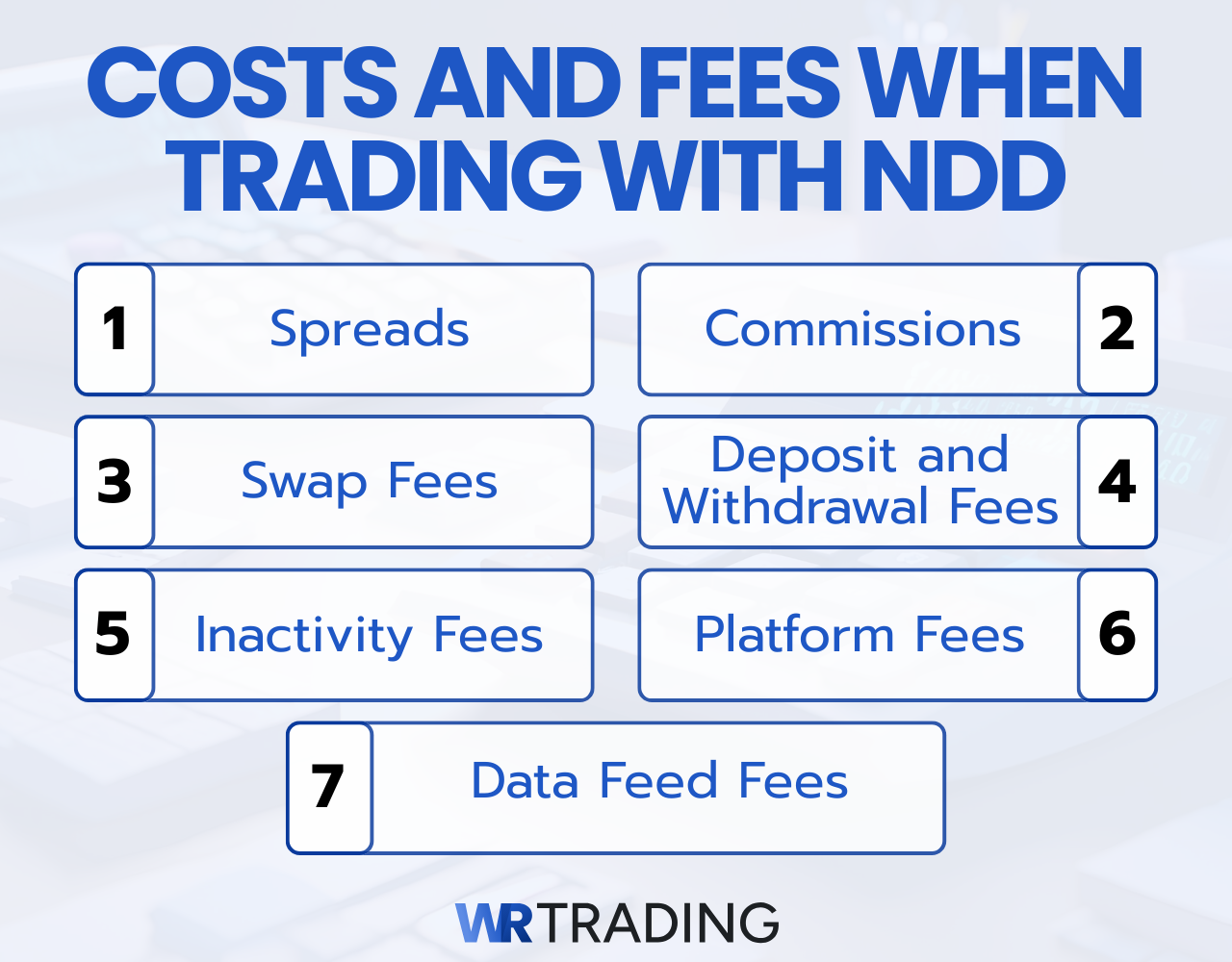
When trading with No Dealing Desk (NDD) brokers, it’s crucial to understand the various costs and fees involved, as they can significantly impact your overall profitability. NDD brokers offer direct market access, meaning they typically have a different fee structure compared to dealing desk brokers. Here are the primary costs and fees to be aware of:
Spreads
NDD brokers typically offer variable spreads that fluctuate in response to market conditions. During periods of high liquidity, spreads can be very tight, sometimes starting from as low as 0.0 pips. However, during times of low liquidity or high market volatility, spreads can widen significantly. Traders should monitor the typical spread patterns of their chosen broker to gauge average and peak spreads.
Commissions
In addition to spreads, NDD brokers often charge a commission per trade. This commission is usually a fixed fee per lot traded, which can vary between brokers. While the spread may be low, the commission fee can add up, especially for high-frequency traders. It is essential to compare commission structures across different brokers to find the most cost-effective option for your trading strategy.
Swap Fees
Swap fees, also known as overnight financing fees, are charged when a position is held overnight. These fees are based on the interest rate differential between the two currencies in a foreign exchange (forex) pair and can be either positive or negative. Traders should be aware of the swap rates for the instruments they trade and consider these costs when planning to hold positions for an extended period.
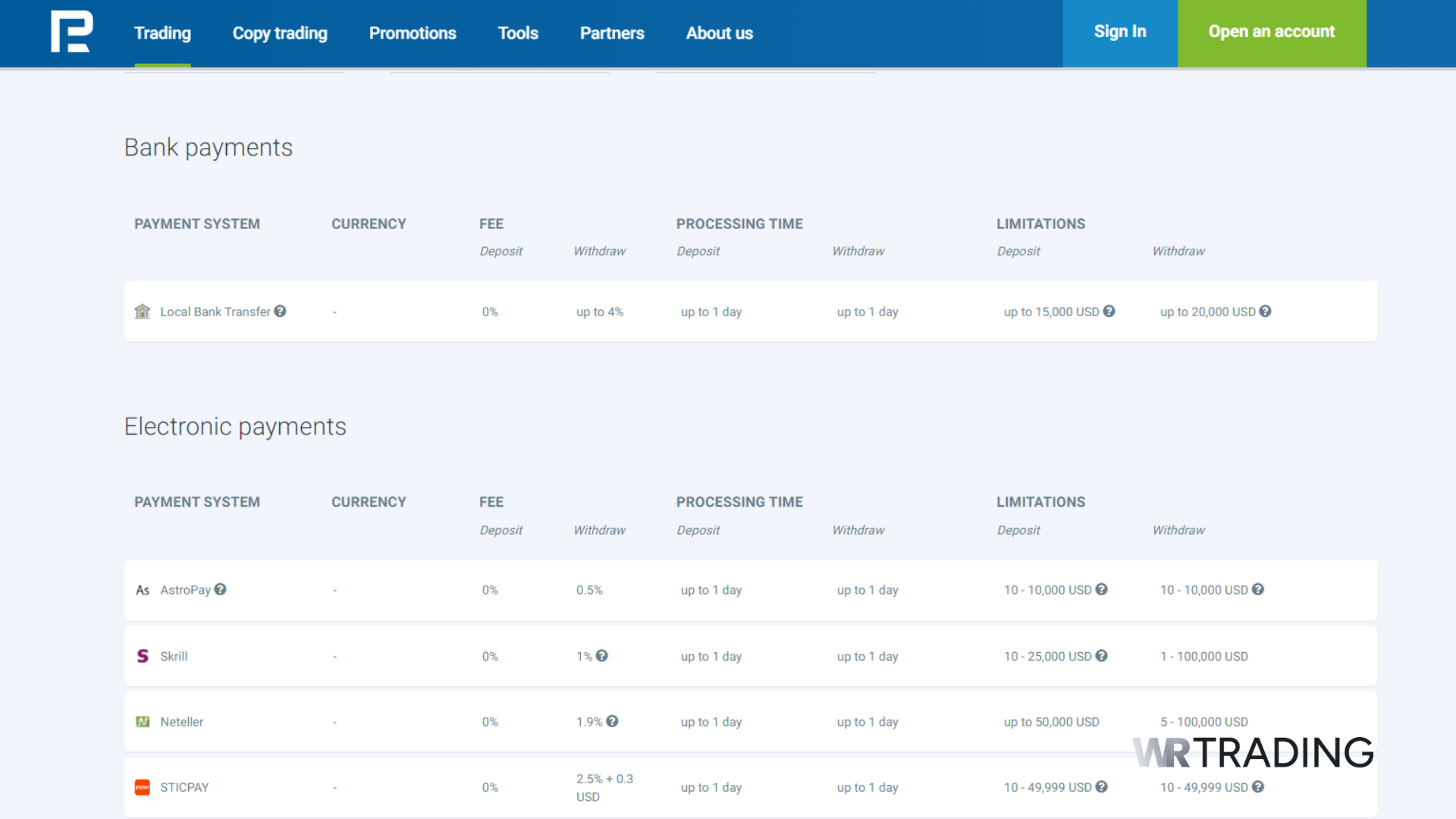
Deposit and Withdrawal Fees
Many NDD brokers do not charge fees for deposits, but some may impose fees for withdrawals, particularly for transactions involving specific methods or minimum amounts. It is essential to check the broker’s policies on deposit and withdrawal fees to avoid unexpected costs when managing your trading funds.
Inactivity Fees
Some brokers charge inactivity fees if an account is dormant for a specified period. These fees can vary significantly and may be charged on a monthly or quarterly basis. Traders who do not trade frequently should be aware of these potential charges and choose brokers with more lenient inactivity policies if necessary.
Platform Fees
While most brokers offer free access to popular trading platforms like MetaTrader 4 and MetaTrader 5, some may charge for premium features, additional tools, or access to their proprietary platforms. Traders should evaluate whether these platform fees are justified by the benefits offered.
If you’d like to learn how to use these powerful trading platforms, consider joining the WR Trading course. There, you can learn winning trading strategies, receive advice from experts, and watch trading webinars.
Data Feed Fees
Some NDD brokers charge for access to real-time data feeds, particularly for advanced trading instruments or services. These fees can be an additional cost for traders who require up-to-date market data for their strategies.
Is an NDD Broker A Book Broker?
Yes, an NDD (No Dealing Desk) broker can be considered as an a-book broker, but with significant differences in how they handle trades. NDD brokers operate by providing direct market access, routing client orders to external liquidity providers, or through an electronic communication network (ECN).
NDD brokers utilise either Straight-Through Processing (STP) or ECN models, both of which facilitate a more transparent trading environment. STP brokers send orders directly to liquidity providers without any dealing desk intervention, while ECN brokers connect traders directly with other market participants, including banks and financial institutions. In both cases, the broker does not internalise trades but instead acts as an intermediary, ensuring that traders receive competitive and fair market pricing.
For Which Trading Strategies Should You Use NDD Brokers?
NDD brokers are ideal for strategies that rely on speed, transparency, and real market pricing, like scalping, swing trading, and algorithmic trading. Scalpers and high-frequency traders benefit from direct market access, as spreads can be as low as 0.0 pips and execution is faster without dealing desk intervention.
Swing traders and position traders also gain an advantage, as NDD brokers offer variable spreads that often remain competitive across major currency pairs, allowing long-term strategies to operate under fair pricing conditions.
Algorithmic traders and those running Expert Advisors on MetaTrader will find NDD accounts beneficial because order flow is handled directly with liquidity providers, which reduces the risk of requotes. This allows automated systems to operate more reliably, as fills are closer to the displayed market prices.
How Good Is the Order Execution on No Dealing Desk Brokers?
Order execution on NDD brokers is generally faster and more transparent than with dealing desk brokers. This is because trades are routed directly to liquidity providers, and there is no conflict of interest or artificial delays caused by internal dealing desks. Traders can expect execution speeds measured in milliseconds when brokers operate servers in major financial centers, such as London or New York.
The quality of execution also depends on market conditions, as spreads can widen during times of volatility. However, since NDD brokers rely on aggregated liquidity, traders are usually filled at the best available prices, which is a significant advantage for active and professional traders.
Is There Slippage by Trading With NDD Brokers?
Yes, slippage can occur with NDD brokers, but it’s the result of genuine market conditions rather than broker manipulation. During high-impact news events or sudden market moves, prices may change between the time an order is placed and when it is executed. In these cases, traders may experience either negative or positive slippage.
The benefit of NDD brokers is that slippage reflects the real market rather than an artificial adjustment. Traders can occasionally benefit from price improvements, which is not possible with dealing desk brokers that fix spreads internally.
Can a No Dealing Desk Forex Broker Offer Negative Balance Protection?
Yes, many NDD brokers, such as StarTrader, Vantage Markets, and Pepperstone, provide negative balance protection to safeguard clients from owing more than their deposited capital. This feature ensures that even if extreme volatility pushes positions into large losses, the trader’s account cannot fall below zero.
Negative balance protection is important for retail traders who use higher leverage and may not have additional funds to cover unexpected margin calls. For professional and advanced traders, negative balance protection is necessary because volatile periods or news releases are unpredictable and can take out positions quickly. While it does not eliminate trading risks, it prevents catastrophic losses that extend beyond the account balance.
Conclusion
When selecting the right No Dealing Desk (NDD) forex broker,consider top options such as FP Trading, Vantage Markets, and IC Markets. Look for brokers that offer competitive spreads, low commission fees, and substantial regulatory compliance to ensure a safe trading environment. Reliable customer support is crucial for addressing any issues that may arise. By focusing on these key features, you can make an informed decision that aligns with your trading strategy and goals, ultimately enhancing your potential for success in the forex market.
Highlighting the Top Best No Dealing Desk (NDD) Forex Brokers and Their Key Benefits:
- StarTrader – Best Overall No Dealing Desk (NDD) Forex Broker
- Vantage Markets – Excellent Trading Platform for tight pricing and trader education
- RoboForex – Great for High Leverage and Asset Variety
- Moneta Markets – Best for User-Friendly Interface
- BlackBull Markets – Ideal for Institutional-Grade NDD Trading and Fast Execution
- Pepperstone – Renowned for Scalping and Algorithmic NDD Trading
- IC Trading – Best for High-Frequency Trading and Raw Spreads
- FP Trading – Best for Multi-Platform NDD Trading and Broad Market Access
- FBS – Optimal for High-Leverage NDD Trading and Fast Order Routing
- VT Markets – Best for Low-Slippage Multi-Platform NDD Trading
Frequently Asked Questions on NDD Brokers
What Is a No Dealing Desk (NDD) Broker?
An NDD broker provides direct market access without the intervention of a dealing desk. This means that trades are routed directly to liquidity providers, ensuring transparent pricing and execution. NDD brokers eliminate conflicts of interest as they do not take the opposite side of clients’ trades.
Are NDD Brokers Regulated?
Yes, many NDD brokers are regulated by reputable financial authorities, such as ASIC, FCA, and CySEC. Regulation ensures that brokers adhere to strict standards, providing a secure trading environment. Always verify a broker’s regulatory status before opening an account.
What Are the Advantages of Trading With an NDD Broker?
Trading with an NDD broker offers transparent pricing, faster execution speeds, and reduced conflict of interest. These brokers offer direct market access, which often results in tighter spreads. They are suitable for various trading strategies, including scalping and high-frequency trading.
Can NDD Brokers Manipulate Prices?
No, NDD brokers do not manipulate prices because they route orders directly to liquidity providers. This ensures that traders receive fair and competitive market rates. The absence of a dealing desk eliminates the possibility of price manipulation.
What Types of Trading Platforms Do NDD Brokers Offer?
NDD brokers typically offer advanced trading platforms, such as MetaTrader 4 (MT4), MetaTrader 5 (MT5), and cTrader. These platforms provide robust charting tools, automated trading features, and fast execution speeds. Some brokers may offer proprietary platforms tailored to their clients’ needs.

