Compare the best trading platforms in our professional review on WR Trading. A trading platform is a broker that provides the software you use to place orders, manage risk, and analyze markets in real-time, seeking profit from rising or falling prices.
We tested each platform ourselves by opening accounts, placing live and demo orders, and noting what felt fast, clear, and reliable on desktop, web, and mobile. Our checks covered spreads and total costs, maximum leverage with margin use, platform quality across MT4, MT5, TradingView, cTrader, and proprietary terminals, as well as the number of tradable assets.
See here our top 10 trading platform picks:
Broker:
Trading Platforms:
Advantages:
Account:

TradingView, MT4/5, cTrader, Pro Trader
- ECN Accounts
- Spreads from 0.0 Pips
- Copy Trading available
- Leverage up to 1:500
- Low Commission from 1.5$/1 Lot
- High liquidity and fast execution

TradingView, MT4/5, cTrader, Pro Trader
- High Leverage up to 1:1000
- RAW ECN Spreads from 0.0 pips
- Fastest execution
- Attractive Bonus Programs
- Copy Trading
- MT4 / MT5
- Personal support 24/7

xStation 5, xStation Mobile
- Regulated by multiple authorities
- Spreads from 0.0 Pips
- Leverage up to 1:200
- Commission from 0% per lot
- 2,100+ tradable assets

eToro investing platform and app
- $50 Minimum Deposit
- Zero commission for real stocks and ETF trades, 1% on cryptos
- 5,000+ Markets
- Copy Trading available
- Multiple regulations (FCA, CySEC, & more)

TradingView, MT4/5, cTrader, Pro Trader
- No Minimum Deposit
- FCA regulated
- Options contracts starting at $0.65
- No Platform Fees
- Demo Account available
- IBKR GlobalTrader, IBKR Desktop, Trader Workstation (TWS), & more

TradingView, MT4/5, cTrader, Pro Trader
- Multiple Exchanges (CME, CBOT, NYMEX, & more)
- Commissions: $0.75 per micro contract, $1.75 per standard contract
- MT4, TradingView
- Multiple Regulations
- Minimum Deposit: $100

TradingView, MT4/5, cTrader, Invest Account, MetaTrader Web Trader, BlackBull Trade
- No Minimum Deposit
- Spreads from 0.0 Pips
- 26,000+ Markets
- Leverage up to 1:500
- Low Commission from 2$/1 Lot
- High liquidity and fast execution
- New Zealand regulated

MT4/5 and Pro Trader
- Leverage Up To 125x
- Fast Deposits / Withdrawals
- Easy Sign-Up Process
- More Than 1,000 Cryptos
- Trading Bots, Copy Trading, Staking & more
- 24/7 Customer Support

MT4/5 and Pro Trader
- ECN/STP Accounts
- Spreads from 0.0 Pips
- Leverage up to 1:1000
- Low Commission from 3$/1 Lot
- High liquidity and fast execution

TradingView, MT4/5, cTrader, Pro Trader
- Different ECN Accounts
- Spreads from 0.0 Pips
- Copy Trading available
- Leverage up to 1:2000
- Low Commission from 6$/1 Lot
- High liquidity and fast execution
List of the Best 10 Trading Platforms:
Here is our detailed review of the top 10 trading platforms. Each platform has been tested and evaluated based on key features, usability, and overall performance.
1. Vantage
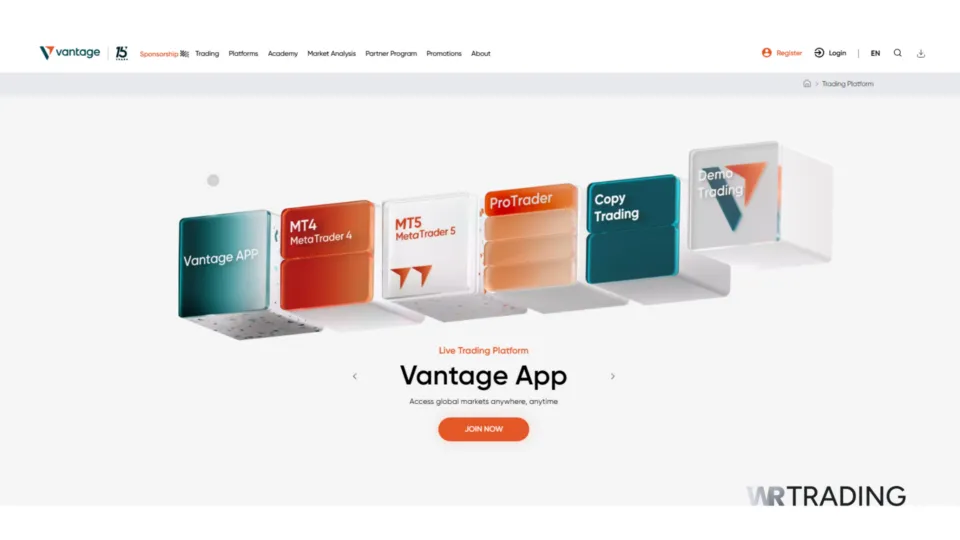
Vantage is our overall best trading broker at WR Trading, with a score of 5/5. It supports MT4, MT5, ProTrader, and its own mobile app, ensuring consistent order entry and charting across desktop, web, and mobile devices. We found Vantage to be an ultra-low-cost broker with spreads from 0.0 pips and commissions from $1.50 per lot, while standard accounts rely solely on spreads.
The extensive asset list stood out to us, featuring over 1,000 tradable products across forex, stocks, indices, commodities, bonds, and ETFs, with leverage of up to 500:1 in supported regions. Tooling includes advanced charting, market analysis, and education through courses, webinars, and ebooks that help you plan around financial events and refine risk rules. Watchlists, alerts, and one-click trading speed up our workflow for short-term strategies.
Customer support is available by email, chat, and phone, and onboarding is straightforward. Mobile apps for iOS and Android make it easy to monitor positions from anywhere, even away from your desk. Also, we found Vantage to be safe for trading due to its regulation by the Australian regulator, ASIC.
| Feature | Information |
|---|---|
| Regulation | ASIC, FCA, FSCA, VFSC, and CIMA |
| Spreads and Commission | Varies based on account: Spread – from 0.0 pips Commission – From $1.50 per lot |
| Trading Platforms | Vantage App, MetaTrader 4, MetaTrader 5, and ProTrader |
| Asset Types | Forex, stocks, indices, commodities, bonds, and ETFs |
| Financial Products | CFDs and futures via CFDs |
| Tradable Assets | Over 1,000 |
| Leverage | 500:1 |
| Copy Trading | Yes |
| Customer Support | Email, live chat, and phone support |
| Demo Account | Yes |
| Educational Content | Courses, webinars, and ebooks |
| Mobile App Availability | iOS and Android |
2. StarTrader: Best for High Leverage 1:1000
StarTrader targets traders who want high leverage of 1000:1 and clear account options, making it our 2nd best trading platform. The broker offers over 500 tradable assets, including forex, commodities, indices, shares, and cryptocurrencies, via CFDs. You can trade on MT4, MT5, and a browser-based terminal, so desktop, web, and mobile are covered with the same core order types. Pricing is account-dependent, allowing you to choose a spread-only setup or spreads starting from 0.0 pips, along with a $6 commission.
We tested the trading platform features, which include one-click trading, customizable chart layouts, VPS support for algorithmic strategies, and a built-in economic calendar for planning around events. Copy trading is available for users who want to mirror strategies and then refine their own entries and exits. We recommend using the risk-free demo account that mirrors the live environment to test position sizing and execution flow before committing capital.
StarTrader offers multiple base currencies, common funding methods, and negative balance protection in supported regions. Educational content focuses on platform use and trade planning rather than marketing gloss, which keeps onboarding practical. Response from live chat and email was quick during our testing, and account verification is simple for users who want to start trading quickly. Also, the StarTrader is regulated by the FCA in the UK and ASIC in Australia.
| Feature | Information |
|---|---|
| Regulation | FCA, ASIC, CMA, FSCA, and VFSC |
| Spreads and Commission | Varies based on account: Spread – from 0.0 pips Commission – from 0% to $6 per lot |
| Trading Platforms | Web Trader, MetaTrader 4 and MetaTrader 5 |
| Asset Types | Forex, commodities, indices, shares, crypto |
| Financial Products | CFDs and futures via CFDs |
| Tradable Assets | Over 500 |
| Currency Pairs | Over 80 |
| Leverage | Up to 1000:1 |
| Copy Trading | Yes |
| Customer Support | 24/5 phone, email, and live chat |
| Demo Account | Yes |
| Educational Content | Trading guides, webinars, and market insights |
| Mobile App Availability | iOS and Android |
3. XTB: Best for Beginners
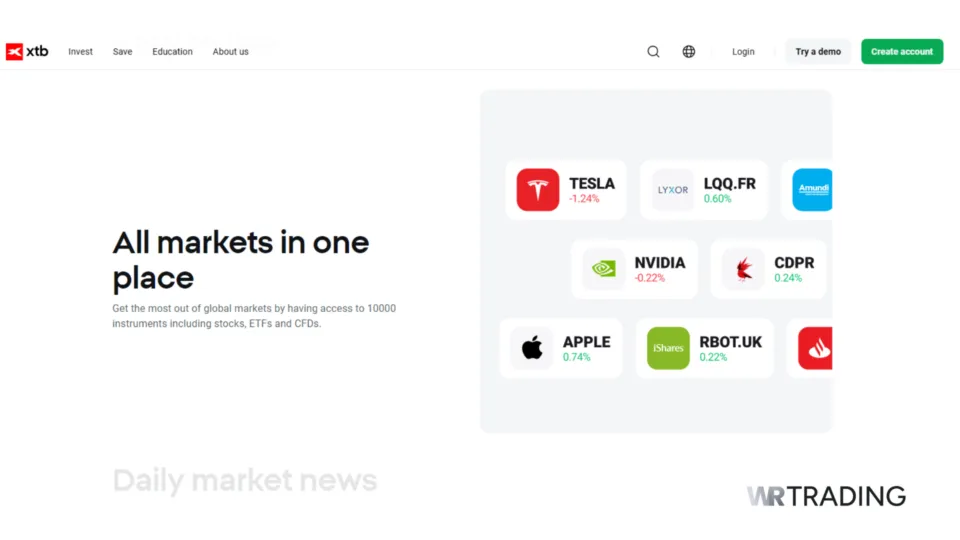
XTB is our 3rd top pick at WR Trading for beginners, which we thoroughly enjoyed testing, primarily for its advanced charting tools and award-winning trading platform, xStation 5. The trading software features a sleek, user-friendly interface that facilitates easy navigation through its various features, and it offers access to over 2,300 instruments. Whether you are dealing in forex, indices, or commodities, XTB ensures you have all the data at your fingertips. We were impressed with the depth of the charting tools, which include a variety of indicators and drawing tools, perfect for those who love getting into the nitty-gritty of technical analysis. However, we didn’t like that XTB doesn’t include other trading software, so traders who are familiar with platforms like MetaTrader will have to learn how to use xStation 5.
Another highlight of XTB is its rich educational resources. The platform goes beyond just offering trading tools; it equips traders with knowledge through webinars, tutorials, and market analysis articles. This makes it a great choice not just for expert traders but for beginners who are keen to learn and grow. The support team is responsive and helpful, which adds to the overall positive experience.
| Feature | XTB |
|---|---|
| Spreads and Commission | Varies based on account: Spread – from 0.0 pips Commission – From 0% per lot |
| Trading Platforms | xStation 5 and xStation Mobile |
| Asset Types | Forex, stocks, indices, ETFs, and commodities |
| Tradable Assets | Over 2,300 |
| Leverage | 200:1 |
| Customer Support | Email, live chat, and phone support |
| Demo Account | Yes |
| Educational Content | Knowledge base and market analysis |
| Regulation | CySEC, KNF, FCA, DFSA, FSC, and IFSC |
4. eToro: Best for Copy trading
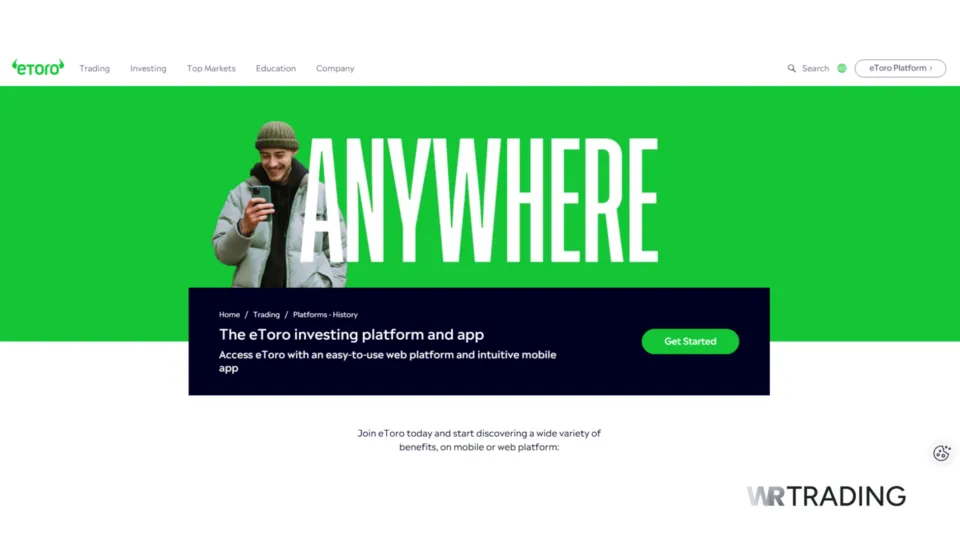
eToro lets you copy trade or trade more than 5,000 instruments across forex, stocks, indices, ETFs, commodities, and some cryptocurrency markets, all within a clean web and mobile app. Fees are displayed at the ticket level, with variable spreads and zero-commission stock investing available in certain regions, as well as leverage of up to 400:1, depending on the product.
In our expert opinion, eToro is the best choice for copy trading via CopyTrader and Smart Portfolios, as it helps you learn by following real investors. We also found the demo account to be useful, as it provides a safe space to practice position sizing and risk management rules. Market briefs, calendars, and in-platform explainers make it easier to plan around earnings and macro events. You can track performance in real-time and set alerts so you don’t miss price levels that matter to your stratergy.
Costs, such as spreads, overnight funding, and any conversion or withdrawal fees, are explained in the help center and displayed before you place an order. We found that spreads on some CFD markets can be higher than those of brokers that focus on raw pricing. Therefore, cost-sensitive day traders should compare the instruments they use most frequently to determine if eToro is a suitable fit for their strategies.
Regulation includes the UK’s FCA, Australia’s ASIC, and the USA’s FinCEN, which gives us confidence that eToro is a safe platform to trade on. Also, you have access to the eToro Academy that contains insights and helps beginners get familiar with the trading platform.
| Feature | Information |
|---|---|
| Regulation | CySEC, MFSA, ADGM, ASIC, FSAS, FinCEN, and the FCA |
| Spreads and Commission | Varies based on account: Spread – from 1 pip Commission – From 0% per lot |
| Trading Platforms | eToro Trading Platform |
| Asset Types | Forex, stocks, indices, ETFs, and commodities |
| Financial Products | CFDs and options |
| Tradable Assets | Over 5,000 |
| Leverage | 400:1 (30:1 Europe) |
| Copy Trading | Yes |
| Customer Support | Email and live chat |
| Demo Account | Yes |
| Educational Content | eToro Academy |
| Mobile App Availability | iOS and Android |
5. Interactive Brokers: Best for US and Multi-Asset Broker
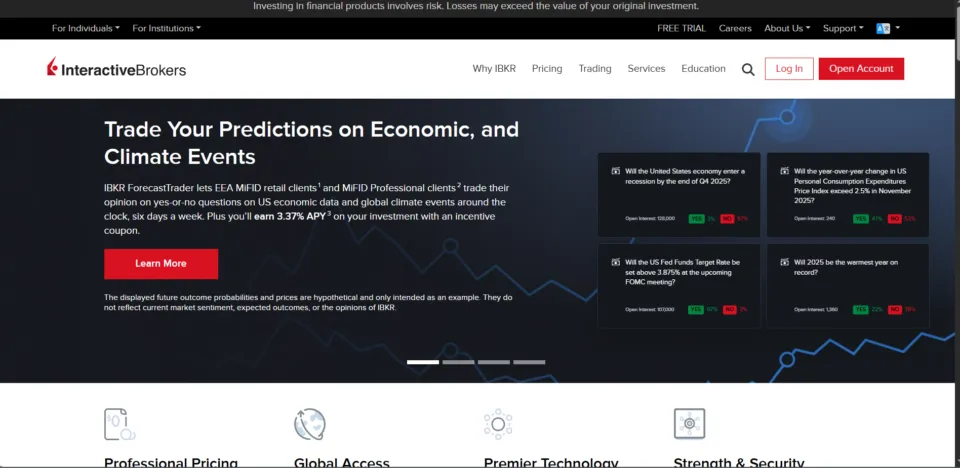
Interactive Brokers gives you one account to trade forex, futures, stocks, options, ETFs, bonds, metals, and crypto, with more than 43,000 listed products and over 100 currency pairs. Our research shows the pricing is transparent: FX spreads can start from 0.1 pips, and commissions on many exchange-traded products range from 0.08 to 0.20 basis points of trade value, while leverage can go up to 50:1. IBKR is regulated in the USA (SEC, CFTC, NFA), the UK (FCA), and Australia (ASIC).
We liked using the proprietary Trader Workstation, Client Portal, and IBKR Mobile, which all stay connected without breaking your workflow, and paper trading helps you refine complex strategies before risking capital. TWS adds advanced order types, options strategy builders, vol analytics, and risk dashboards for position management across markets. Research access and IBKR Campus round out education with structured paths and daily content, making it ideal for beginners.
Support is available nearly around the clock on trading days, and multi-currency balances, along with built-in conversions, make cross-market trading smoother. Account tools help you view margin impact and scenario tests before placing trades. We found that IB can feel dense at first, so plan a learning phase to get comfortable with the layout and routing.
| Feature | Information |
|---|---|
| Regulation | SEC, CFTC, NFA, FCA, CIRO, ASIC, SFC, MAS, JFSA, HKMA, CSSF, and FINMA |
| Spreads and Commission | Varies based on account: Spread – from 0.1 pips Commission – from 0.08 to 0.20 bps of trade value |
| Trading Platforms | Trader Workstation (TWS), Client Portal, IBKR Mobile |
| Asset Types | Forex, futures, stocks, options, ETFs, bonds, metals, crypto |
| Financial Products | CFDs, Futures, and Options |
| Tradable Assets | Over 43,000 |
| Currency Pairs | Over 100 |
| Leverage | Up to 50:1 |
| Copy Trading | No |
| Customer Support | 24/6 phone, email, and live chat |
| Demo Account | Yes |
| Educational Content | IBKR Campus, webinars, podcasts, and courses |
| Mobile App Availability | iOS and Android |
6. AvaFutures: Best for Futures
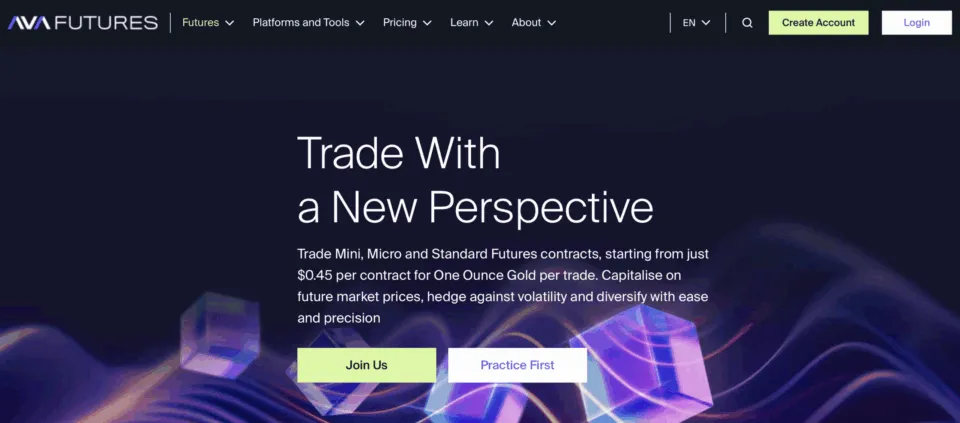
AvaFutures is our top pick for futures trading, as it can handle positions on top-tier platforms like TradingView and MetaTrader 5, with more than 75 instruments. Commissions for Micro contracts are $0.75, and standard contracts are $1.75, depending on the instrument. Also, leverage can go up to 30:1. It’s regulated in Australia (ASIC) and South Africa (FSCA), which gave us confidence that all trading practices on AvaFutures are fair and legitimate.
We found AvaFutures to be very beginner-friendly, with tutorials and strategy guides that clearly explain contract specifications, margin behavior, and event-driven setups, all shown with clear examples. The paper trading account helps you practice rollovers and stop placement, plus you can test the broker and see if it matches your needs.
During our testing with customer support, we found it to be helpful and fast, with responses reachable via chat, email, and phone. We were unwhelmed by the Leverage caps, which can feel strict if you are used to higher limits, so plan your position size with the 30:1 limit in mind.
| Feature | Information |
|---|---|
| Regulation | CySEC, CBI, PFSA, ASIC, BVI, FSA, FSCA, ADGM, and ISA |
| Spreads and Commission | Varies based on account: Commission: Micro Contract – $0.75, Standard Contract – $1.75 |
| Trading Platforms | TradingView and MetaTrader 5 |
| Asset Types | Forex, commodities, indices, ETFs, bonds, and stock |
| Financial Products | CFDs, futures, and options |
| Tradable Assets | Over 75 |
| Leverage | 30:1 |
| Copy Trading | Yes |
| Customer Support | Email, live chat, and phone support |
| Demo Account | Yes |
| Educational Content | Tutorials, technical analysis, strategy overviews, and guides |
| Mobile App Availability | iOS and Android |
7. BlackBull Markets: Best for Fastest Execution
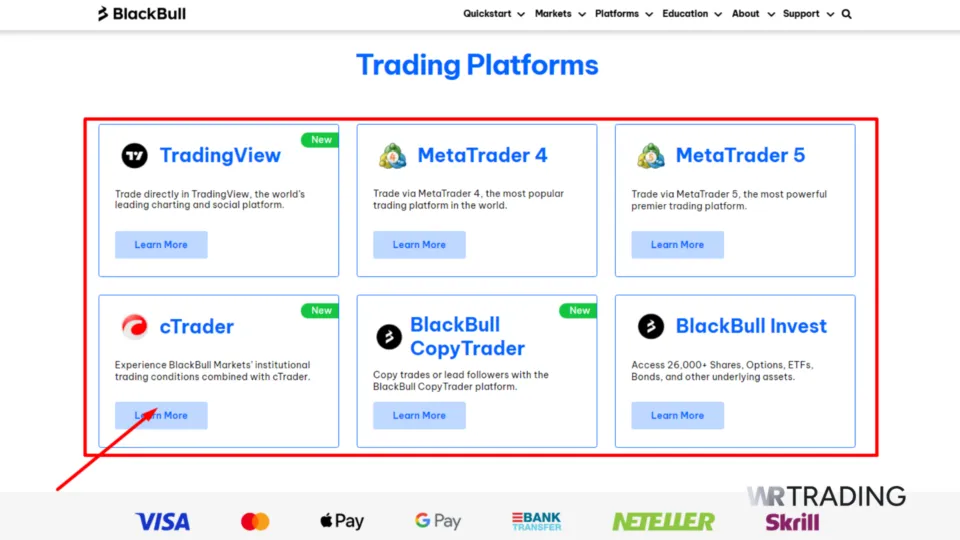
BlackBull is one of the most comprehensive brokers we’ve reviewed, offering MT4, MT5, cTrader, TradingView, and its own web and mobile apps. It provides access to more than 26,000 instruments across forex, commodities, indices, cryptocurrencies, futures, and stocks, allowing traders to capitalize on multiple markets without needing to sign up with another broker.
Spreads can start from 0.0 pips on raw accounts, with a commission fee ranging from $0 to $6 per lot, depending on the account type. The maximum leverage reaches 500:1 as the regulation is offshore. BlackBull lists regulation with the Financial Services Authority in Seychelles, which is not a top-tier authority like ASIC or the FCA, so you will not have as much protection.
Furthermore, Copy features and VPS hosting support both mirroring and automation, and the demo account lets you test execution and risk rules. The platform mix makes it easy to match tools to your trading style, making the onboarding process straightforward, from our experience.
We also appreciated the extensive educational resources available, which include webinars, market analysis, and trading guides, helping traders at all levels to enhance their skills. The customer support team was highly responsive during our testing, and you have multiple methods of receiving assistance.
| Feature | Information |
|---|---|
| Regulation | FSA in Seychelles and FMA in New Zealand |
| Spreads and Commission | Varies based on account: Spread – from 0.0 pips Commission – From no commission to $6 per lot |
| Trading Platforms | MetaTrader 4, MetaTrader 5, MetaTrader Web Trader, cTrader, TradingView, and BlackBull Trade |
| Asset Types | Forex, commodities, indices, cryptocurrencies, futures, and stock |
| Financial Products | CFDs, futures via CFDs, and options via BlackBull Invest |
| Tradable Assets | Over 26,000 |
| Leverage | 500:1 |
| Copy Trading | Yes |
| Customer Support | Email, live chat, and phone support |
| Demo Account | Yes |
| Educational Content | Webinars, tutorials, education hub |
| Mobile App Availability | iOS and Android |
8. Bitget: Best for Crypto
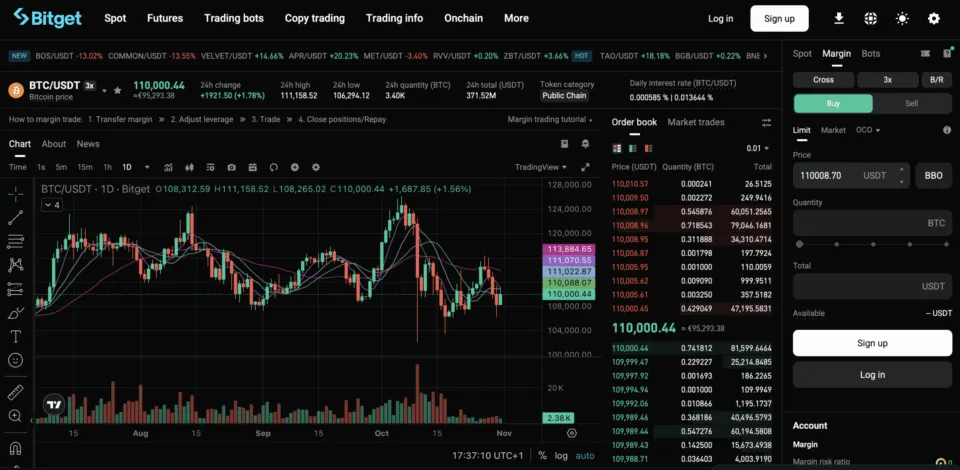
Bitget is our top pick as an all-in-one, crypto-first broker offering spot, options, and futures trading in one account, along with more than 1,000 listed coins. Trading fees start at 0.1 percent for both makers and takers, with lower tiers available for higher trading volumes. Derivatives leverage goes up to 125:1 on supported pairs, allowing you to control huge positions with a small balance.
During features testing, we liked that you get grid and other automated strategies, isolated and cross-margin, funding-rate views, and detailed collateral reporting that help you track risk. Charting supports multi-layout work, drawing tools, and alerts, which are useful when managing multiple watchlists. We recommend using Bitget’s demo account first, as it allows you to practice orders and risk sizing before committing to the broker.
Security features include common authentication methods and withdrawal whitelists, with support available 24/7 via chat and email. Bitget Academy caught our attention for its comprehensiveness and how beginner-friendly it was. Coverage is crypto only, so you will need a separate broker for stocks or futures outside digital assets. Also, Bitget is regulated in the UK by the FCA and Australia by the AUSTRAC.
| Feature | Information |
|---|---|
| Regulation | AUSTRAC, OAM, MoF Poland, CNAD, BCR, FCA, NRA Bulgaria, CoR Lithuania, CNB, NBG, and CNV |
| Spreads and Commission | From 0.1% maker and taker orders, lowers depending on trading volume |
| Trading Platforms | Bitget trading platform |
| Asset Types | Cryptocurrency |
| Financial Products | Spot trading, options, and futures |
| Tradable Assets | Over 1,000 |
| Leverage | 125:1 |
| Copy Trading | Yes |
| Customer Support | 24/7 live chat and email support |
| Demo Account | Yes |
| Educational Content | Bitget Academy tutorials and guides |
| Mobile App Availability | iOS and Android |
9. Moneta Markets: Best for Cashback Bonus
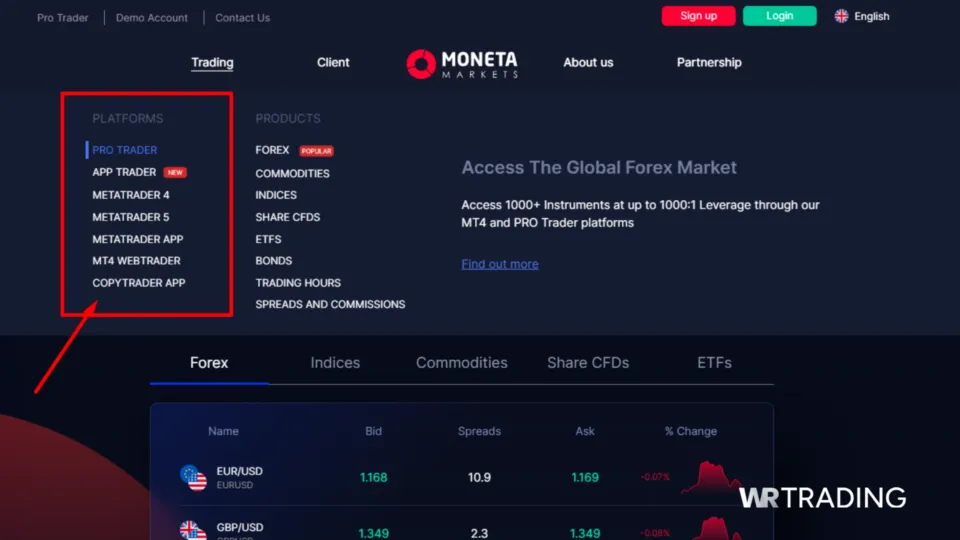
Moneta Markets won us over with its straightforward and user-friendly interface, as well as its cashback bonus. Traders can claim 50% cashback on deposits over $500 and convert it to real cash. We liked how the platform is designed to be accessible for traders of all levels, making it an ideal starting point for beginners while still offering advanced features for advanced traders.
Moneta Markets gives you MT4, MT5, Pro Trader, and MT4 WebTrader with more than 1,000 CFDs across forex, indices, commodities, ETFs, bonds, and stocks. Spreads can start from 0.0 pips on commission accounts, with commissions ranging from $0 to $3 per lot. When we tested the trading, we liked that we could significantly increase our position sizes due to the 1000:1 leverage.
Charting, alerts, and watchlists are easy to manage, and market updates provide insight into expected market moves, allowing you to plan accordingly around news and sessions. A demo account closely mirrors live execution to test entries, exits, and risk per trade. The minimum to start is $50, and common funding methods have no deposit fees. Also, Moneta Markets is regulated in South Africa by the Financial Sector Conduct Authority.
| Feature | Information |
|---|---|
| Regulation | Cayman Islands Monetary Authority and Financial Sector Conduct Authority |
| Spreads and Commission | Varies based on account: Spread – from 0.0 pips Commission – from no commission to $3 per lot |
| Trading Platforms | MetaTrader 4, MetaTrader 5, Pro Trader, and MT4 WebTrader |
| Asset Types | Forex, commodities, indices, ETFs, bonds, and stocks |
| Financial Products | CFDs and futures via CFDs |
| Tradable Assets | Over 1,000 |
| Leverage | 1000:1 |
| Copy Trading | Yes |
| Customer Support | Email, live chat, and phone support |
| Demo Account | Yes |
| Educational Content | Blogs and guides |
| Mobile App Availability | iOS and Android |
10. RoboForex: Best for Automated Trading
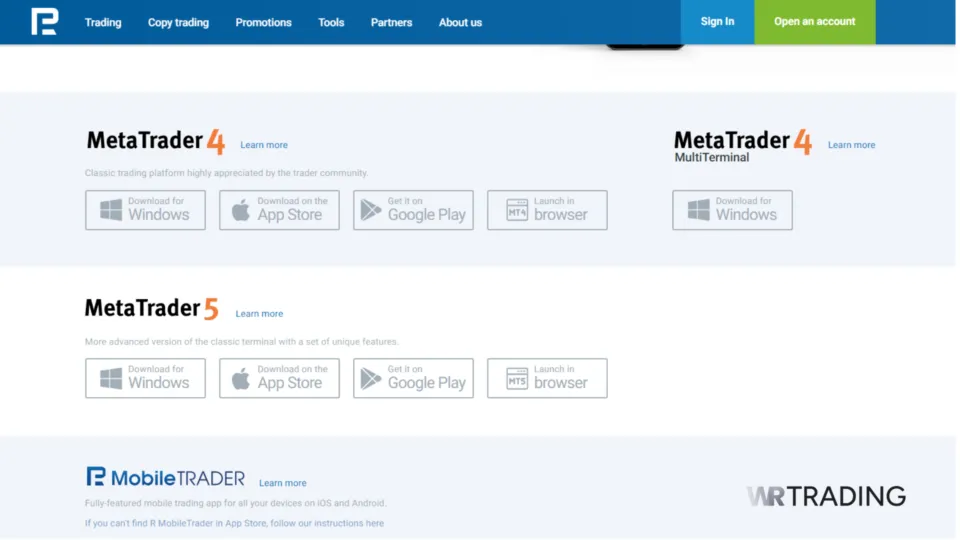
RoboForex is our preferred broker for automated trading, allowing you to run expert advisors, copy trading, and VPS-hosted strategies, ensuring your systems remain online even when your PC is off. The setup lets you test ideas in a demo account first, then scale live with the same order flow and risk rules.
Platform choice covers MT4, MT5, and R StocksTrader, and you can pick raw-spread or all-in pricing to match your bots. The product list is broad, with over 12,000 instruments across forex, indices, futures, ETFs, commodities, and stocks as CFDs. Spreads can start from 0.0 pips, commission is listed at 0% to $2 on specific accounts, and max leverage goes up to 2000:1.
Onboarding is quick, and support is available via chat, email, and phone for common requests. We liked how the bonuses and promotions can reduce costs when you meet the rules, which can help active traders. Offshore regulation may not be suitable for everyone, so consider evaluating it against your risk tolerance and capital plan.
| Feature | Information |
|---|---|
| Regulation | Financial Services Commission (FSC) of Belize |
| Spreads and Commission | Varies based on account: Spread – from 0.0 pips Commission – 0% to $2 |
| Trading Platforms | MetaTrader 4, MetaTrader 5, and R Stocks Trader |
| Asset Types | Stocks, indices, futures, ETFs, commodities, and forex |
| Financial Products | CFDs and futures via CFDs |
| Tradable Assets | Over 12,000 |
| Leverage | 2000:1 |
| Copy Trading | Yes |
| Customer Support | Email, live chat, and phone support |
| Demo Account | Yes |
| Educational Content | None |
| Mobile App Availability | iOS and Android |
How We Tested the Best Trading Platforms
Choosing the right trading platform can be a daunting task, given the multitude of options available. To provide you with accurate and helpful recommendations, we test each platform based on several key criteria: the range of assets, trading tools, fees (trading costs), and regulatory compliance. Here’s what we considered during our evaluation:
User Interface and Experience
We assessed how intuitive and user-friendly each platform is. A good trading platform should be easy to navigate, with a clean layout and accessible features. We looked for platforms that beginners and experienced traders can use, ensuring that all necessary tools and information are readily available.
Range of Assets
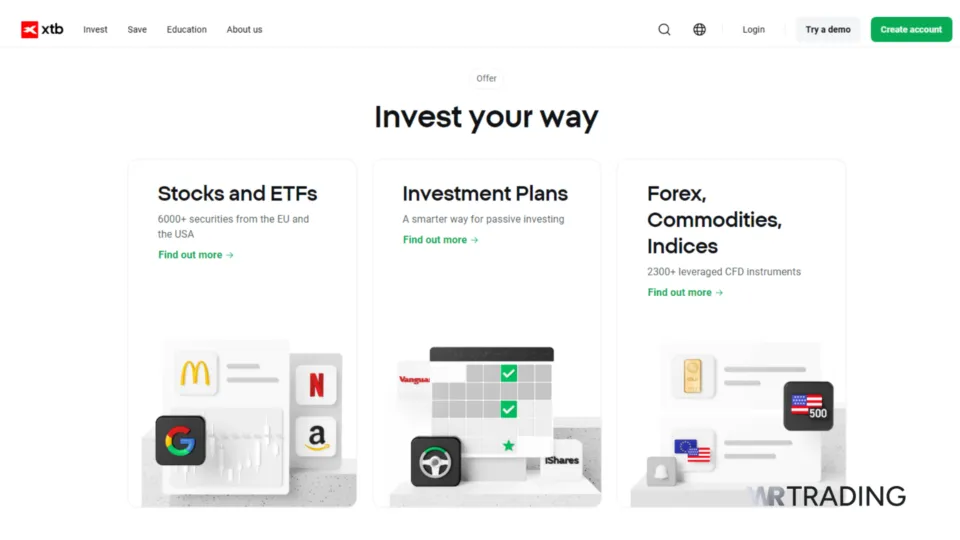
We checked how many markets and the types of financial products each platform offers. Our review covered spot forex, ETFs, bonds, commodities, indices, and cryptocurrencies, as well as derivatives such as CFDs, futures, listed options, and crypto perpetuals. Platforms that combine broad asset coverage and multiple product types scored higher because you can build positions, hedge, and test strategies in one account.
Trading Tools and Features
Advanced trading tools and features are essential for conducting thorough market analysis and executing trades efficiently. We evaluated the charting tools, technical indicators, real-time data feeds, and other functionalities that each platform provides. Platforms with comprehensive tools were rated more favorably.
Costs and Fees
We looked at the cost structure of each platform, including spreads, commissions, and any additional fees. Transparent and competitive pricing is crucial for traders to maximise their returns. Platforms that offer low-cost trading options without hidden fees were preferred.
Educational Resources
Educational resources are invaluable, especially for beginner traders looking to build their knowledge. We looked at the availability and quality of tutorials, webinars, articles, and other educational materials. Platforms that offer extensive and well-organised educational content were highly rated.
If you require educational material, consider signing up for WR Trading, a course that helps traders learn new strategies and become better at spotting profitable opportunities. You gain access to an exclusive community of traders and several webinars for a month.
Customer Support
Reliable customer support is essential for addressing any issues that traders might encounter. We tested the responsiveness and helpfulness of each platform’s support team, considering various contact methods such as live chat, email, and phone support. Platforms with prompt and effective customer service scored higher in our tests.
Security and Regulation
Security and regulatory compliance are essential in ensuring a safe trading environment. We verified the regulatory status of each platform and reviewed their security measures, including data encryption and protection protocols. Platforms with strong regulatory oversight and good security practices were rated more favourably.
What Are the Trading Fees on Trading Platforms?
The trading fees on trading platforms are the real cost of placing and holding trades, and understanding each one helps you choose a platform that fits your strategy and account size. Here are the different fees you will encounter when trading:
- Spread: The difference between the buy price and the sell price shown on the screen. You pay this instantly when the order opens because you buy slightly higher than you can sell at that moment. It is quoted in pips or price points, depending on the asset you are trading.
- Commission: A fixed charge added to your order by the broker. It’s shown per lot, per contract, or as a small percentage of the trade value. Some accounts have no commission and fold costs into the spread instead.
- Overnight financing (swap/funding): A daily charge or credit applied if you keep a leveraged position past the platform’s cut-off time. The rate depends on the instrument and the direction of your trade. It appears on your statement as a separate line for each day held.
- Maker/taker fees for crypto: Percentage fees applied to crypto spot and derivatives trades. “Maker” orders add liquidity to the book and can be charged less; “taker” orders remove liquidity and are charged more. Exchanges display both rates and a volume ladder that reduces fees as monthly trading volume increases.
- Options fees: Listed options have a broker commission quoted per contract plus exchange and clearing fees. Assignment and exercise can carry their own small charges. All of these appear on the order ticket or fee schedule.
- Futures fees: Exchange-traded futures include a broker commission per contract and separate exchange and clearing fees. These are charged when you open and when you close. Market data for certain futures exchanges can also carry a monthly fee.
- CFD financing and borrow costs: In addition to spread or commission, CFDs can have overnight financing similar to swaps. Short positions on share CFDs may include a borrowing fee set by the availability of the underlying shares. Platforms list these rates instrument by instrument.
- Currency conversion fees: Applied when the instrument’s currency differs from your account currency. The broker converts profit, loss, and cash movements at its conversion rate and may add a small percentage as a fee. Statements show the rate used and the converted amount.
- Deposit and withdrawal fees: Costs tied to the payment method, such as cards, e-wallets, or bank transfers. The platform shows the amount before you confirm the transaction. Some methods are free, others carry a flat fee or a small percentage.
- Inactivity fees: A periodic charge after a set time with no trading or logins, defined in the broker’s terms. It stops as soon as you resume activity. If you plan to stop using an account, review the policy and close or withdraw it to avoid the associated fee.
Fees Comparison Table
Here is the fee comparison table of our top trading platforms. Most platforms incorporate trading costs into the spread, rather than charging a separate commission, and spreads vary by asset, account type, and live market conditions.
| Broker | Forex | CFDs | Stock | Crypto | Options | Futures | Platform Fees | Market Data Fees | Deposit/withdrawal fees |
|---|---|---|---|---|---|---|---|---|---|
| Vantage | from 0.0 pips with $1.5 commission | from $0 commission | / | from $0 commission | / | / | $0 | / | From $0 |
| StarTrader | from 0.0 pips with $3 commission | from 0 pts and $0 commission | / | / | / | / | $0 | / | From $0 |
| XTB | from 0.8 pips with $0 commission | from $0 commission | from 0% commission up to €100k/mo | from 1% fee | / | / | $0 | / | From $0 |
| eToro | from 1 pip with $0 commission | from a 0.15% spread | from 0% commission | 1% fee | from $0 | / | $0 | / | From $0 |
| Interactive Brokers | from 0.1 pips with 0.08 to 0.20 bps commission | from 0 pts and $1 commission | from $0 – $0.003 per share | from 0.12% commission | from $0.15/contract | from $0.25/contract | $0 | from $1.50/mo (US L1 market data) | From $0 |
| AvaFutures | from 0.0 pips with $6 commission | from $0 commission | / | from $0 commission | / | from $0.75 per mini contract | $0 | Free | From $0 |
| Blackbull | from 0.0 pips with $2 commission | from $0 commission | from $0.06/share | from $0 commission | / | / | $0 | Free | From $0 |
| Bitget | / | / | / | from 0.1% trade fee | / | from 0.02% maker / 0.06% taker | $0 | Free | From $0 |
| Moneta Markets | from 0.0 pips with $3 commission | from $0 commission | / | from $0 commission | / | / | $0 | Free | From $0 |
| RoboForex | from 0.0 pips with $2 commission | $4 per $1 million traded | from 0% commission and 0.15% spread | from $0 commission | / | / | $0 | Free | From $0 |
Types of Trading Platforms
Several types of trading platforms exist, each offering unique features and benefits, such as different account opening processes and mobile app availability. Understanding these different types can help you select the one that best suits your trading style and goals.
Web-Based Platforms
Web-based platforms are accessed directly through a web browser without the need for any software installation. These platforms are convenient as they can be used on any device with internet access. They typically offer a range of trading tools and features, though the quality of your internet connection can influence the performance. Web-based platforms are ideal for traders who value flexibility and ease of access.
Desktop Platforms
Desktop platforms are software applications installed on your computer. They generally provide more features and faster execution speeds compared to web-based platforms. These platforms often include advanced charting tools, customisable interfaces, and extensive data analysis capabilities. Desktop platforms are well-suited for professional traders who require high performance and advanced functionalities.
Mobile Platforms
Mobile platforms are designed for trading on the go and are accessed via smartphone or tablet apps. They offer the convenience of monitoring and executing trades from anywhere, at any time. While mobile platforms might have fewer features compared to desktop versions, they are continuously improving in functionality. These platforms are perfect for traders who need to stay connected to the markets at all times.
Proprietary Platforms
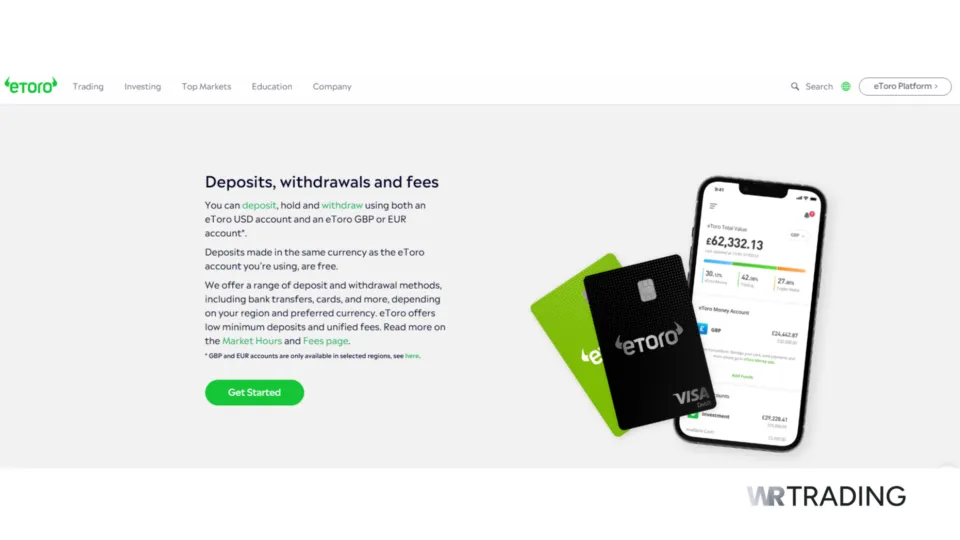
Proprietary platforms are custom-built by brokerage firms to offer a unique trading experience. These platforms can provide exclusive features and tools tailored to the broker’s offerings. They often integrate seamlessly with other services offered by the broker, such as research and customer support. Proprietary platforms can be beneficial for traders who prefer a more personalised trading environment.
Third-Party Platforms
Third-party platforms, such as MetaTrader 4 (MT4), MetaTrader 5 (MT5), and cTrader, are popular among traders for their extensive features and wide acceptance among brokers. These platforms are known for their advanced charting tools, automated trading capabilities, and vast customisation options. Third-party platforms are ideal for traders who seek a familiar and versatile trading environment that can be used across multiple trading brokers.
Copy Trading Platforms
Copy trading platforms let you follow another trader’s positions in real-time while keeping control over risk, allocation, and when to stop. You choose a provider, set your max risk per trade and daily loss limit, and the system opens and closes positions in your account according to the provider’s signals. Fees can include a performance share or a subscription, so check the cost page before you start.
On our list, copy trading is available with Vantage, StarTrader, eToro, AvaFutures, BlackBull, Bitget, Moneta Markets, and RoboForex. All of these options we have tested ourselves, and our conclusion is that eToro is the more beginner-friendly option that is easy to manage.
How To Open An Account With A Trading Platform
Opening a trading account is a step-by-step process that can be completed in one sitting if you know what to expect. You can follow our quick guide to understand the process, such as comparing brokers, confirming regulation, creating your profile, and completing KYC by submitting your documents. After that, you can practice on a demo, explore copy trading, or place your first live trade.
Compare platforms and verify regulation
Start by researching brokers that match your markets, fees, and platform needs. Check the regulator shown on each website and confirm that client money is kept in segregated accounts. Read the fee page so you know the spread, any commission, overnight financing, and payment charges before you apply.
Create your account and complete KYC
Once you’ve found a suitable broker, click “Open account” and complete the form with your legal name, address, phone, and email. Choose your base currency and the platform you want to use. Turn on two-factor authentication so your login is protected from the start. Next, you will upload your documents for KYC so the broker can verify your identity and address. Here are the accepted documents the broker will ask for:
Identity
- Passport
- National ID card
- Driver’s license
Proof of address
- Bank or credit card statement
- Utility bill
- Government or tax letter
- Lease or mortgage statement
You may also be asked for:
- Selfie or short live video for a liveness check
- Tax identification number
- Proof of the funding method
- Source of funds, such as a recent payslip or bank statement
Fund account
After verification is complete, you will have access to your account and trading. Pick a payment method that is compatible with the broker. Cards and wallets are fast for small deposits, while bank transfers suit larger amounts and most withdrawals. Check minimums, processing times, and any currency conversion fees. Alternatively, you can open a demo account to test the broker before committing funds.
Paper trade on a demo
Open the demo trading account and test your workflow from the watchlist to trading. Practice entries, stop losses, and position size until execution feels smooth and consistent. Keep brief notes so you can refine your strategy before going live.
Try copy trading if you want a guided start
Copy trading is another great way to start with a broker since you can follow proven traders and take a more hands-off approach. Review strategy stats such as equity curve, drawdown, and average trade length. Allocate a small amount and set daily loss limits. Stop copying the moment performance moves outside your rules.
Place first trade
Start on a market you practiced with the demo account, then open the order ticket and choose the order type you need, such as market for instant entry or limit for a planned price. Check the live spread and any commission shown on the ticket so you know the true entry cost.
Set your position size in lots, units, or contracts using a fixed risk amount for the trade. Place your stop-loss based on technical analysis, for example, beyond a recent swing or a key level, and confirm the stop distance in points or pips.
Add a take profit that matches your plan, or leave it blank if you will trail the stop manually. Review the margin impact and available balance to make sure the trade will not trigger a margin call. Double-check the trade to ensure it’s correct, then click Buy or Sell.
Can You Try Trading Platforms For Free?
Yes, you can try trading platforms for free with a paper trading account. A demo account is a risk-free environment that uses virtual money while displaying real-time market prices. You will also see it referred to as paper trading or a virtual account, which mirrors the live platform, allowing you to learn order entry, charts, alerts, and basic risk controls without risking your actual funds.
Open the broker’s website or app and choose Create Demo or Try Free. Fill in your name and email, pick the platform you want, and select the starting balance so position sizing makes sense for you. Log in and practice the full workflow from building a watchlist to placing market and limit orders with stop-loss and take-profit. Review fills and statements to ensure you understand spreads, commission displays, and overnight financing lines before switching to live.
Use a demo account to test one setup, record results, and adjust the rules until execution feels smooth. When you are ready, open a live account, complete KYC, fund the wallet, and place a small first trade while keeping the same rules you proved on demo.
Be Aware of Fake Trading Platform Scams
During our testing and review process, we came across several warning signs that can help you avoid fake trading platforms. Here are some crucial points to keep in mind:
- Unrealistic Promises: One major red flag is when a platform promises guaranteed high returns with little to no risk. No legitimate trading platform can assure consistent profits without any potential losses. Always be sceptical of platforms making such claims.
- Lack of Regulation: We constantly check the regulatory status of trading platforms. Legitimate platforms are regulated by recognised financial authorities like the SEC in the US, the FCA in the UK, or ASIC in Australia. Ensure the platform you’re considering is properly regulated to avoid scams.
- Poor Website Quality: Fake platforms often have poorly designed websites filled with spelling and grammatical errors. Professional platforms invest in quality website design and content. If a website looks unprofessional, it might be a scam.
- Unverified User Reviews: Beware of platforms with overwhelmingly positive reviews that lack critical feedback. Scammers often use fake reviews to build credibility. Look for reviews from multiple independent sources and verify their authenticity.
- Pressure Tactics: Legitimate trading platforms provide information and allow you to make decisions at your own pace. If a platform uses high-pressure sales tactics to get you to invest quickly, it’s likely a scam. Take your time to research and make informed choices.
- Unclear Withdrawal Process: A significant red flag is when a platform makes it difficult to withdraw your funds. Legitimate platforms have transparent, straightforward withdrawal processes. If you encounter delays, excessive fees, or obstacles when trying to withdraw your money, steer clear.
- Contact Information: Reliable trading platforms provide clear and accessible contact information, including customer support details. If a platform lacks contact information or provides only vague details, it’s best to avoid it.
How to Check the Security of a Trading Platform
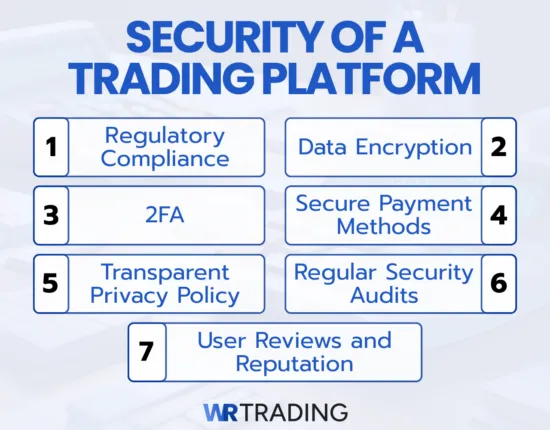
Ensuring the security of a trading platform is crucial for protecting your investments and personal information. Here are some steps and considerations to help you verify the security of a trading platform:
Regulatory Compliance
Always start by checking if recognised financial authorities regulate the platform. Regulated platforms adhere to strict standards and practices designed to protect traders. Look for regulations from bodies such as the SEC (Securities and Exchange Commission) in the US, FCA (Financial Conduct Authority) in the UK, or ASIC (Australian Securities and Investments Commission) in Australia.
Data Encryption
A secure trading platform uses advanced encryption technology to protect user data. Look for platforms that use SSL (Secure Socket Layer) encryption, indicated by a padlock symbol in the browser’s address bar. SSL encryption ensures that all data transmitted between your browser and the platform’s servers is secure.
Two-Factor Authentication (2FA)
Two-factor authentication adds an extra layer of security by requiring not just a password but a second form of verification, such as a code sent to your phone. Ensure the platform supports 2FA, as it significantly reduces the risk of unauthorised access to your account.
Secure Payment Methods
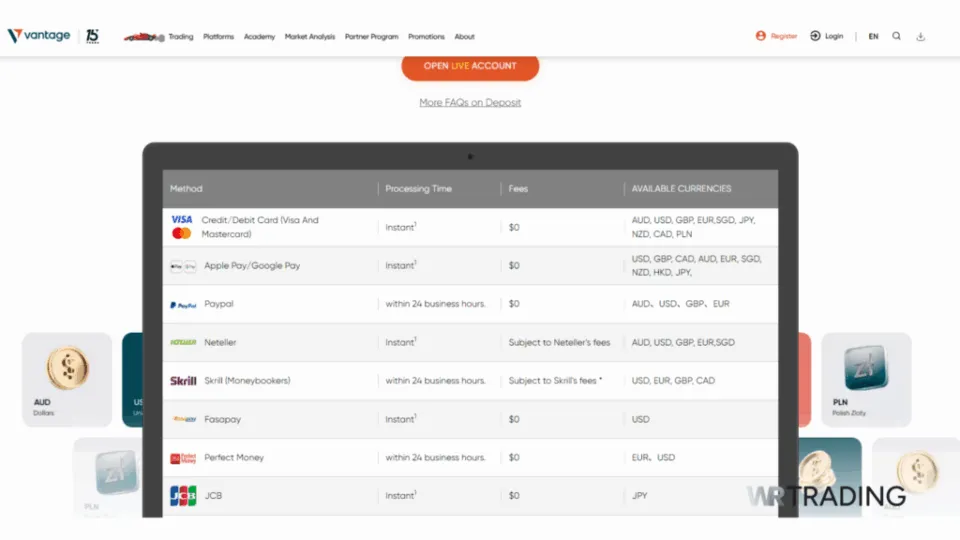
Verify that the trading platform offers secure and reputable payment methods for deposits and withdrawals. Trusted payment methods include bank transfers, credit cards, and established e-wallets like PayPal or Skrill. Avoid platforms that only offer obscure or unverified payment methods.
Transparent Privacy Policy
A legitimate trading platform will have a clear and transparent privacy policy that explains how your data is collected, used, and protected. Please review the privacy policy to ensure that the platform is committed to safeguarding your personal information and does not share it with third parties without your consent.
Regular Security Audits
Check if the platform undergoes regular security audits conducted by independent third-party firms. These audits assess the platform’s security measures and identify potential vulnerabilities. Platforms that publish their audit results demonstrate a commitment to maintaining high-security standards.
User Reviews and Reputation
Research user reviews and the platform’s reputation within the trading community. Look for feedback on security issues and how the platform handles them. A platform with a history of security breaches or poor handling of security concerns should be avoided.
Assets You Can Trade on Trading Platforms
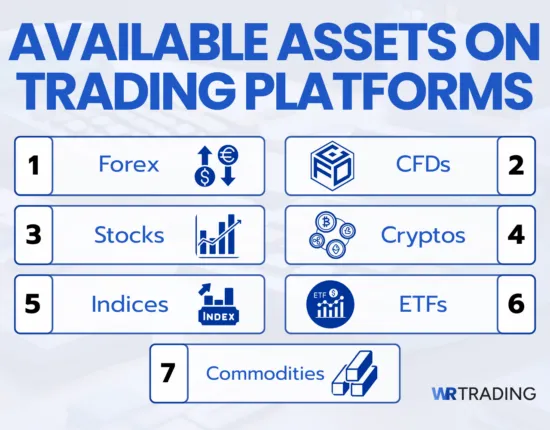
Trading platforms offer multiple assets to trade, giving you plenty of opportunities to diversify and maximise your investment potential. Here’s a rundown of the primary asset classes you can trade:
- Forex: Forex, or foreign exchange, is one of the most popular markets for trading. It involves buying and selling currency pairs, such as EUR/USD or GBP/JPY. Forex trading is known for its high liquidity and the ability to trade 24 hours a day, seven days a week. It’s suitable for traders looking to capitalise on short-term price movements.
- CFDs: Contracts for Difference (CFDs) allow you to speculate on the price movements of various assets without actually owning them. You can trade CFDs on forex, stocks, commodities, and indices. This type of trading is attractive due to its leverage options, which can amplify both gains and losses. It’s essential to understand the risks involved before trading CFDs.
- Cryptocurrencies: Cryptocurrency trading has gained significant popularity in recent years. Platforms offer trading on major cryptocurrencies like Bitcoin, Ethereum, and Litecoin, as well as a variety of altcoins. Cryptocurrency markets are highly volatile, providing opportunities for significant profits which come with substantial risks.
- Stocks: Many trading platforms provide access to global stock markets, allowing you to buy and sell shares of publicly traded companies. Stock trading is suitable for those looking to invest in the growth and performance of specific companies. It’s a good way to build a diversified investment portfolio.
- ETFs: Exchange-Traded Funds (ETFs) are investment funds traded on stock exchanges, much like stocks. ETFs hold a diversified portfolio of assets, such as stocks, bonds, or commodities, and provide a way to invest in a broad market segment. They are popular for their diversification benefits and relatively low costs.
- Commodities: Commodities trading involves buying and selling physical goods like gold, silver, oil, and agricultural products. Geopolitical events, supply and demand dynamics, and economic indicators can influence these markets. Trading commodities can be a way to hedge against inflation and diversify an investment portfolio.
- Indices: Indices allow traders to speculate on the performance of a group of stocks representing a particular market or sector, such as the S&P 500 or the FTSE 100. Trading indices provide exposure to the overall market movement without having to buy individual stocks. This can be a valuable way to diversify and hedge against market volatility.
Conclusion
To summarise, we’ve explored the best trading platforms available and their top features. The best platforms, such as Vantage, eToro, and StarTrader, offer a blend of user-friendly interfaces, advanced trading tools, and a wide range of assets to trade. Each platform has its unique strengths, so it’s essential to choose one that aligns with your trading style and goals.
Quick Overview of the Top 10 Trading Platforms:
- Vantage: Superior for high-leverage options.
- StarTrader: Best for High Leverage 1:1000
- XTB: Best for advanced charting tools.
- eToro: Ideal for social trading.
- Interactive Brokers: Best for US and Multi-Asset Broker
- AvaFutures: Best for Futures
- BlackBull Markets: Perfect for high-frequency trading.
- Bitget: Best trading platform for Crypto
- Moneta Markets: Great for a user-friendly interface.
- RoboForex: Known for competitive spreads.
Frequently Asked Questions on Trading Platforms
How Do I Choose the Best Trading Platform?
To choose the best trading platform, consider factors like regulatory compliance, user interface, available trading tools, and the range of assets offered. Read reviews and test the platform with a demo account if available. Ensure it meets your trading needs and style.
Are Trading Platforms Safe?
Yes, most reputable trading platforms are safe, especially those regulated by recognised financial authorities. They use advanced encryption and security protocols to protect user data. Always verify the platform’s regulatory status and security measures before investing.
What Assets Can I Trade on These Platforms?
You can trade a variety of assets, including forex, stocks, cryptocurrencies, commodities, and ETFs. The range of available assets depends on the specific trading platform. Check the platform’s asset list to ensure it offers what you want to trade.
Do Trading Platforms Charge Fees?
Yes, trading platforms typically charge fees such as spreads, commissions, and withdrawal fees. Some platforms may charge inactivity fees or fees for using premium tools. Always review the fee structure before committing to a platform.
What Is Social Trading?
Social trading allows users to follow and copy the trades of experienced investors on the platform. Platforms like eToro are known for their robust social trading features. This can be an excellent way for beginners to learn and potentially profit from more experienced traders’ strategies.