Crypto trading bots are software programs designed to place orders in the cryptocurrency market without needing constant human supervision. They can analyze price movements, evaluate market indicators, and execute trades on a user’s behalf. Still, not all bots are made equal, so we’ll provide you with our list of the top 10 crypto bots at WR Trading.
Top 10 Crypto Trading Bots And Their Key Benefits:
- Bitget – Best Crypto Bots overall: Built-in customizable automation tools
- 3Commas – Advanced custom bots
- Pionex – Free built-in bots
- KuCoin Bots – Copy trading feature for top trading bots
- CryptoHopper – Offers AI signal bots
- Bitsgap – Great Grid & arbitrage bots
- TradeSanta – Quick setup for bots
- Gunbot – One-time payment to use their services
- Altrady – Provides smart trade automation
- WunderTrading – Allows TradingView alerts for bots
Top List of the Best Crypto Trading Bots:
Many developers have built tools to automate Bitcoin trading, but few can handle the full range of market conditions. Some bots excel at specific strategies, such as grid trading in sideways markets, while others are built to manage multiple strategies in one place.
We’ll provide detailed insights into ten top crypto bots for Bitcoin that have earned a great reputation among active traders. Although each has its own style, they all share a commitment to simplifying the process of buying and selling digital assets automatically.
1. Bitget
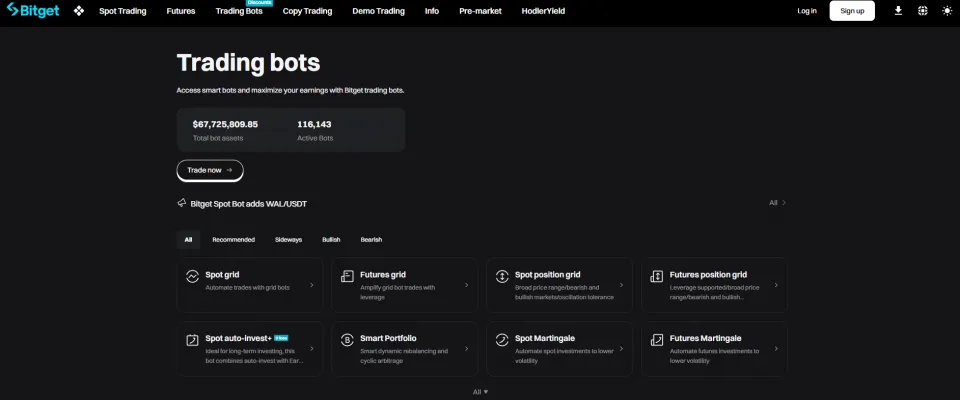
Bitget is our first option at WR Trading that includes a built-in system for automated trading, allowing users to try out different bot strategies without leaving the platform. You can select from simple preset methods or go further by fine-tuning parameters like order size, stop-loss levels, and profit targets.
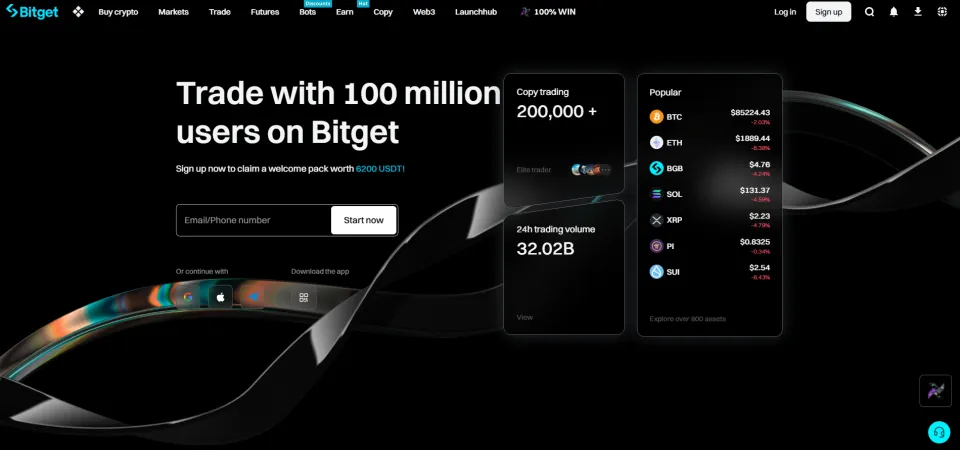
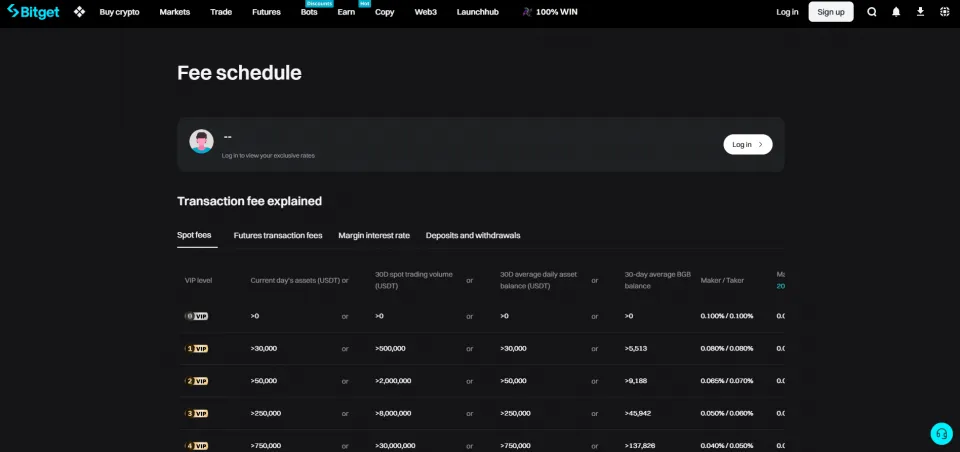
Also, because these automation tools are native to the exchange, there is less need to fiddle with external APIs, which can be helpful for beginners who want a straightforward setup. Bitget charges standard trading fees based on a tiered model starting at 0.1%, though you can reduce costs by using limit orders or holding the platform’s native token.
| Attribute | Details |
|---|---|
| Fees | Spot: 0.1% per trade (0.08% with BGB token), Futures: 0.02% Maker / 0.06% Taker |
| Supported Bot Types | Spot Grid, Futures Grid, Spot Martingale, Spot Position Grid, Futures Position Grid, Auto-Invest, CTA Bots (Indicator Bots), AI Quant, Signal Bots |
| Key Feature | Built-in free bots with AI and technical indicator-based trading. No API setup required. Integrated copy trading marketplace. |
| Supported Exchanges | Bitget only |
| Trial Available? | No extra fees for bots, free for Bitget users |
2. 3Commas
3Commas is well-known for its feature-rich dashboard, which connects seamlessly to multiple exchanges through API keys, making it our 2nd choice at WR Trading. The platform’s bot offerings include simple grid trading, advanced trailing strategies, and the option to build custom bots that follow technical signals. You can also use TradingView alerts to trigger actions, giving you a high level of control over how your bot behaves. Pricing comes in tiered monthly plans, with higher tiers unlocking more bots, advanced analytics, and other perks.
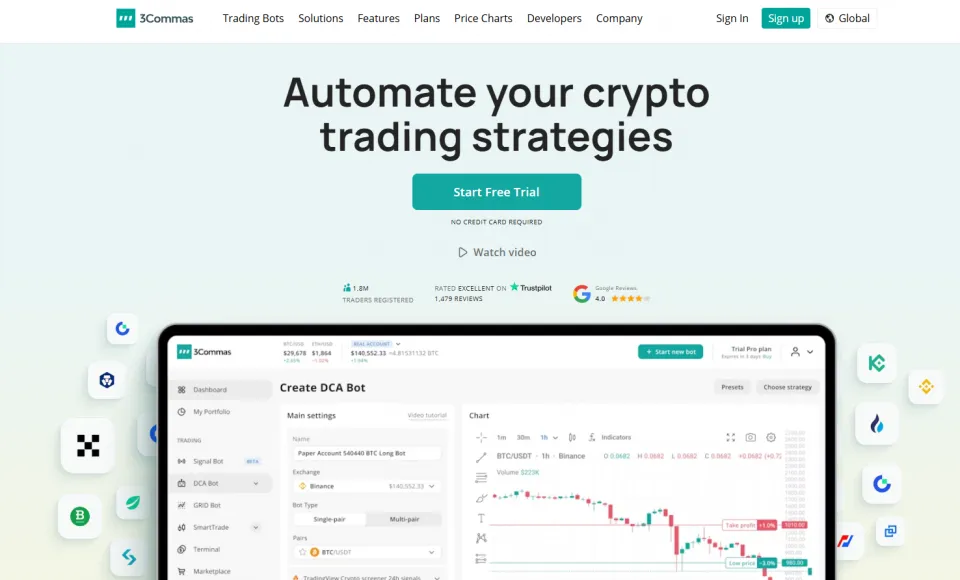
A major draw is the accessible interface that helps traders set up new strategies without writing code. Beginners can pick from templates that focus on common strategies, while more experienced users have the freedom to tweak small details. The ability to monitor all positions in one place can save time for people who hold multiple exchange accounts. Also, you can try out their free account to see how the bots work and if it is the right service for you.
| Attribute | Details |
|---|---|
| Fees | Pro Plan: $37/month, Expert Plan: $59/month (discounts on annual payments) |
| Supported Bot Types | Grid Bots, DCA Bots, Options Bots, TradingView Signal Bots, Smart Trade Bots |
| Key Feature | Multi-exchange support with advanced trading strategies and SmartTrade for customized trading setups. |
| Supported Exchanges | Binance, KuCoin, Coinbase, Kraken, Bybit, and more (14+ exchanges) |
| Trial Available? | Free plan available with limited bot access |
3. Pionex
Pionex takes 3rd place on our list at WR Trading due to its specialization in grid-based trading bots while also offering a few additional strategies like DCA (Dollar-Cost Averaging). Its grid system spreads buy and sell orders over price levels to benefit from market swings, which can be appealing if you believe Bitcoin will move within a defined range. The platform’s fees are relatively low, with a flat 0.05% rate per transaction, making it competitive for traders who rely on frequent orders.

Many users enjoy Pionex integrating these bots directly into its exchange, removing the need for external tools or complex configuration. You can set up a bot quickly by picking your price boundaries and the amount of capital you want to assign. However, it’s worth noting that grid trading might not thrive in strongly trending markets. If the price soars well above or crashes below your grid levels, the strategy can underperform until adjusted.
| Attribute | Details |
|---|---|
| Fees | 0.05% flat per trade (no subscription fees) |
| Supported Bot Types | Grid Bot, Infinity Grid, DCA, Leveraged Grid, Rebalancing Bot, Trailing TP Bot, Spot-Futures Arbitrage Bot |
| Key Feature | First exchange with free built-in bots, AI grid settings, no need for API keys. |
| Supported Exchanges | Pionex only |
| Trial Available? | Free to use for all users |
4. KuCoin Bots
KuCoin offers a few in-house trading bots tied to your KuCoin account, so you do not have to juggle extra software or connect external APIs. These bots include grid trading, Smart Rebalance, and a DCA approach that spreads out purchases over time. Setting up a bot can be done through simple menus, and each tool provides an overview of how it will handle trades.

One perk is the 992 coins listed, giving you the chance to automate strategies for many different assets besides Bitcoin. However, you can copy successful Bitcoin bots created by other users, which display their PnL, making it easier to pick the most profitable option. KuCoin bots also let you run multiple strategies at once, which can diversify risk if used carefully. KuCoin’s standard fee structure applies, but it can be reduced if you hold the platform’s KCS token.
| Attribute | Details |
|---|---|
| Fees | Spot: 0.1% per trade, Futures: 0.02% Maker / 0.06% Taker |
| Supported Bot Types | Spot Grid, Futures Grid, DCA, Smart Rebalance, Infinity Grid, AI Bots, Dual Investment Bots |
| Key Feature | Integrated copy trading for bots, built-in AI for bot strategy optimization. |
| Supported Exchanges | KuCoin only |
| Trial Available? | Free for all users |
5. CryptoHopper
CryptoHopper claims to have the “World’s most customizable crypto trading bot” with AI-driven signals for better entry and exit points. You can connect your exchanges with API keys, pick from prebuilt templates, or subscribe to external signal providers through the marketplace. Pricing is based on monthly plans, which offer different limits on positions, bots, and advanced features like AI strategies.
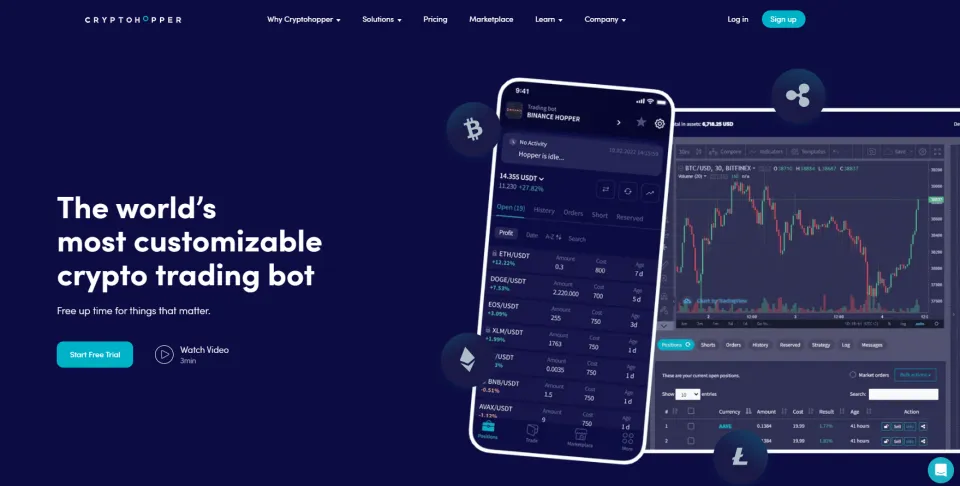
One of the standout features is the educational material and the so-called “Hopper Academy,” where newcomers can learn how to tune a bot for various market conditions. There is also a backtesting function that uses historical data to test your ideas. Whether you use AI signals or prefer your own indicators, CryptoHopper is a fantastic platform for those new to bot trading. It has a free plan that allows 20 open positions with the option to upgrade to a paid plan with more bot types and features.
| Attribute | Details |
|---|---|
| Fees | Explorer Plan: $29/month, Adventure Plan: $69/month, Hero Plan: $129/month |
| Supported Bot Types | Grid Bots, DCA Bots, AI Bots, Market Arbitrage Bots, Exchange Arbitrage Bots, TradingView Signal Bots |
| Key Feature | Customizable trading strategies with AI-driven optimization and social trading marketplace. |
| Supported Exchanges | Binance, Kraken, Coinbase, Bitfinex, OKX, and more. |
| Trial Available? | Free plan available |
6. Bitsgap
Bitsgap is a crypto platform that connects across numerous exchanges, offering portfolio tracking, smart orders, and grid bots in a single interface. The grid bot system automatically arranges buy and sell orders at different intervals, taking advantage of market moves in both directions. There is also an arbitrage feature, which tries to exploit price differences between exchanges, but success depends on liquidity and the speed of your transfers.
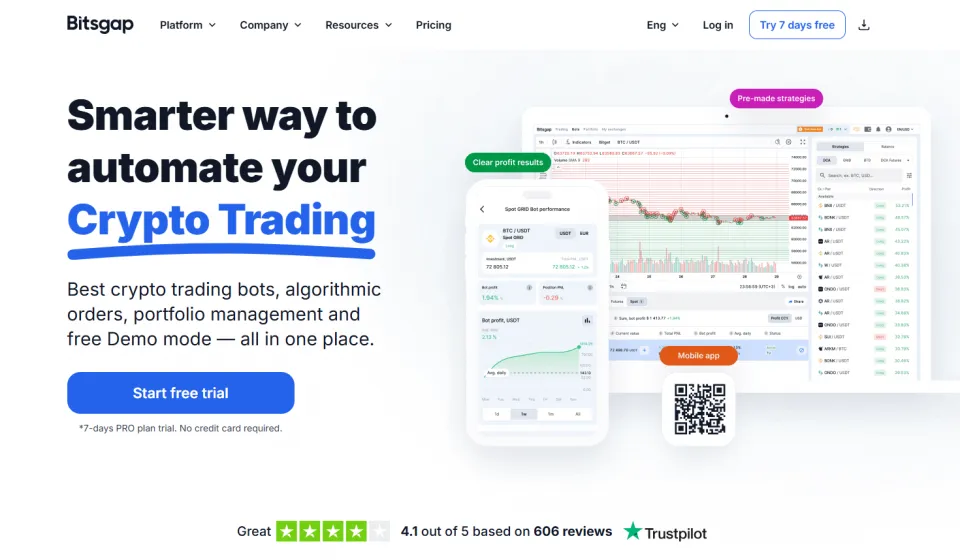
Moreover, because Bitsgap acts like a hub, you’ll enter your API keys for whichever exchanges you plan to use. This can be convenient for people who already have accounts on multiple platforms and want a single dashboard to manage them. Also, there is an AI smart assistant feature that will create a well-balanced bot specifically for your portfolio.
| Attribute | Details |
|---|---|
| Fees | Basic Plan: $26/month, Advanced: $62/month, Pro: $135/month |
| Supported Bot Types | Spot Grid, Futures Grid (Combo Bot), DCA, Buy-the-Dip (BTD) Bot, Arbitrage Bots |
| Key Feature | AI-powered strategy recommendations and advanced trailing grid functionality. |
| Supported Exchanges | 25+ exchanges including Binance, Coinbase, Kraken, OKX |
| Trial Available? | 7-day free trial of Pro plan |
7. TradeSanta
TradeSanta offers a straightforward interface that allows new traders to set up automated strategies in a few clicks. Its core bots cover basic scenarios like grid trading and DCA, along with straightforward long or short tactics. Focusing on simplicity, the platform makes it easier for people who do not have coding expertise to try out automated crypto trading and use their own parameters. There is also an option to integrate with TradingView signals if you want more advanced triggers.

The higher tier subscription plans come with more bots and advanced features. This approach fits those who plan to manage multiple trading pairs or experiment with varied strategies. For the best results, remember to start with smaller trades and see how the bot behaves before scaling up your investment.
| Attribute | Details |
|---|---|
| Fees | Basic: $25/month, Advanced: $45/month, Maximum: $90/month |
| Supported Bot Types | Grid Bots, DCA Bots, Long Bots, Short Bots, TradingView Signal Bots |
| Key Feature | Fast and easy bot setup with pre-configured templates and trailing take profit. |
| Supported Exchanges | Binance, Bybit, Huobi, OKX, HitBTC, and more |
| Trial Available? | 3-day free trial of the Maximum plan |
8. Gunbot
Gunbot is a software package you can run on your own computer or server, giving you a high level of control over configuration and security. It supports many exchanges and comes with pre-coded strategies like Bollinger Bands, step grid, and emotionless trading. One of Gunbot’s selling points is the one-time purchase model starting from $99, with different license tiers granting access to more features. This is great for traders who do not want recurring subscription costs and plan to use trading bots for a long time.
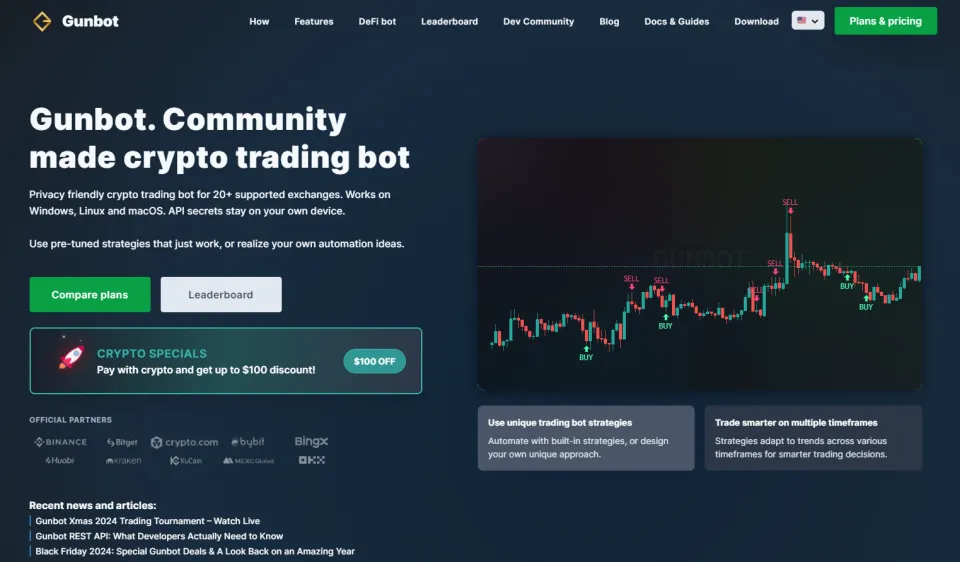
Setting it up requires downloading and installing the software, then linking it to your exchange via API. Custom scripts can be added if you have the technical background, letting you modify strategies to suit your own market view. Though Gunbot has a dedicated community forum, it can still feel more complex to a brand-new trader. Running it locally also places more responsibility on you to maintain uptime, security, and stable internet connections.
| Attribute | Details |
|---|---|
| Fees | One-time fee – Standard: $199), Pro: $299, Ultimate: $499. |
| Supported Bot Types | Grid Bot, DCA, Bollinger Bands Bot, Step Gain, MACD, ADX, Trend-following Bots |
| Key Feature | Fully self-hosted trading bot with advanced scripting and automation. |
| Supported Exchanges | Over 30 supported exchanges including Binance, Kraken, and KuCoin. |
| Trial Available? | No free trial, one-time purchase or monthly subscription. |
9. Altrady
Altrady is an automated crypto trading platform that merges charting, portfolio tracking, and automation tools in one place. It includes a bot feature known as the “Smart Trading” interface, which helps you plan entries and exits automatically using signals or grid bots. You can structure multi-level take-profit targets and stop-loss points to adapt to shifting market trends. Altrady charges a monthly subscription, with higher tiers unlocking extras like advanced scanning tools and real-time data feeds.
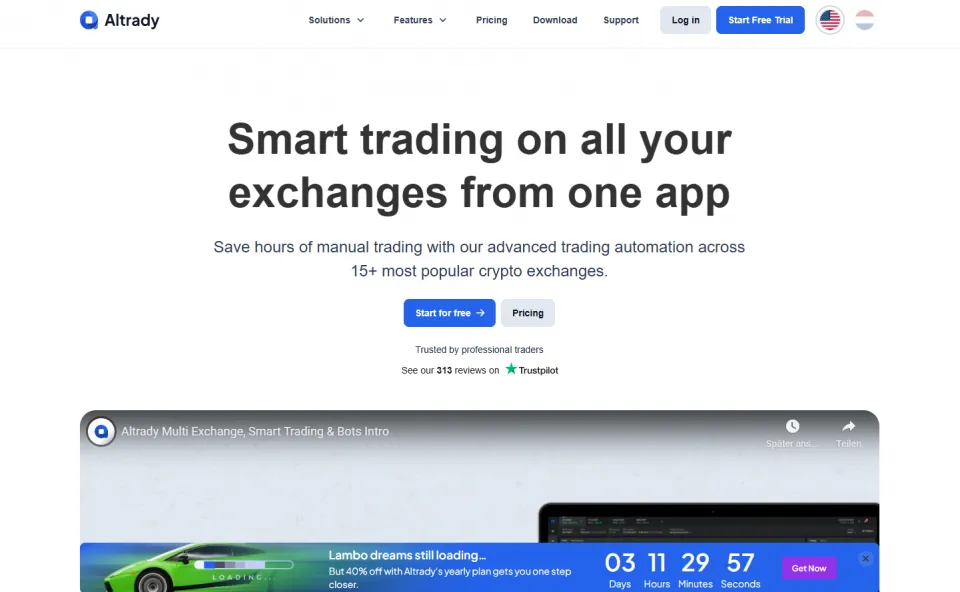
Altrady’s design makes it easier to implement your own parameters. You can chart out a plan, then let the bot execute once certain conditions arise, minimizing the need to watch the screen all day. The platform supports multiple exchanges, and the user interface is praised for its clear layout. All Altrady plans include smart trading, spot trading, futures trading, chart backtesting, and live chat support.
| Attribute | Details |
|---|---|
| Fees | Basic: $30/month, Essential: $60/month, Premium: $100/month |
| Supported Bot Types | Grid Bots, Signal Bots, Smart Trade Bots |
| Key Feature | Advanced portfolio tracking, trading terminal with integrated scanners. |
| Supported Exchanges | Binance, Huobi, Kraken, and more |
| Trial Available? | Free trial available |
10. WunderTrading
WunderTrading focuses on social trading, copy-trading, and automated scripts, letting you set up systems or follow strategies created by others. The platform makes it straightforward to connect via API to top exchanges and run signals around the clock. Subscriptions follow a monthly billing structure, and you pick a plan based on how many trades or signals you wish to manage simultaneously.
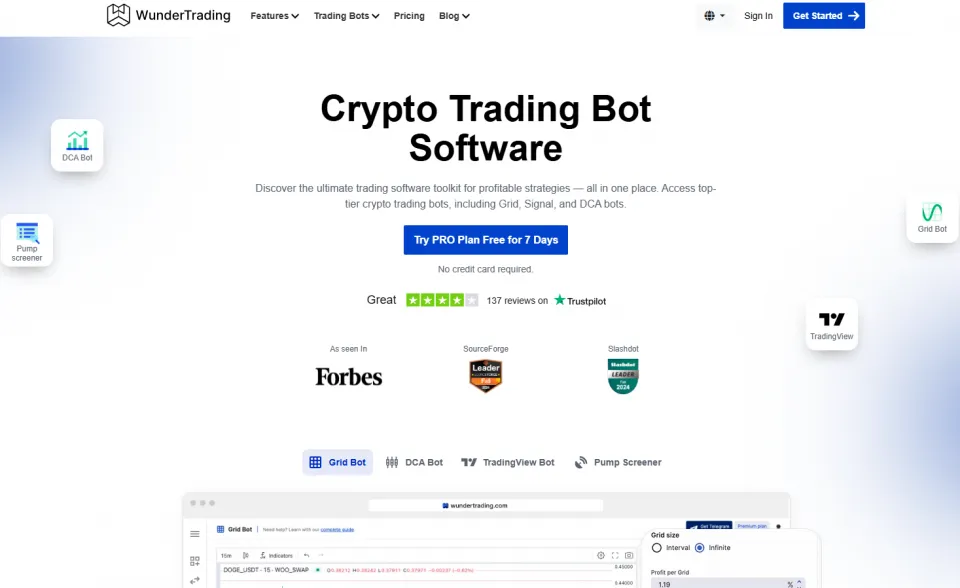
One appealing part of the service is the ability to use TradingView alerts directly in WunderTrading, giving you the chance to build custom triggers based on specific technical indicators. This lets you transform your favorite TradingView script into a functioning bot with minimal hassle.
| Attribute | Details |
|---|---|
| Fees | Starter: $4.95/month, Basic: $19.95/month, Pro: $39.95/month, Premium: $89.95/month |
| Supported Bot Types | Grid Bots, DCA Bots, TradingView Signal Bots, Copy Trading Bots, Futures Arbitrage Bots |
| Key Feature | Strong copy-trading and TradingView integration, multiple API accounts supported. |
| Supported Exchanges | Binance, FTX, Kraken, OKX, and more |
| Trial Available? | 7-day trial of the pro plan |
How to Automate Crypto Trading and Set Up a Crypto Bot:
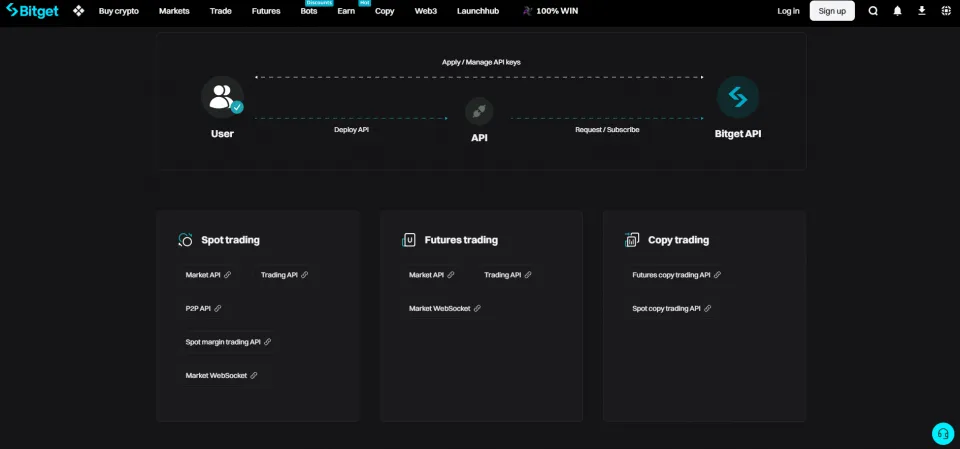
Automating crypto trading starts by choosing an exchange or platform and a bot that are compatible with each other. In most cases, you create API keys on the exchange, then insert them into the bot’s settings. These keys allow the bot to execute trades on your behalf without sharing your login credentials. One of the easiest ways to begin is to pick an exchange like Bitget, which has its own built-in automated trading tools or straightforward steps for connecting an external bot. Here is a simplified example of how you might set up a bot on Bitget:
- Register or Log In to Bitget
- Create API Keys
- Configure the Bot
- Select or Build a Strategy
- Launch the Bot
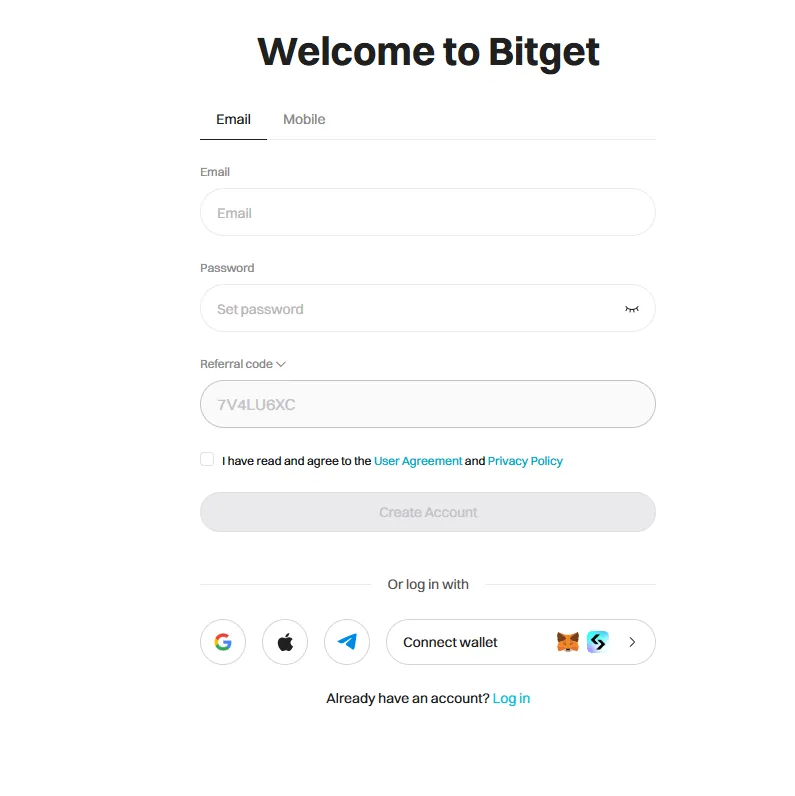
Register or Log In to Bitget
First, sign up for an account if you do not already have one. Completing basic registration only takes a few minutes, and you can optionally go through identity checks if you want higher withdrawal limits. Once inside, browse the dashboard to find the trading bot or API management section.
Create API Keys
Locate the API management page in your account settings. Then generate a new set of keys, including a public key and a secret key, which you will keep confidential. Make sure to enable trading permissions and limit withdrawal rights to add another layer of safety.
Configure the Bot
If Bitget offers a native bot, explore the built-in strategies or pick a template that fits your objectives, such as grid trading or DCA (Dollar-Cost Averaging). If you use an external tool, head to its “Settings” or “Exchange Connection” section and paste your API keys there. Double-check permission scopes and test a small trade to ensure everything is set correctly.
Select or Build a Strategy
Select or Build a Strategy Some people choose from a library of pre-designed strategies, while others craft custom rules. Setting parameters such as maximum position size, stop-loss triggers, and target profit levels can guide the bot’s actions. Test everything on a demo or backtest feature if available, so you can verify that your plan holds up under real market conditions.
Launch the Bot
Next, click the button to activate the trading bot. It will begin working instantly, and you’ll see it place trades based on your parameters. After some time, you may need to configure the bot based on market conditions unless you use a bot that is managed by another entity.
What Are the Pros and Cons of Crypto Trading Bots?
If you want to successfully trade crypto bots, it’s important to be aware of their advantages and disadvantages. We’ve listed them here:
Pros
- Operate 24/7 without the need for human oversight
- Remove emotional biases like fear or greed from trading decisions
- Place trades with faster execution than humans
- Can handle multiple strategies or pairs at once, saving time
- Useful for tasks like rebalancing portfolios or repetitive scalping
- Profitable in sideways markets using grid or DCA methods
- Free up time for research or other activities
- Less likely to miss sudden opportunities during sleep or busy hours
- Automate repetitive tasks, reducing manual workload and potential human errors
- Multiple bot providers offer free trials or demos for risk-free testing
Cons
- Risk of malfunction due to coding errors or API issues
- Might fail in highly volatile conditions if not properly configured
- Complex setups can be confusing for beginners, leading to mistakes
- Subscription or license fees can cut into profits
- A single bad setting can cause a series of losing trades
- Market conditions can change, making a once-successful strategy outdated
- Overdependence can cause traders to neglect learning core market principles themselves
- Scam bots exist, and fake testimonials can lure unsuspecting traders into bad investments
- Reliance on third-party platforms introduces security concerns if not vetted
- Most trading bot services have many restrictions unless you pay for the premium subscriptions
Are Crypto Trading Bots Secure?
Yes, cryptocurrency trading bots are secure and safe to use. Security often depends on two main areas: the reliability of the bot software and how it handles exchange access. Many bots connect through API keys, which can have specific permissions. This means you can limit the bot’s access to trading only and block withdrawals. If a hacker gains access to your bot platform, they might place unauthorized trades, but they usually cannot withdraw your funds if withdrawal rights are off. Taking these steps can reduce the danger of losing assets to malicious actors.
Furthermore, some bots are cloud-based, while others run locally on your computer. Cloud-based solutions rely on the developer’s infrastructure, so you must trust that they keep their servers secure. Locally hosted solutions shift responsibility to you for maintaining computer security and preventing viruses or malware. Both methods have pros and cons. If you decide on a cloud service, research its reputation and data safety history.
If you prefer hosting locally, ensure your computer is protected with strong antivirus tools, a firewall, and prudent browsing habits.
Be Aware of Scam Crypto Robots
Scam trading robots can appear professional but are designed to exploit new or uninformed traders. They may hide behind false promises, presenting their products as guaranteed money-makers. Here are the main factors to watch out for:
- Unrealistic Profit Claims: Many scam operations guarantee high returns in a short span, saying phrases like “double your money in a week.” They may use glowing testimonials to create trust, but actual results often differ drastically from what they advertise. Traders should keep in mind that crypto markets are unpredictable. A genuine service will explain possible outcomes rather than painting everything as a guaranteed success.
- Lack of Verified Performance History: If a robot fails to provide any verifiable track record or third-party audit, proceed carefully. Genuine platforms usually share at least some data on past performance or offer ways to validate it.
- Pressure to Deposit Large Amounts: Some scammers urge you to put in big sums right away, insisting that the window for an “incredible opportunity” is closing fast. This tactic plays on the fear of missing out, pushing you into impulsive decisions. Reputable bots usually do not require large initial deposits, letting you start with smaller amounts to test outcomes. If you feel rushed or threatened with losing special deals, it can be a sign that the offer isn’t genuine.
- No Clearly Defined Bot Types: A legitimate trading bot explains the core logic behind its signals, such as whether it uses grid methods, trend-following, or arbitrage. Scammers often speak in vague terms, offering magical algorithms without specifics. If the entity refuses to show how the bot operates, it is safer to look elsewhere.
- Missing or Suspicious Team Information: Teams behind real services normally present themselves in some verifiable fashion, listing credentials or professional backgrounds. Scammers might use stock photos, fake LinkedIn profiles, or incomplete bios. If you cannot find consistent information on who created the bot, treat it as a warning sign. The more transparent a provider is about its leadership, the better you can gauge trustworthiness.
- Fake Endorsements or Testimonials: It is not hard to fabricate online reviews and testimonials praising a trading bot service. Some scammers go as far as creating entire fake review websites or paying freelancers to post positive feedback. Look for reviews from reputable sources, and see if known figures in the crypto scene confirm any endorsements. A quick reverse image search can expose fake user photos or repeated text used on multiple sites.
- Secrecy About Fees or Hidden Costs: Honest platforms tend to list their fees, whether they are subscription-based, volume-based, or profit-sharing. Scammers might downplay or hide these details, only to apply steep charges later. Pay attention if the provider refuses to clarify what you will pay. Unclear or shifting fee structures can erode your balance fast, even if the robot’s trades do well in theory.
- No Real User Community or Support: A legitimate trading service has forums, social media channels, or chat groups where users can interact, share results, and ask questions. If a platform lacks an engaged community or any sign of real discussion, it could be a red flag. Solid customer support is also essential for resolving technical issues. When support is slow or non-existent, you lose the ability to troubleshoot problems that inevitably arise during live trading.
How We Picked the Best Crypto Trading Robot
At WR Trading, we surveyed a wide range of automated platforms to sort out the most reliable options for crypto trading robots. Several key factors influenced our decisions, including stability, range of strategies, and how the bot handles security. To provide more detail on these choices, we have divided them into multiple categories below.
Reliability and Uptime
An automated Bitcoin bot must function without crashes or interruptions. If the software shuts down during a key price movement, trades can be missed, leading to lost opportunities or increased risk. We tested how platforms handle increased traffic and tried to see if any background maintenance occurs during volatile periods. Moreover, reliability includes how quickly a bot can recover from an outage. Some providers keep backups to reduce downtime.
User Feedback and Reputation
User reviews highlight practical issues that are not visible in marketing materials. From delayed order execution to confusing interfaces, these real-world accounts gave us a more honest view. We dug into forums, social media platforms, and review sites to see how each bot was perceived by its user base.
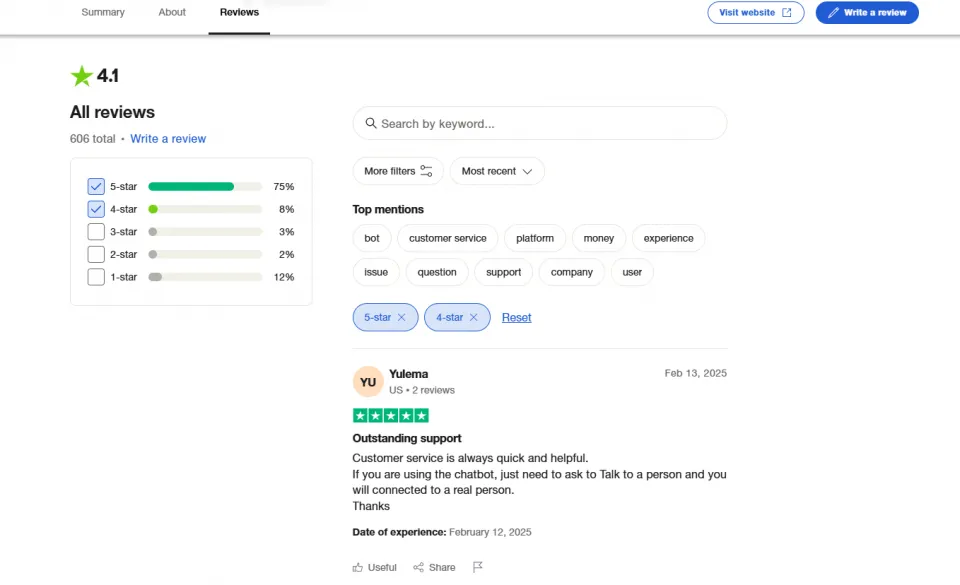
Positive feedback focusing on helpful support, prompt bug fixes, and consistent trade performance indicated a strong product. On the other hand, multiple unresolved complaints served as a warning sign. This part of our research helped narrow down which bots delivered on promises. Only trading robots with a great history made it into our list.
Security Practices
Security covers aspects such as API key handling, data storage, and protection against hacks. We looked for bots that allow permission-based API usage, limiting them to trading actions only. This approach helps to safeguard funds since the bot cannot withdraw assets from the exchange. Encryption of user credentials also stood out. If a provider stores login data or secret keys without proper safeguards, your account could be at risk. We weeded out options that might compromise user safety by prioritizing security as a core aspect.
Exchange Compatibility
Traders often have accounts on multiple exchanges, so a good robot connects seamlessly with the most popular platforms. We checked how many different exchanges each bot supports and whether it supports spot and futures trading. Sometimes, a bot might excel at spot trades but not handle derivatives well, or vice versa.
Versatility in exchange compatibility expands a bot’s usefulness, letting you use your favorite markets without juggling multiple automation tools.
Cost and Fee Structure
Pricing models vary, including monthly subscriptions, yearly licenses, or a portion of profits. We compared these structures to understand how each one could impact overall gains. Some bots might seem affordable at first glance but then tack on extra fees for advanced features. Knowing your trading style helps in choosing a suitable pricing plan. For example, if you have a low-volume approach, paying a fixed subscription might be more cost-effective than a volume-based fee structure, and vice versa.
Ease of Use
Simplicity can be vital, especially for beginners. We gave a closer look at setups that walk users through each step, provide tutorials, or offer visual aids for tasks like setting stop-loss targets. An interface that is cluttered or isn’t straightforward to understand may discourage people who just want a quick start.
Nevertheless, advanced traders may seek an in-depth system that supports scripting or third-party signals. A great platform provides the perfect balance, guiding beginners yet giving experts room to customize.
Strategy Range and Adaptability
The best bots let you pick from or create multiple strategies, such as grid trading, DCA, or momentum-based tactics. This range gives you the freedom to adapt to different market conditions without switching platforms. Some even offer AI features that tweak parameters as the market changes.
On top of variety, adaptability matters. A bot that is locked into one approach might excel for a while but lose effectiveness as trends evolve. Having the option to backtest and modify parameters ensures the bot can keep pace with shifts in volatility or volume.
Customer Support
Even the most reliable bot can run into glitches or user errors. Customer support that responds quickly can be a lifesaver when something goes wrong during a major market move. We factored in live chat options, email response times, and community-driven support, such as Discord or Telegram channels.
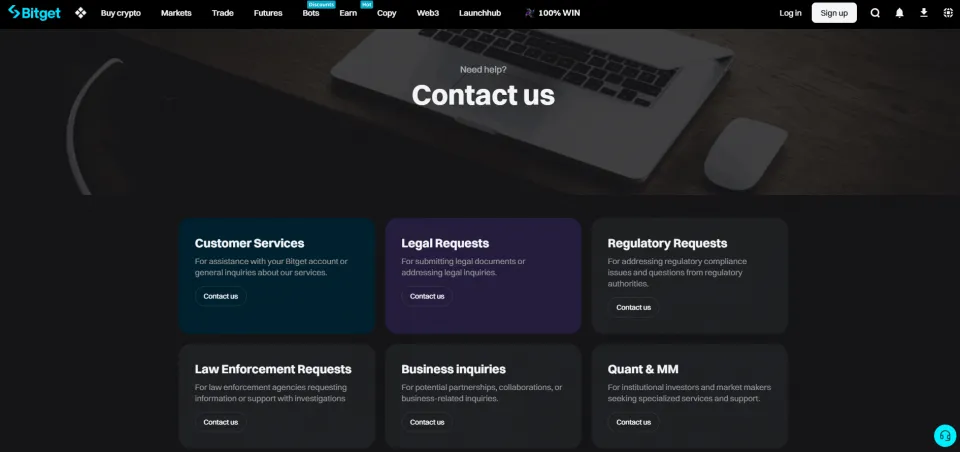
Bots that offer comprehensive FAQs or detailed documentation also rank higher. Knowing you can reach out to real people for assistance, or at least find self-serve troubleshooting info, boosts trust in the platform.
Strategies for Automated Crypto Trading:
Automated crypto trading can follow many different approaches, and the strategy you choose depends on your goals and market outlook. Some people target short-term swings, while others aim for consistent accumulation. Each tactic has its benefits, and a bot can help by carrying out the required actions without human interference. These are three popular strategies that often appear in automated trading plans:
- Trend-Following
- Grid Trading
- Arbitrage
Trend-Following
Trend-following tries to catch extended market shifts in one direction by hopping on board once the market begins rising or falling. The bot might use indicators like moving averages, MACD crossovers, or breakout signals to detect momentum. Once it confirms a trend, the system opens a position and may let gains run until a reversal or stop-loss condition is triggered.
This strategy can thrive in markets with a clear upward or downward direction. However, it can fail when the market is choppy or trades in a narrow band, creating multiple false signals. To address this, some traders add filters to reduce the noise, like higher time frame confirmation. A well-tuned trend-following bot can act quickly when a breakout occurs, often capturing larger moves than a manual trader might.
Grid Trading
Grid trading sets a series of buy and sell orders at regular intervals above and below a central price point. The basic concept is to purchase low and then sell higher on small rebounds, repeatedly profiting from minor market fluctuations. Bots excel at this because manually placing dozens of orders can be tedious, and they can set up multiple positions within milliseconds.
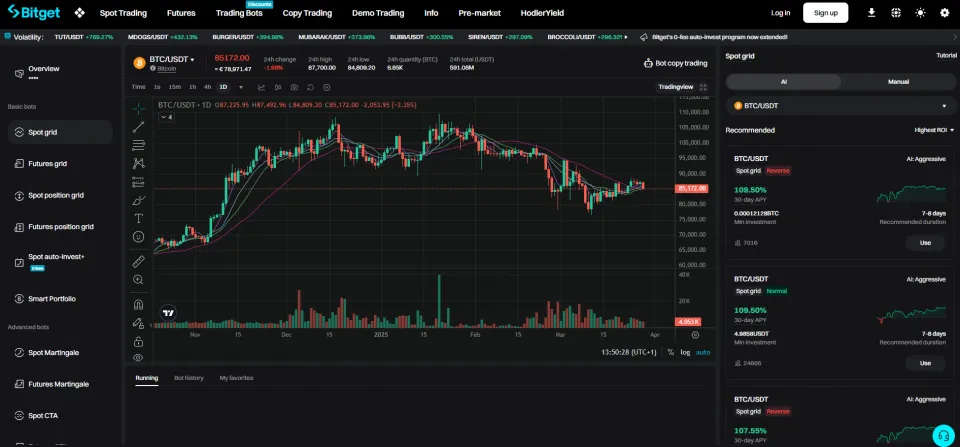
Grid trading can produce steady results when the price bounces back and forth. However, a rapid directional trend might cause many grid levels to be left behind, creating floating losses if the market keeps moving in one direction. Many grid traders adjust their grids over time or choose assets that have historically shown range-bound behavior. Although the system can appear simple, picking the correct spacing and number of orders remains a skill.
Arbitrage
Arbitrage aims to exploit price differences for the same asset across two or more markets. A bot can detect slight discrepancies and quickly execute a buy on the cheaper exchange while selling on the more expensive one. The profit might be small for each trade, but the idea is to repeat it many times.
In theory, this is low risk if done correctly, but real-world events can cause issues. Withdrawals and transfers take time, and fees can reduce the narrow profit margins. Some arbitrage bots function entirely within a single exchange’s multiple trading pairs, converting one coin to another and back again if a pricing anomaly exists. Although arbitrage can be consistent, the method is sensitive to execution speed, liquidity, and transaction costs, which can reduce earnings.
What Are the Costs of Crypto Bots?
Cryptocurrency trading bot providers can implement various fees to generate profits. Some platforms charge a flat monthly or annual subscription fee, giving you access to their dashboard and features, while others have usage-based fees tied to your trading volume. You also need to be mindful of standard exchange fees since each trade the bot places will generate transaction costs. If you are not careful, these costs can add up and erode any gains your bot strategy produces.
It is wise to compare the price of the service with the average returns you expect. In many cases, starting with a less expensive plan or a trial period can help you see how effective the bot is in real markets. If the initial results are positive and you feel confident in the system’s stability, upgrading to a more advanced plan might become worthwhile. This simple table outlines the costs associated with automated trading platforms.
| Cost Type | Description |
|---|---|
| Subscription Fees | A monthly or yearly charge to access the platform’s full feature set. Cost may differ based on the number of bots or advanced tools. |
| Trading Fees | Exchanges charge fees per trade. The starting standard in the industry is 0.1%, which can be reduced based on your 30-day trading volume. |
| Profit-Sharing Plans | Some bots with copy-trading features demand a share of your profits instead of a fixed subscription. |
Automated Crypto Trading vs Doing Crypto Trading Yourself
Manual crypto trading and automated trading have pros and cons, and the choice depends on how much time you can dedicate and how confident you are in your own decision-making. Manual crypto trading allows you to react to real-time news and interpret market psychology. Some people prefer this hands-on method because they feel they can judge major shifts better than a bot. Plus, you have full control over each order, which can be reassuring when the market acts unpredictably.
Meanwhile, automated trading lowers the burden of constant monitoring and helps avoid human error or emotional decisions. Bots can scan markets 24 hours a day, looking for pre-defined signals and placing orders in seconds. That said, a poorly configured bot can cause losses just as fast and it might not adapt well to unpredicted events.
Some traders find that a hybrid strategy, where they run an automated system but keep an eye on major announcements, strikes the best balance between convenience and active oversight.
Learn Crypto Trading With WR Trading
WR Trading is an educational platform built to help trading enthusiasts move beyond trial-and-error approaches. The program provides clear explanations of topics such as technical analysis, risk management, and strategy development. WR Trading aims to reduce confusion and point traders toward more structured methods, aiming to create long-term profitability. It offers a variety of resources, ranging from beginner-friendly tutorials to materials covering more advanced concepts. Consider joining now and fast-track your investment knowledge.
(Never Trade In Uncertainty Again – Join The WR Trading Mentorship)
Conclusion: Crypto Trading Bots Can Be Highly Profitable
Crypto trading bots can deliver strong results for those who know how to configure them responsibly. These systems can seize opportunities or exit losing trades reacting to market signals 24/7, giving a huge advantage over manual trading. The convenience and speed are major selling points, especially in the fast-paced market of Bitcoin and other cryptocurrencies.
Nevertheless, profitability depends on the underlying strategy and its alignment with real market conditions. Bots are tools, not magic boxes that guarantee success. A well-thought-out trading plan that accounts for risk management, market swings, and operational costs is still necessary. If you invest the effort to learn how they work, stay informed about market changes, and make adjustments when needed, you can enhance your chances of seeing consistent returns over the long run.
Frequently Asked Questions on Crypto Trading Bots:
What Level of Returns Can I Expect From a Bot?
It depends heavily on your bot settings, the amount you invest, and overall market conditions. Bots can do well during certain trends but might falter in others. Testing your strategy over varied time frames and adjusting when necessary can improve long-term results.
Are Free Bots Any Good?
Some free crypto trading bots offer decent features, but they often come with limitations, such as fewer exchanges, less flexible rules, or limited support. You can experiment with them to understand the basics, but for advanced tools, you may need a paid service. Exchanges often provide trading bots for free within their expansive ecosystem, which can be a huge benefit.
Do Crypto Bots Work on Altcoins as Well as Bitcoin?
Yes, most platforms support multiple coins, not just Bitcoin. However, liquidity and volatility can vary a lot across different assets, so the bot’s performance might differ when applied to smaller or less liquid tokens.
Can I Run Multiple Bots at Once?
Absolutely, provided your platform allows it. Using multiple bots can help you spread risk across different strategies and cryptocurrencies. Just make sure they do not conflict with each other by simultaneously betting on contradictory market moves.
How Much Capital Do I Need to Start With Bitcoin Trading Bots?
The amount differs based on your goals and the bot’s minimum requirements, if any. Some people begin with small amounts, like a few hundred dollars, to see how the bot behaves. As you grow more confident and refine your setup, you can consider allocating more funds.