


Modern proprietary (prop) firms make most of their income (at least 99%) through the fees they require traders to pay upfront. These include the evaluation/challenge fees in order to open an account, any subscription fee and other costs for optional perks like higher profit splits and faster payouts. While many prop firms like to publicly say that their users are like “partners,” the harsh reality is that their business model relies on most of its users failing the challenge/evaluation in order for it to be profitable.
Unlike in the past where traders used the prop firms’ actual money to trade and the success of the trader directly benefits the firm, most modern “prop firms” have adopted the name but a totally different business model. Now, they simply provide a simulated trading environment where their users use demo money and no “real” trading actually occurs. In this guide, you will learn the real truth behind how prop firms make money, how prop firms really work, their profit-sharing arrangement and why understanding its business model is crucial for your success in this space.
Key facts:
- Prop Firms’ Primary Income Source: 99% comes from upfront costs the trader pays (the evaluation/challenge fee or instant funding cost)
- Common Fees:
- 1. Evaluation/Challenge Fees
2. Repeat/Reset Account Fees
3. Optional Add-ons (or account upgrades)
- 1. Evaluation/Challenge Fees
- Conflict of Interest: High; every successful payout is a loss for the prop firm
- Regulatory Status: Most prop firms are unregulated or have minimal regulation
- Typical Trader Profile: Mostly beginner to intermediate retail traders
The 11 Different Income Streams of Prop Firms Explained
The following are the key income streams of modern prop firms. This is how prop firms really earn money:
- Evaluation / Challenge Fees
- Repeat Challenge Purchases
- Reset Fees
- Monthly Subscription Fees
- Instant Funding Fees
- Optional Add-ons & Upgrades
- Broker Partnerships
- Liquidity & Hedge Routing
- Education & Coaching Fees
- Trading Platforms & Tools
- Payment Processing Fees
1. Evaluation or Challenge Fees
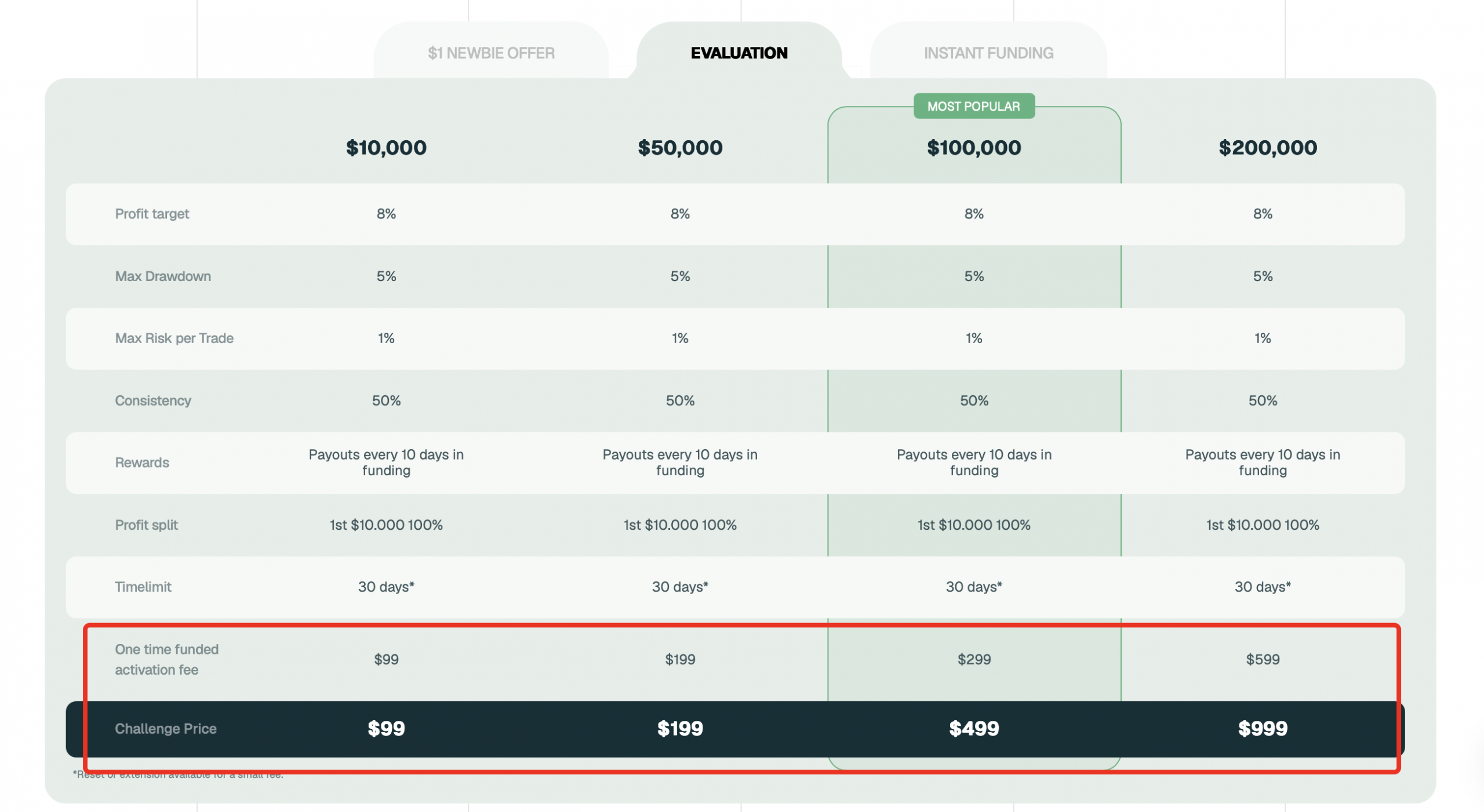
First, the evaluation/challenge fee they collect in order for users to open an account comprises the bulk of prop firms’ total revenue. For most prop firms, this is required in order for their users to have a chance at getting a “funded” account.
2. Repeat Challenge Purchases
Second, at least 90% of those who bought an evaluation/challenge account will fail the evaluation phase. For many of these traders who still want to try again, they will have to essentially buy another evaluation/challenge account, creating a repeat income stream for the prop firm.
3. Reset Fees
Third, for many prop firms, they have a “reset fee” which is essentially a discounted version of #2 where traders who failed the challenge/evaluation phase can reset their account and try again. This entices users to pay this fee in order to have another shot at getting a funded account.
4. Monthly Subscription Fees
Fourth, instead of a one-off challenge/evaluation fee, some prop firms follow a subscription revenue model where their users have to pay a recurring (usually monthly) fee in order to keep the account. This fee usually lasts until the trader passes the evaluation/challenge phase. Hence, it benefits the prop firm when traders take longer than a month to pass its challenge.
5. Instant Funding Fees
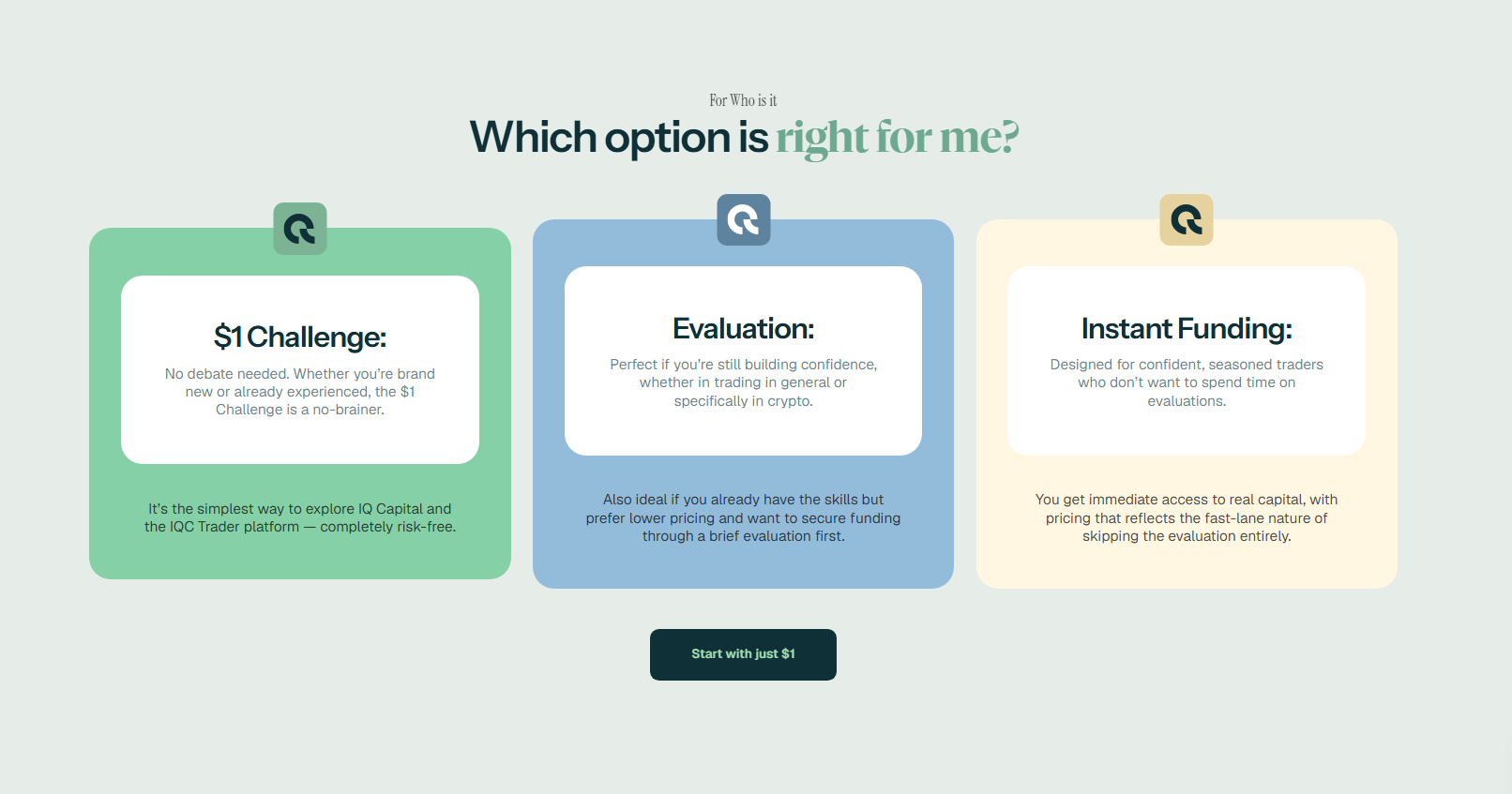
Fifth, many prop firms offer “instant funding” to traders to bypass the challenge/evaluation phase altogether. Note that these accounts are usually priced at a much higher rate due to the convenience and the perk of being funded instantly.

6. Optional Add-ons (Account Upgrades)
Sixth, prop firms also profit from the optional add-ons or upgrades they offer alongside. These include higher profit splits once you are funded, faster payouts, lower profit targets, higher drawdown limits, and fewer trading restrictions.
7. Broker Partnerships
Seventh, some prop firms have a direct broker partnership where they essentially earn a commission when their users open an account with their partner broker. Some prop firms also use this partnership as a “reputation vouch” to make themselves look more legitimate.
8. Using Brokers For Liquidity and Hedge
Eighth, some prop firms may also choose to use brokers as part of their liquidity and risk management strategy. For example, they can route or hedge a portion of trades from funded accounts (especially consistently profitable traders or their top funded traders) through their partner brokers to access liquidity and make these trader payouts more sustainable. This involve A-book/B-book arrangements or broker-side commissions as well.
9. Education or Coaching Fees
Eight, some prop firms also sell exclusive courses, mentorship, webinars, or trader development programs marketed to help their users pass the evaluation, become funded, and earn consistently inside the prop firm.
10. Exclusive Platform and Trading Tools
Ninth, some prop firms offer access to external trading platforms, exclusive trading software, or specific trading tools, analytics, or advanced metrics marketed to improve the chance of their traders being profitable or give them an edge.
11. Payment Processing Fees
Finally, some prop firms also earn from fees related to payments, withdrawals, currency conversion, and other administrative processes. These fees are added on top of the usual external costs of executing these processes.
Do Not Get Fooled by Prop Firms: What You Should Know
The harsh reality is that many prop firms lie about trade execution. This happens either directly, when they advertise that you trade in a real market or indirectly, when they play with words designed to make it seem like you are trading using real money and/or buying/selling actual financial instruments. Here’s the thing: 99% of all “prop firms” never execute your trades in a real market and you actually just trade in a simulated/virtual trading environment.
In fact, having a “funded account” after you pass the evaluation/challenge phase (or by buying an instant funding account) does not mean you are using real money, because you still don’t. It just means that if you earn a profit from that account, you will then be eligible for a payout equal to your profit split (assuming you do not breach any rules or terms).
Remember, it is still a virtual account and you do not actually execute trades in a real market.
That said, there’s an important exception on the side of the prop firms: some of them decide to use a broker partner as liquidity provider (essentially acting as a money pool when a client wins large amounts). Note that this does not mean there is direct execution. Instead, the prop firm mirror the trades of selected traders through the broker arrangement, which can help support trader payouts rather than having them come purely from the prop firm itself, essentially acting as a hedge for their profitable users. That said, these are still select accounts of usually their most consistent funded traders (not all funded traders are treated this way).
Every Payout Is a Loss for the Prop Firm
An extremely important caveat you need to keep in mind is that from the perspective of the prop firm, every single payout they give to a trader is essentially a cost/loss in their balance sheet. The ugly truth is that prop firms act more like a casino where it needs to win more than the players in order to be profitable. Prop firms remain profitable because a vast majority of their users (at least 90%) fail to pass the challenge/evaluation phase in the first place, and the few who successfully transition to a funded stage fail to become consistently profitable.
Then those very few who become consistently profitable are closely watched and in a lot of unreputable prop firms, many report being kicked out for unreasonable grounds. This is because profitable traders request consistent payouts from the prop firm, which are, again, losses for the prop firm. It’s an ironic situation where prop firms advertise that they want their users to “succeed” but they’re incentivized to ensure that only a small percentage are actually profitable.
Can You Really Trust Prop Firms?
It heavily depends on the specific prop firm. Remember that prop firms have a huge conflict of interest with their users as every payout is essentially a loss for them. This business model only works because 90 to 99% (depending on the prop firm) of all of its users fail to pass the evaluation stage in the first place (and even if they do, most do not reach eligibility for a payout anyway). This is the harsh reality of how prop firms make money and stay in business.
That said, if you are confident that you have the trading system and strategy to become a consistently profitable trader, we recommend sticking to the most established and reputable prop firms such as FTMO, FundedNext, Funding Pips, Topstep, and The5ers. These prop firms in particular have a strong trust rating and reputation in the industry. In contrast, we strongly advise against relatively new and unproven prop firms which are usually cheaper but often have shady business practices against profitable traders. In fact, our students at WR Trading (who are consistently profitable prop firm traders) stick with these top prop firms and have not faced any issues with their payouts.
Do Prop Firms Only Offer Demo Accounts?
Yes, regardless of how a specific prop firm likes to call it, modern prop firms exclusively offer a simulated trading environment where you trade using a demo account with demo funds. Note that prop firms are not brokers and so they cannot legally buy and sell financial instruments in a real financial market. Hence, there is no real trade execution that actually happens when you trade using your prop firm account. This setup is also why they have lower overhead costs and usually have high profit margins as unlike brokers, most prop firms are unregulated and do not put safeguards to guarantee the well-being of their users.
That said, many prop firms claim that their trading environment “mirrors” the real market environment and the actual price changes. However, beware of this claim as they can still manipulate prices as all this ultimately still happens inside the prop firm’s ecosystem and they still have control over how everything works, and they are incentivized to ensure only a few users are consistently making a profit and requesting a payout.
Modern Prop Trading vs. Traditional Prop Trading
The following are the key differences between traditional prop trading and modern prop trading which are rampant now:
| Differences | Traditional Prop Trading | Modern Prop Trading |
|---|---|---|
| The meaning of “Proprietary” | The firm uses its own real capital to trade in the financial markets | Mainly used for marketing, modern prop firms do not give real capital to their traders |
| Trading Environment | Traders use the firms’ real capital to trade in real (live) markets | Users trade inside the simulated (demo) environment of the firm |
| Capital Source | The firm gives a portion of its real capital to its traders to trade | There is no actual capital as its users trade fictitious funds |
| Revenue Source | The firm directly makes money when its traders make money from the given capital | The firm makes most of its revenue from selling evaluation/challenge and instant funding accounts to its users |
| Source of Losses | The firm directly loses money when its traders made a losing trade | The firm incurs a loss every time it makes a payout to a successful (profitable) user |
| Who carries the risk | The firm carries the risk as its capital is directly involved | The user carries the risk as it is the one who pays the firm |
| Typical Trader Profile | Professional traders directly hired by the firm | Retail traders, most of which are beginners |
| Trader Losses | Losses directly reduce the firm’s capital | Any trader’s losses are immaterial as they are inside a demo account |
| 8. Incentive | Firms are incentivized to ensure traders are profitable as their positive performance provides direct benefit to the firm | Firms are incentivized to ensure most of their users fail as most of their revenue comes from selling evaluation (challenge) accounts and any successful payout is a loss for the firm |
| Conflict of Interest | Low; the interest of the firm and its traders are aligned as it directly benefits from the traders’ positive performance | High; a user’s successful payout is a loss for the firm and it maximizes profit when most of its users do not qualify for a payout |
| Firm-Trader Relationship | Traders are direct employees of the firm | The firm’s users (traders) are considered customers and there is no actual professional relationship |
Can You Actually Make Money With Prop Firms?
Yes, but the odds are not in your favor. The business model of prop firms is already a huge conflict of interest as they have the incentive to ensure that most of its users (at least 90%) do not become consistently profitable as every payout is a loss for them. In addition, compared to trading on your own broker account, prop firms set arbitrary terms and strict trading rules that you have to comply with if you want to qualify for a payout. Finally, most prop firms are not regulated at all and since they control the trading environment, there is always a risk for price manipulation.
That said, if you have a proven trading system and strategy that works within the rules and terms a prop firm, then you can really make money on prop firms. However, we still strongly recommend only sticking with the most established and reputable prop firms such as FTMO, FundedNext, Funding Pips, Topstep, and The5ers to minimize the risk of being exposed to shady business practices that many other prop firms engage in.
Conclusion: Modern Prop Firms Profit When Most Its Traders Fail
The bottom line is that modern prop firms’ business success and long-term sustainability depend on ensuring most of their users (traders) do not ever qualify for a payout. While this seems harsh, this is the sobering reality of these firms’ glaring conflict of interest with their users. Ultimately, most of its revenue is collected upfront when users buy an account and it directly benefits when the majority of these users eventually fail and buy another account (or renew/reset their failed accounts).
In contrast, the payouts to its profitable users are a direct and, in fact, the biggest cost to modern prop firms. Hence, these firms are naturally motivated to keep payouts at a minimum or at the very least, ensure it makes more money from failed users than what it pays to its much fewer profitable traders. This is why at WR Trading, our mission is to help traders become part of this “profitable few” who actually succeed in prop firm trading. We do this by helping our students establish a trading system that is specifically designed to work within the prop firm’s constraints.
FAQs: Most Asked Questions On How Prop Firms Make Money
What happens if a prop firm shuts down?
This is one of the biggest risks if you go for new prop firms with no established reputation. Many traders experienced this and unfortunately, when the prop firm shut down, there is a very small chance for you to recover the amount you paid. In fact, in almost all cases, your account is instantaneously closed and you have no one to run to, especially if the prop firm is unregulated (which most are). Many traders then move on to other prop firms if they want to continue.
Can prop firms change their rules and terms after traders sign up?
Yes. This is one of the most important caveats that you have to keep in mind. Even if you read and understand all the rules, the prop firm reserves the right to change (add or remove) rules and terms at any point. This is especially risky if you engage with an unreputable prop firm, as many traders report them changing their rules to deny payouts. This is less of an issue for more established prop firms, as they typically announce key changes in advance.
Are prop firms regulated like brokers?
No. Most prop firms are not regulated like financial market brokers. This is because brokers take client deposits and execute live trades. In contrast, most prop firms do not take deposits and only offer a demo/simulated trading environment (you do not trade in the real market). This means while many brokers are heavily regulated (with investor protection), most prop firms have minimal to no regulation at all.
Why do prop firms have so many “trading rules”?
Prop firms typically have so many “trading rules” to filter trades and limit the payouts as much as they can. Remember that each payout is a cost to a prop firm, and so they design these trading rules to essentially protect themselves from payouts that they would have to pay if these rules were not implemented in the first place.
Can a prop firm deny a payout even if the trader is profitable?
Yes, a prop firm can deny a payout if the trader violated its rules. This is why reading and understanding a prop firm’s rules and terms is very important. A rule breach is the most common ground for a denied payout. In addition, many shady prop firms engage in dubious business practices of denying profitable traders their payouts and even closing their accounts, even if these traders did not breach any rules. This is why it’s incredibly important that you only stick to top-tier prop firms that have a strong reputation in the industry.

