


Find the best forex trading books for currency traders at every level. At WR Trading, we have read, reviewed, and compared the leading titles on currency markets, FX strategy, fundamental analysis, and trading psychology, evaluated across content quality, author credentials, real-world applicability, and price.
We’ve evaluated each title across 6 factors: content quality, author credentials, beginner-friendliness, depth of coverage, price, and real-world applicability. Community feedback was drawn from Reddit’s r/Forex, Goodreads, Amazon, TradingView, and other industry communities to ensure the selections reflect what traders across experience levels actually find useful.
These are the top forex books every trader should read, selected for relevance to currency markets, author credentials, and validation from active trading communities.
We selected these 10 books based on 3 criteria tailored to forex traders:
- Relevance to currency markets specifically, covering price action, macro fundamentals, central bank policy, and the mechanics of FX pairs
- Suitability across experience levels, from complete beginners entering the currency markets for the first time to professionals refining their edge
- Real-world validation from active forex communities, including Reddit’s r/Forex, Goodreads, Amazon, and TradingView
We have identified the best forex trading book to read at each stage of your development, from your first introduction to currency markets through to professional-level institutional strategy. These are the 10 must-read forex trading books listed:
The best Forex Trading Books to read at a glance:
- Trading in the Zone by Mark Douglas: Best overall, best for trading psychology
- Day Trading and Swing Trading the Currency Market by Kathy Lien: Best forex-specific strategy book, best for beginners to intermediates
- The Art of Currency Trading by Brent Donnelly: Best for advanced traders, best institutional perspective
- Market Wizards by Jack D. Schwager: Best for mindset and perspective, industry classic
- Technical Analysis of the Financial Markets by John J. Murphy: Best reference textbook, best for technical foundations
- Naked Forex by Nekritin & Peters: Best for price action trading, best no-indicator strategy book
- Japanese Candlestick Charting Techniques by Steve Nison: Best for candlestick mastery, best charting reference
- The New Trading for a Living by Dr. Alexander Elder: Best all-in-one manual, best for intermediate traders
- Reminiscences of a Stock Operator by Edwin Lefèvre: Best classic, best for timeless market wisdom
- Currency Trading for Dummies by Kathleen Brooks & Brian Dolan: Best for complete beginners, most affordable entry point
We selected these 10 books based on 3 criteria tailored to forex traders:
- Relevance to currency markets specifically, covering price action, macro fundamentals, central bank policy, and the mechanics of FX pairs
- Suitability across experience levels, from complete beginners entering the currency markets for the first time to professionals refining their edge
- Real-world validation from active forex communities, including Reddit’s r/Forex, Goodreads, Amazon, and TradingView
We have identified the best forex trading book to read at each stage of your development, from your first introduction to currency markets through to professional-level institutional strategy. These are the 10 must-read forex trading books listed:
1. Trading in the Zone by Mark Douglas
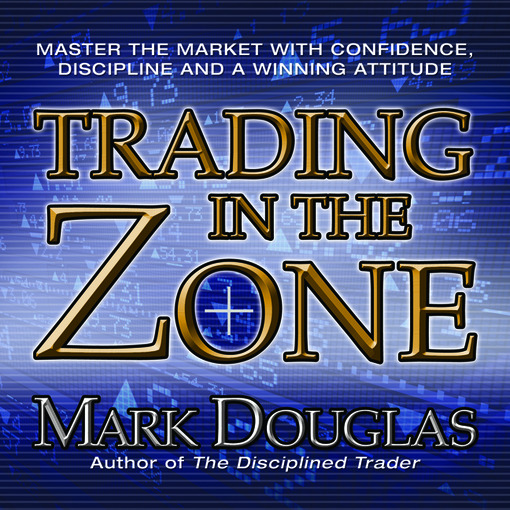
You’ll find Trading in the Zone at the top of almost every forex reading list, and we fully agree. We recommend this book first to every trader at WR Trading, regardless of experience level, because it addresses the single biggest reason traders fail: their psychology, not their strategy.
Mark Douglas does not teach trade setups. Trading in the Zone teaches traders to think in probabilities, to accept that no single trade has a guaranteed outcome, but that a well-defined edge produces consistent results over a series of trades. Douglas identifies 5 fundamental truths that define a professional trading mindset.
- First, anything can happen in any one trade.
- Second, you don’t need to know what happens next in order to make money.
- Third, within any defined edge, wins and losses distribute randomly.
- Fourth, an edge increases the probability of one outcome rather than another, and nothing more.
- Fifth, every moment in the market is a unique moment.
We rate this book highly, not least because it delves into why in spite of a good strategy you can still lose money. The answer is always psychological. That it contains no concrete trading strategies is deflating, and it also repeats its core ideas across multiple chapters. That said, repetition is intentional here. Douglas wrote this book to replace habits, not just inform them. Most traders we know at WR Trading have read it twice.
Pros
- Addresses the psychological baseline of inconsistent trading
- Applicable to every market, timeframe, and approach
- Short enough to read in a weekend; deep enough to revisit for years
- The single most recommended book in r/Forex and other online forums
Cons
- Contains no trade setups, indicators, or strategies
- Repeats its core arguments throughout (which can feel slow on the first read)
- Abstract for complete beginners who have not yet traded
What Readers Say
“This book literally changed my trading overnight. Discipline, control, and zen, these are the things that will make you profitable in the markets.”
– Goodreads reviewer
Book Summary
Trading in the Zone teaches traders to adopt a probabilistic mindset. His philosophy is “be the casino, not the gambler”. It identifies fear and euphoria as the 2 most destructive emotional states a trader can experience, and provides a framework for eliminating both through defined rules and consistent execution. The book is a mindset manual, not a strategy guide. It is most powerful for traders who already have an edge and yet still find themselves losing money.
| Detail | Information |
|---|---|
| Author | Mark Douglas |
| Published | 2000 |
| Publisher | Prentice Hall Press |
| Pages | 240 |
| Price range | $15 – $25 (print) | $10 – $15 (ebook) |
| Best for | All levels, especially traders who have a strategy yet battle consistent losing trades |
| Goodreads rating | 4.31 / 5 (9,700+ ratings) |
| Focus | Trading psychology, probabilistic mindset, emotional discipline |
| Where to buy | Amazon |
2. Day Trading and Swing Trading the Currency Market by Kathy Lien
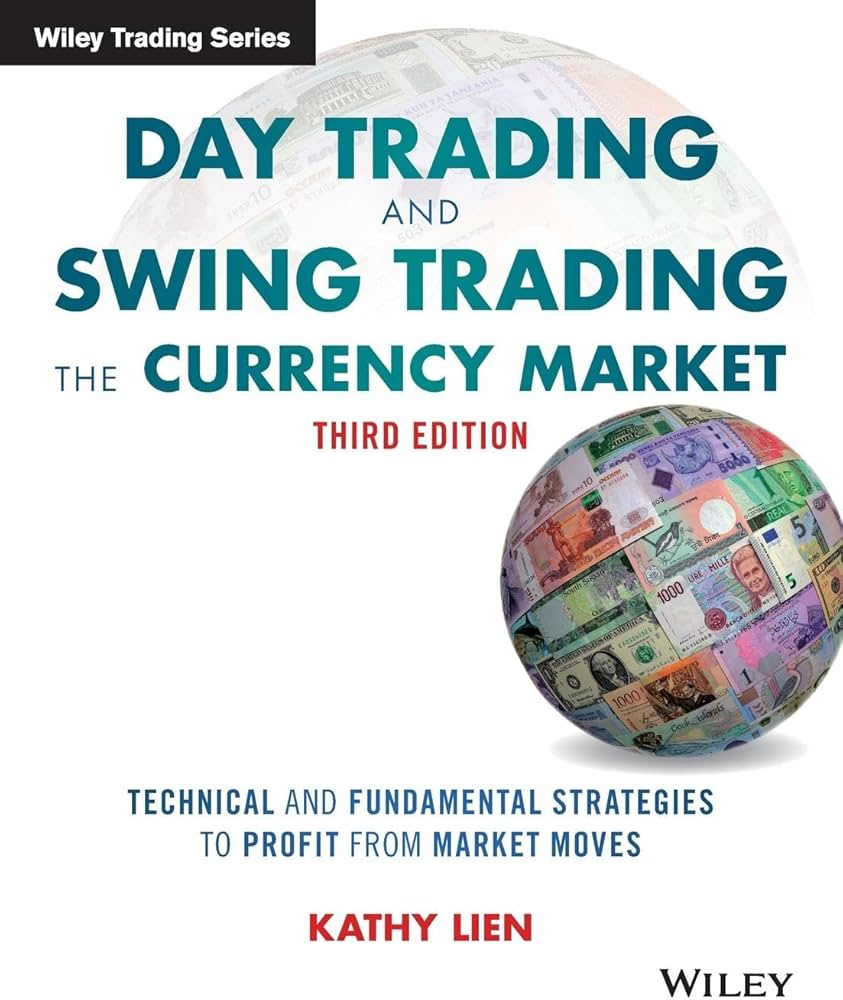
At WR Trading, we recommend this book as the primary strategy read for traders moving beyond the basics. Kathy Lien is a former JPMorgan trader and ex-chief strategist at DailyFX. She brings genuine institutional experience to an accessible format and parlays that experience into a good read.
This book, now in its 3rd edition (2015), covers both technical and fundamental analysis in a single volume. Where most forex books focus entirely on chart patterns, Lien dedicates significant space to macroeconomics: interest rate differentials, central bank policy, and major economic data releases including NFP, CPI, and PMI. She then breaks the book down pair by pair (EUR/USD, GBP/USD, USD/JPY, and others) explaining the 4 to 6 key economic drivers behind each one.
This pair-by-pair structure is rare in trading books and is consistently cited as the standout feature.
We like the dual approach: technical strategy and macro fundamentals in one book. We like less the fact that some chart-based strategy examples feel dated by the time new editions arrive. The macroeconomic and fundamental content, however, holds up across all editions.
Pros
- Combines technical and fundamental analysis in 1 volume, unusual for forex books
- Pair-by-pair breakdown explains the specific drivers behind each major currency
- Written by a former institutional trader, not a retail educator
- Consistently recommended across numerous trader communities including Reddit’s r/Forex
Cons
- Some chart-based strategy examples feel dated
- 3rd edition (2015) has not been updated to reflect post-2015 central bank policy changes
- Less useful for scalpers, focused on swing and day trading timeframes
What Readers Say
“Kathy Lien is the real deal. Former JPMorgan, former DailyFX chief strategist, and this book reads like someone who has actually traded forex for a living, not just written about it. The macro sections are worth the price alone.”
– Amazon reviewer
Book Summary
Day Trading and Swing Trading the Currency Market teaches traders how currency pairs move, not just how to read their charts, but why they move. Lien covers the 3 best times to trade forex (London, New York, and Tokyo session overlaps), the macro drivers behind each major pair, and practical strategies for both day traders and swing traders. Interest rate expectations are presented as the most reliable driver of longer-term currency trends, a concept that transforms how traders interpret central bank announcements.
| Detail | Information |
|---|---|
| Author | Kathy Lien |
| Published | 3rd Edition, 2015 |
| Publisher | Wiley |
| Pages | 368 |
| Price range | $30 – $45 (print) | $20 – $30 (ebook) |
| Best for | Beginner to intermediate traders building a forex-specific strategy foundation |
| Focus | Technical strategy, fundamental analysis, major currency pair drivers |
| Also recommended | Consistently recommended on Reddit’s r/Forex |
| Where to buy | Amazon |
3. The Art of Currency Trading by Brent Donnelly
This is arguably the most comprehensive professional-grade forex book published in the last decade. At WR Trading, we recommend The Art of Currency Trading to any trader who has moved beyond beginner territory and wants to understand how the forex market actually operates at an institutional level.
Brent Donnelly has traded currencies professionally since 1995 as a market maker and senior FX trader at HSBC, Citi New York, and Nomura. His work is cited regularly by The Economist, Wall Street Journal, and Bloomberg. This book draws directly on that 25-year career. Donnelly covers 4 interconnected pillars:
- Macro fundamentals
- Technical analysis
- Behavioral finance
- Risk management
The risk management chapters (covering position sizing, stop placement, and the psychology of scaling positions) are the most praised sections by readers across every platform we reviewed.
We like that Donnelly explains why the market moves, not just how to react to it. He covers institutional trading behaviour, liquidity dynamics, and trading session mechanics that retail-focused books rarely reach. We’re not wild about the fact that parts of the macro-insight section feel more accessible to traders with finance backgrounds, as pure retail beginners may find the opening chapters demanding.
Pros
- Written by a 25-year interbank professional with a genuine institutional perspective
- Risk management chapters are the most detailed and practical of any forex book
- Covers behavioral finance and why traders make systematic errors
- Praised on Reddit’s r/Forex as the best book written by a real FX professional
Cons
- Demanding in places, assumes some familiarity with macro concepts
- Less suitable for complete beginners than Lien or the Dummies guide
- Not a quick read, works best as a study resource over several weeks
What Readers Say
“I’ve read probably 15 trading books. This is the only one written by someone who has actually sat on an institutional desk and can explain why the market does what it does. The risk management chapters alone are worth it.”
– Goodreads reviewer
Book Summary
The Art of Currency Trading builds in intensity from foundational forex concepts to advanced institutional strategies. Donnelly presents a framework in which FX prices respond to 4 main inputs: macro fundamentals, positioning, technicals, and sentiment.
His explanation of how institutional participants behave (and how retail traders can read those behaviors) provides insight that most retail-focused books simply do not contain. The 2 skills he identifies as most separating profitable traders from unprofitable ones are risk management and position sizing, and he covers both with professional-grade detail.
| Detail | Information |
|---|---|
| Author | Brent Donnelly |
| Published | 2019 |
| Publisher | Wiley |
| Pages | 448 |
| Price range | $35 – $55 (print) | $25 – $35 (ebook) |
| Best for | Intermediate to advanced traders seeking professional FX market knowledge |
| Goodreads rating | 4.1 / 5 |
| Focus | Macro fundamentals, technical analysis, behavioural finance, risk management |
| Where to buy | Amazon |
4. Market Wizards by Jack D. Schwager
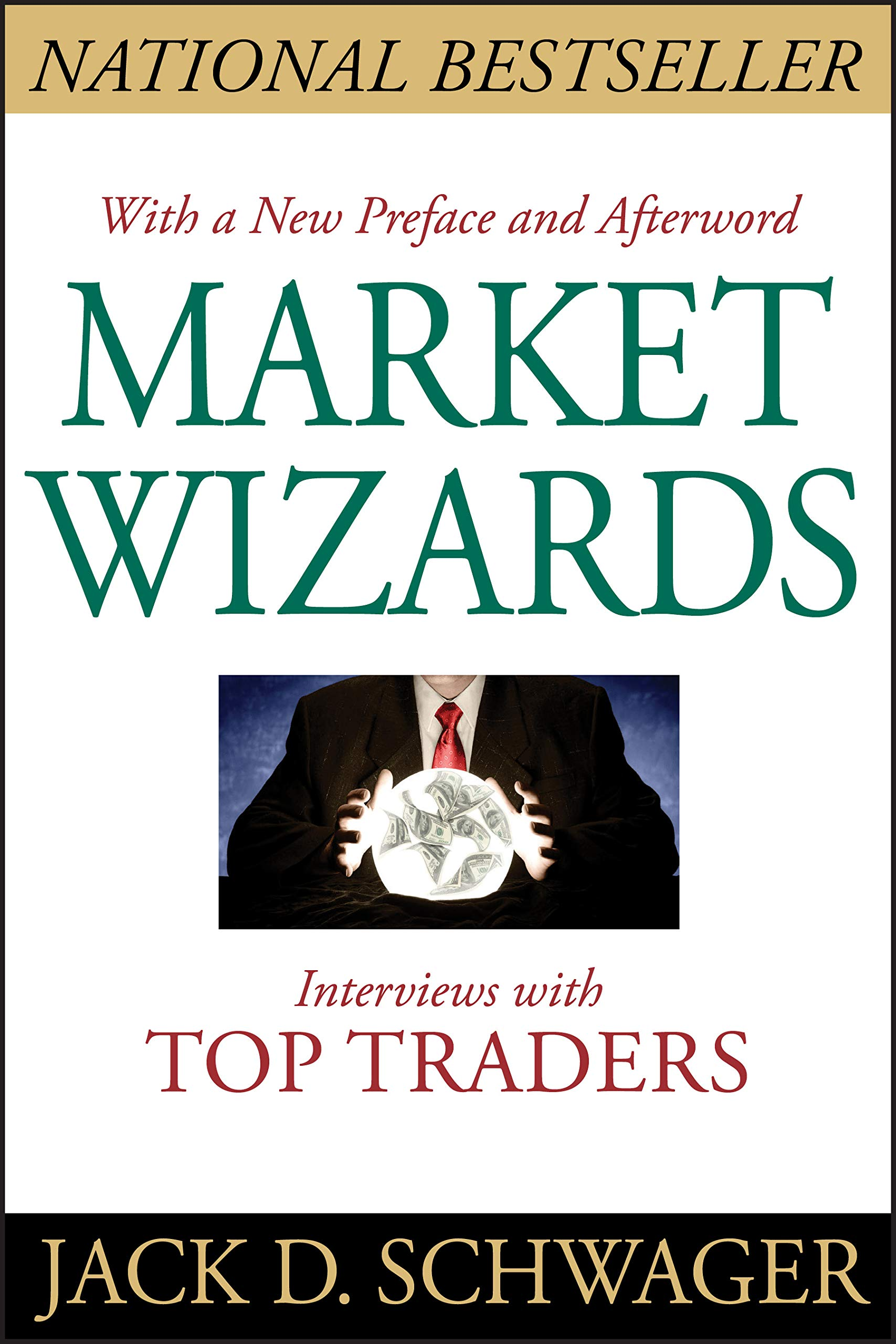
You’ll find Market Wizards in the library of almost every serious trader we know at WR Trading, and there’s a reason for that. This book does not teach a forex strategy, It does something more valuable. It reveals the mindset, discipline, and relationship with risk that define consistently profitable traders across every market.
Jack Schwager, a respected market researcher and fund manager, interviews 17 traders who achieved remarkable results across futures, equities, forex, and global macro. The book has been in print for 35+ years continuously, with 4 sequels.
For forex traders, the chapters featuring macro traders Paul Tudor Jones and Bruce Kovner are particularly relevant, as both built careers on reading currency and macro trends with exceptional precision.
We like that 3 consistent themes emerge across all 17 interviews: risk control comes before opportunity, patience is a defining skill, and losses are managed through discipline rather than avoided through fear. On the downside, beginners sometimes find the book abstract without a concrete technical foundation (it works best after a trader has real market experience).
Pros
- 17 different profitable approaches — proves there is no single right way to trade
- Shifts a trader’s relationship with loss and risk more effectively than most books
- Paul Tudor Jones and Bruce Kovner chapters are directly relevant to forex traders
- Continuously in print for 35+ years, a verified industry classic
Cons
- Not forex-specific (strategies span futures, equities, and macro)
- Can feel abstract for beginners without a prior technical foundation
- Some interviews cover trading environments (1970s–1980s) less relevant to modern markets
What Readers Say
“I’ve reread this at least 4 times over 10 years of trading. Every time I come back to it I get something different out of it, because my experience level has changed. The chapter with Ed Seykota alone is worth more than most trading courses.”
– Amazon reviewer
Book Summary
Market Wizards is an interview-format study of what separates traders who win consistently from those who do not. The answer isn’t a specific strategy. It’s always discipline, a defined edge, and the ability to hold positions through discomfort. Schwager’s 17 traders use different strategies, timeframes, and markets, but the common denominator is their approach to capital preservation and psychological resilience after losing runs. The book is most powerful for experienced traders who want to understand the mindset required to sustain a professional trading career.
| Detail | Information |
|---|---|
| Author | Jack D. Schwager |
| Published | 1989; updated 2012 |
| Publisher | Wiley |
| Pages | 485 |
| Price range | $20 – $35 (print) | $12 – $20 (ebook) |
| Best for | All levels, most impactful after 6+ months of trading experience |
| Goodreads rating | 4.1+ / 5 (across tens of thousands of ratings) |
| Focus | Trader psychology, risk management, mindset, professional discipline |
| Where to buy | Amazon |
5. Technical Analysis of the Financial Markets by John J. Murphy
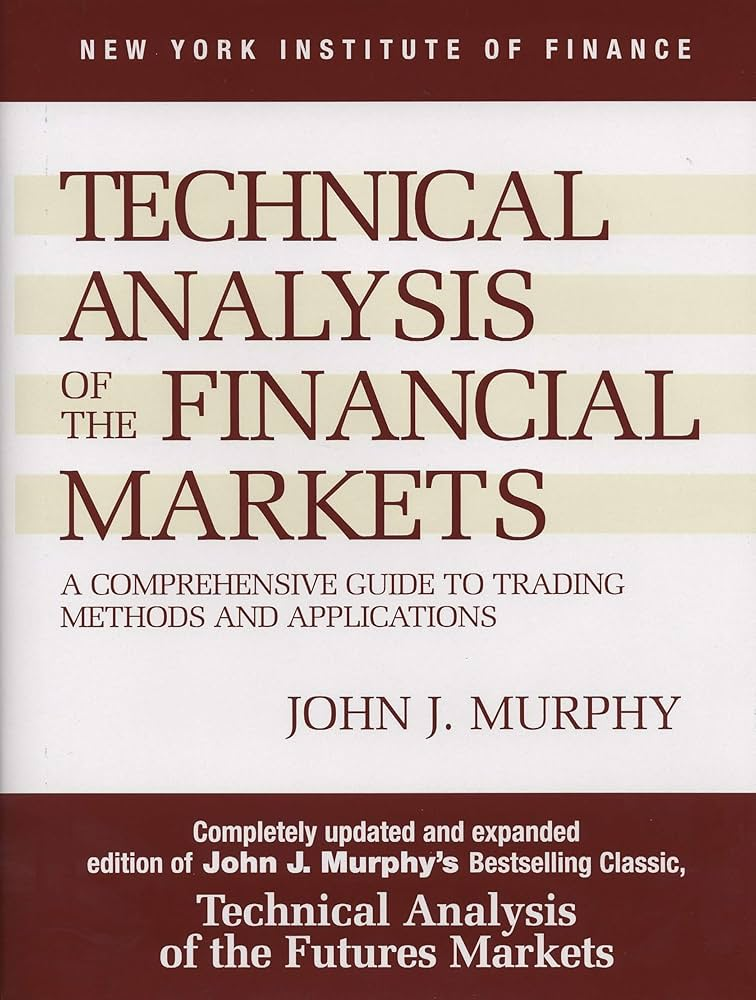
This is the standard reference text for technical analysis, and at WR Trading, we recommend it as the foundational technical study resource for every trader, before they develop a chart-based strategy. John Murphy spent decades as a technical analyst for CNBC and the New York Institute of Finance. This book covers over 600 pages of technical methodology.
Currency pairs respond particularly well to technical analysis because of the liquidity and 24-hour nature of the forex market. Murphy’s treatment of support and resistance levels, trendline analysis, and breakout patterns applies directly to EUR/USD or GBP/JPY in the same way it applies to equity indices.
The intermarket analysis section (explaining how bonds, commodities, and equities connect to currency strength) is especially valuable for forex traders and in our experience isn’t covered in this depth anywhere else.
We like the comprehensiveness, as no other single book covers technical analysis with this breadth. We don’t like that it predates algorithmic trading and some modern instruments. The foundational concepts, however, remain entirely valid and applicable to every forex chart a trader encounters today.
Pros
- The most comprehensive technical analysis reference available in a single volume
- Intermarket analysis section explains currency-commodity-bond relationships
- Applicable directly to forex, Murphy’s patterns work on all liquid markets
- Consistently cited on Investopedia, TradingView, and others
Cons
- 600+ pages, dense; functions as a study resource, not a casual read
- Predates algorithmic trading and some modern market microstructure realities
- Does not focus exclusively on forex but covers all asset classes
What Readers Say
“Murphy’s book is the go-to reference for technical analysis. Every pattern, every indicator, covered in the depth that no online course can match.”
– TradingView community review
Book Summary
Technical Analysis of the Financial Markets covers every major concept in technical analysis: trend identification, chart patterns, candlestick analysis, moving averages, oscillators, volume interpretation, and intermarket relationships. Murphy presents the 3 pillars of technical analysis (trend, momentum, and pattern) and builds each concept on the previous. Traders typically work through this book once with focused study, then return to specific chapters when encountering unfamiliar patterns or indicators. It functions as both a curriculum and a reference library in a single volume.
| Detail | Information |
|---|---|
| Author | John J. Murphy |
| Published | 1999 (2nd edition) |
| Publisher | New York Institute of Finance |
| Pages | 600+ |
| Price range | $40 – $60 (print) | $25 – $40 (ebook) |
| Best for | Beginners building a technical foundation; intermediate traders filling gaps |
| Focus | Chart patterns, indicators, trends, intermarket analysis |
| Status | Industry-standard reference text for technical analysis |
| Where to buy | Amazon |
6. Naked Forex by Alex Nekritin & Walter Peters
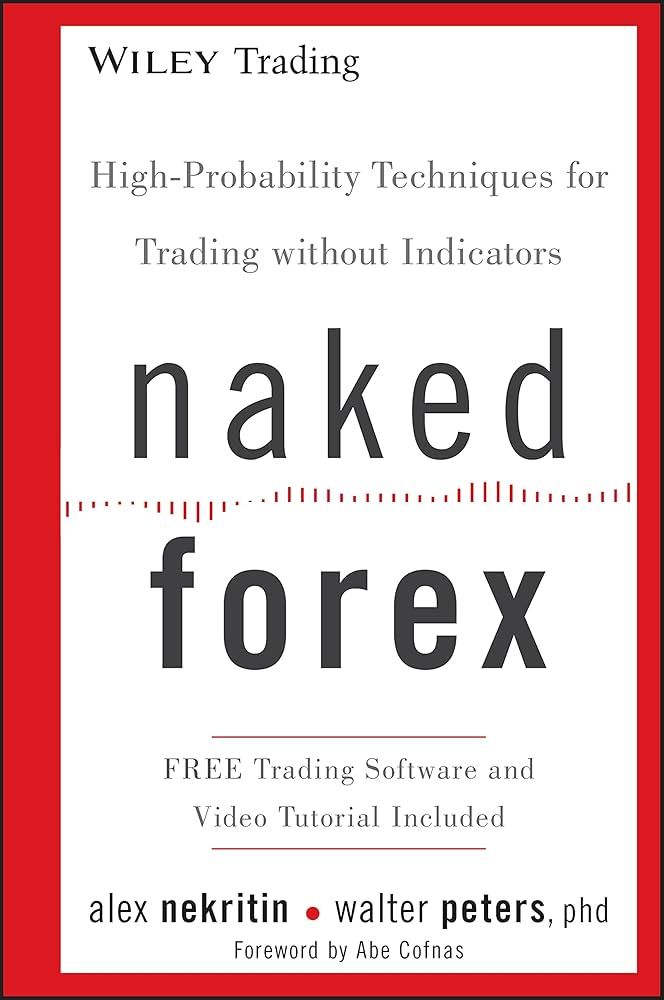
This is the most-recommended forex book for traders who want to read price without indicators. We point traders toward Naked Forex when they ask how to reduce complexity and trade from clean charts, a question we hear constantly from traders who have tried indicator-heavy systems and found them unreliable.
Nekritin and Peters build the entire book around one premise: the best information on a forex chart is price itself. Indicators are derived from price, which means they lag price. Naked Forex teaches traders to read the story the candles tell directly (rejection candles, engulfing patterns, big shadow candles) and trade from those signals without any indicator overlay. The approach has a strong following on r/Forex and other trader communities, particularly among swing and position traders.
We like the clarity of the approach: removing indicators forces traders to understand price structure, which is a skill that transfers to any system. We don’t like that the book can oversimplify the challenges of pure price action trading. Reading price without indicators requires extensive screen time to develop real pattern recognition, and the book does not fully address this learning curve.
Pros
- Teaches traders to read price structure without indicator dependency
- Strong following on r/Forex and other communities, real community validation
- Applicable to any forex pair or timeframe
- Clean approach that complements more indicator-heavy strategies
Cons
- Can oversimplify the difficulty of pure price action pattern recognition
- Less structured than Murphy or Lien, better as a complement than a sole resource
- Requires significant screen time to apply the techniques with real consistency
What Readers Say
“Naked Forex strips away the noise and teaches you to read what the market is actually saying. Essential for traders who want to think independently.”
– r/Forex community review
Book Summary
Naked Forex presents a methodology built entirely on price action, the premise being that everything a trader needs to know about the next move is already visible in the current and recent candles. The book covers 3 primary signal types:
- Reversal candles at key levels
- Continuation patterns within established trends
- Consolidation breakouts
Peters and Nekritin integrate the approach with zone-based analysis (identifying areas on the chart where price has previously reversed) and build entry and exit rules around those zones without any indicator confirmation.
| Detail | Information |
|---|---|
| Authors | Alex Nekritin & Walter Peters |
| Published | 2012 |
| Publisher | Wiley |
| Pages | 288 |
| Price range | $25 – $40 (print) | $15 – $25 (ebook) |
| Best for | Intermediate traders wanting a clean, no-indicator strategy |
| Focus | Price action, reversal candles, zone trading, indicator-free methodology |
| Community status | Consistently recommended on r/Forex and in other forums |
| Where to buy | Amazon |
7. Japanese Candlestick Charting Techniques by Steve Nison
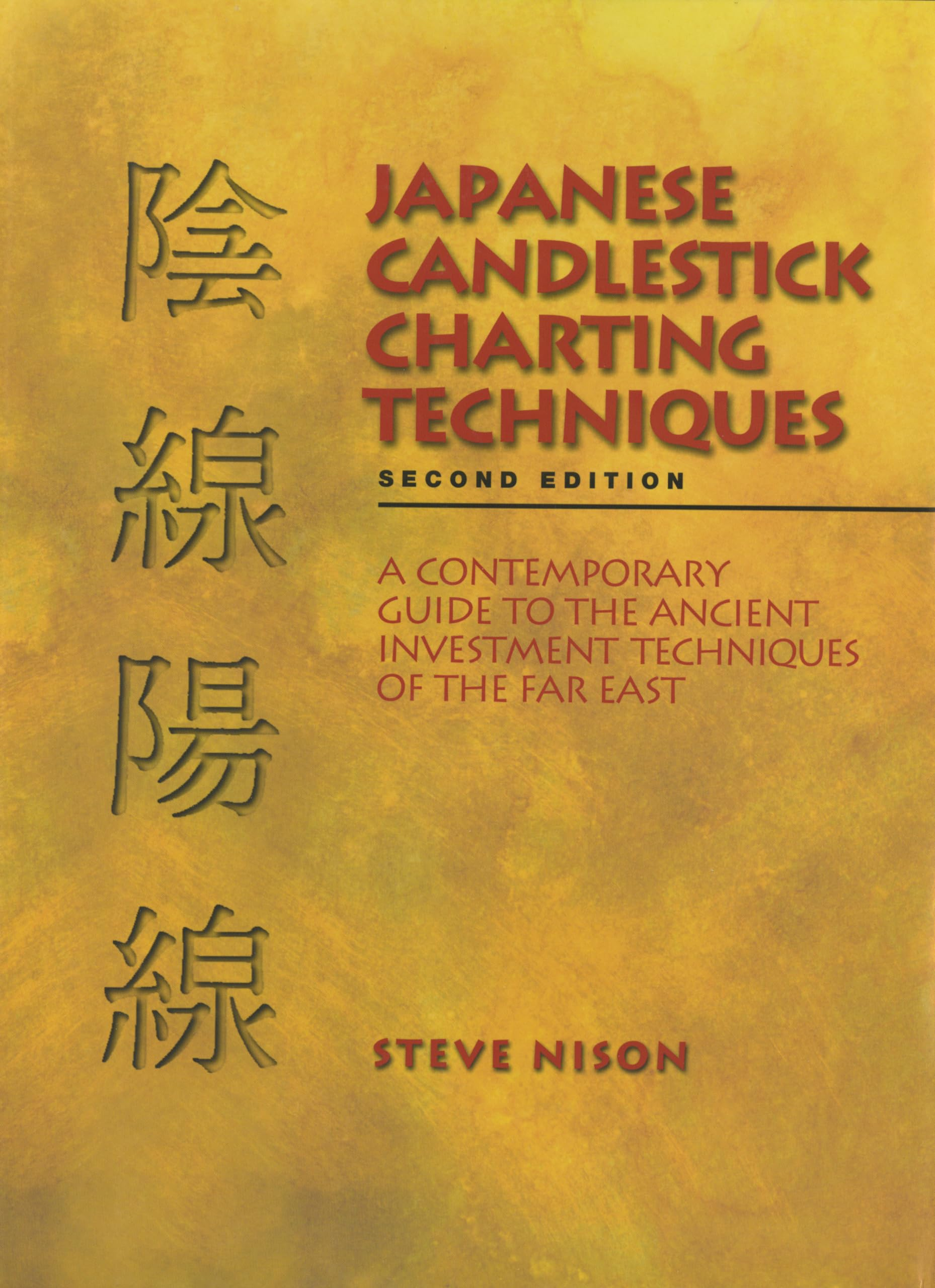
This is the definitive guide to candlestick analysis, and at WR Trading we consider it required reading for any trader who uses charts. Steve Nison is the person who introduced Japanese candlestick charting to Western financial markets. Before this book, candlestick charts were known only within Japanese trading communities. Nison researched the methodology directly from Japanese sources and presented it to the Western world in 1991.
Candlestick analysis is now the dominant charting method in forex trading. Every major platform defaults to candlestick charts. Understanding where the methodology comes from (and what each pattern actually signals about buyer and seller behaviour) gives traders a more complete command of the charts they see every day.
Nison covers 50+ individual patterns across 4 categories: single-candle reversal signals, 2-candle reversal signals, 3-candle patterns, and multi-candle consolidation formations.
We like the depth. No online course or YouTube channel covers candlestick methodology at this level. We like it less that the writing style is dry and methodical, which slows reading pace. This is a reference book, not a story. Traders who approach it as a study resource get considerably more from it than those who try to read it cover to cover in one sitting.
Pros
- The original and most comprehensive source for candlestick methodology
- Covers 50+ patterns with real market examples and the psychology behind each
- Directly applicable to forex, every major pattern appears on currency charts regularly
- Functions as a permanent reference, traders return to it throughout their careers
Cons
- Dry, methodical writing style, not an easy or engaging read
- Some early charts and examples use older market data
- No built-in trading strategy, combines best with a separate strategy book
What Readers Say
“I put off reading this for years thinking candlesticks were just shapes. This book completely changed how I read a chart. Nison explains the psychology behind every pattern. Once you understand that, you can’t unsee it.”
– Amazon reviewer
Book Summary
Japanese Candlestick Charting Techniques explains that candlestick patterns reflect market psychology through price action, as they show exactly where buyers and sellers are in conflict at any point in time. The 3 most reliable single-candle reversal signals Nison identifies are the Doji, Hammer, and Shooting Star. He emphasises that no candlestick pattern works in isolation. Confirmation from the following candle is always required before acting. The book also addresses how to combine candlestick signals with Western technical analysis, including support levels and moving averages, to increase pattern reliability.
| Detail | Information |
|---|---|
| Author | Steve Nison |
| Published | 1991; 2nd edition 2001 |
| Publisher | Prentice Hall Press |
| Pages | 315 |
| Price range | $35 – $55 (print) | $20 – $30 (ebook) |
| Best for | All levels, essential reading for any chart-based forex trader |
| Focus | Candlestick pattern recognition, market psychology, chart interpretation |
| Status | Introduced Japanese candlestick charting to Western markets |
| Where to buy | Amazon |
8. The New Trading for a Living by Dr. Alexander Elder
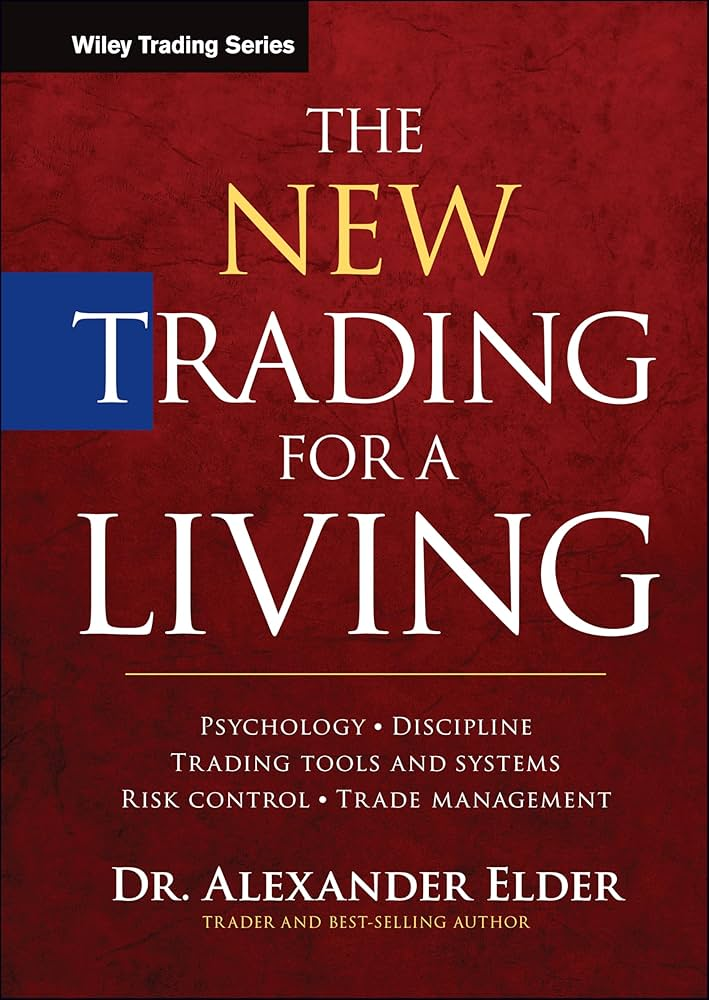
You’ll find in Elder’s work the most comprehensive single-volume trading manual. We recommend The New Trading for a Living to intermediate traders who want one book that covers technical strategy, psychology, and risk management all together, rather than having to compile separate resources.
Dr. Alexander Elder is a professional trader and psychiatrist. That combination is not accidental, as the book applies clinical psychology to the problem of trading losses, which Elder argues are caused in the majority of cases by psychological failures, not strategic ones.
The book covers Elder’s Triple Screen trading system, which uses 3 timeframes and 3 types of indicators to produce entries, is a structured approach that many traders in the forex community apply directly to currency pairs.
We like the integration of the 3 components (psychology, strategy, risk management) into a single coherent framework. The 2% rule for maximum risk per trade, which Elder introduces, has become a standard risk management benchmark across retail forex education. On the flip side, the Triple Screen system requires simultaneous monitoring of multiple timeframes, which increases complexity for newer traders.
Pros
- Integrates psychology, technical strategy, and risk management into one volume
- Elder’s 2% risk rule is now a standard benchmark in retail forex education
- Triple Screen methodology is directly applicable to forex trading
- Updated 2014 edition includes modern trading tools and platforms
Cons
- Triple Screen system involves multiple timeframes, increases complexity for beginners
- Some psychological sections overlap with Trading in the Zone, limited new ground there
- Better suited to traders with 6+ months of market experience
What Readers Say
“Elder’s book is the complete package. Psychology, technical analysis, risk management. A highly rated guide for intermediate traders across multiple platforms.”
– Goodreads reviewer
Book Summary
The New Trading for a Living posits 3 interconnected disciplines as the very nature of trading: mastering psychology, developing a sound technical methodology, and applying rigorous risk control. Elder argues that most traders fail at the first discipline, and that no strategy compensates for psychological weakness.
His Triple Screen system uses the weekly chart for trend direction, the daily chart for signal confirmation, and intraday charts for entry timing. The 2% rule (risking no more than 2% of total account equity on any single trade) is the risk management cornerstone, and applies directly to forex position sizing.
| Detail | Information |
|---|---|
| Author | Dr. Alexander Elder |
| Published | Updated edition 2014 |
| Publisher | Wiley |
| Pages | 352 |
| Price range | $30 – $45 (print) | $18 – $28 (ebook) |
| Best for | Intermediate traders who need to integrate psychology, strategy, and risk framework |
| Focus | Trading psychology, Triple Screen system, risk management, technical analysis |
| Goodreads rating | 4.1 / 5 |
| Where to buy | Amazon |
9. Reminiscences of a Stock Operator by Edwin Lefèvre
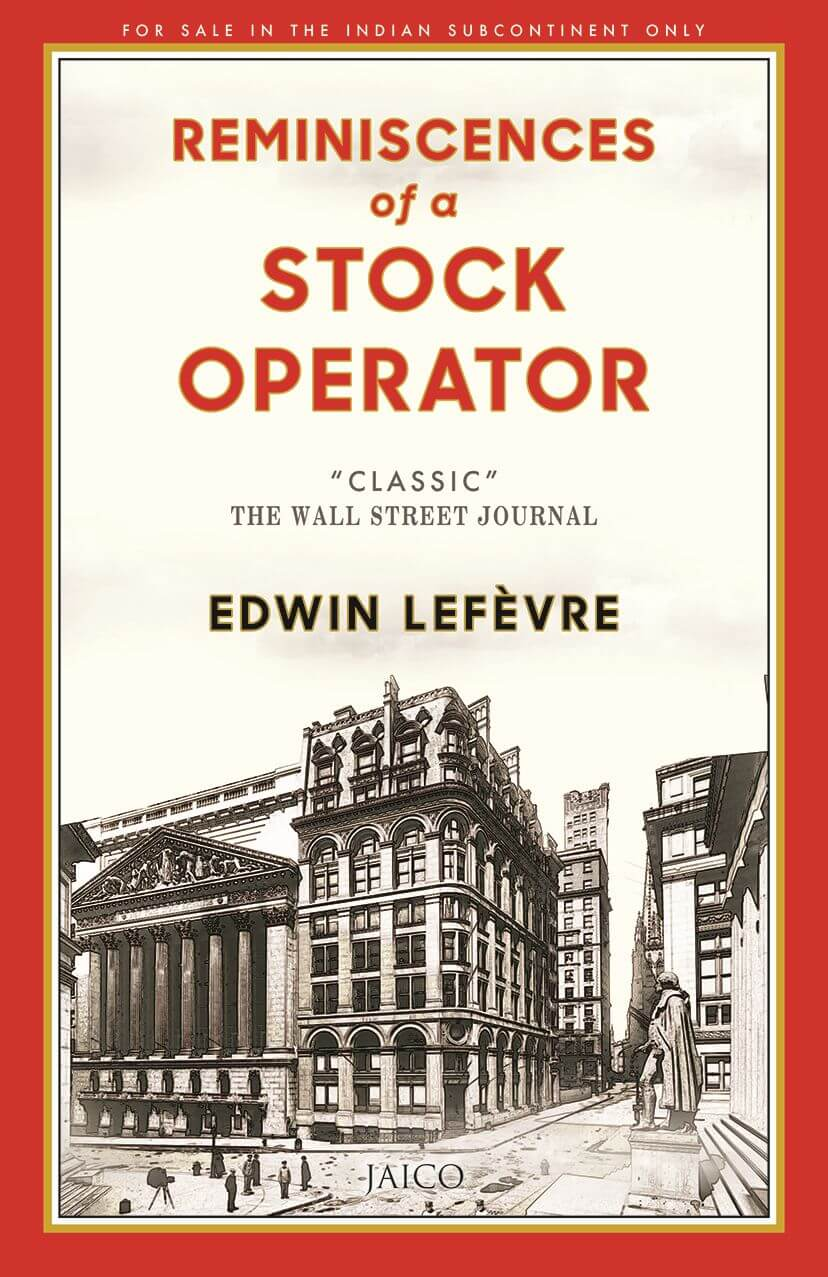
The original trading classic here (first published in 1923), this book remains one of the most widely read books in professional trading communities worldwide. We at WR Trading recommend it to every trader who wants to understand the timeless psychology of markets.
Reminiscences of a Stock Operator is the fictionalised biography of Jesse Livermore, one of the most preternatural traders in history. Livermore accumulated and then lost fortunes many times across stocks, commodities, and currencies in the early 20th century. The book follows his progression from bucket-shop tape reader to Wall Street legend. The lessons he draws from both his successes and ruinous failures apply to forex markets today as directly as they did a century ago.
The book’s strength lies in how it delivers its lessons, through the lived experience of a trader navigating real markets, not through rules, checklists, or theoretical frameworks. Market wisdom absorbed through narrative sticks in a way that instructional writing rarely achieves.
The lessons on trading with the trend, not fighting a losing position, and the destructive power of tips and outside opinions are as relevant to a 2025 EUR/USD chart as they were to 1920s stock tickers. It’s unfortunate that its age means some market mechanics and terminology are outdated, but the psychological lessons are fully evergreen.
Pros
- Teaches market wisdom through narrative — highly readable compared to technical texts
- Timeless lessons on trend trading, position management, and emotional discipline
- Widely recommended across TradingView, r/Forex, and Wall Street Oasis
- Under $15, the most affordable book on this list
Cons
- Published 1923, some mechanics and terminology are dated
- No structured trading methodology or framework
- Livermore himself had periods of catastrophic failure, the book does not shy away from that
What Readers Say
“The lessons Livermore draws from his own failures are worth more than most trading strategy books combined. Timeless wisdom.”
– TradingView community review
Book Summary
Reminiscences of a Stock Operator follows Jesse Livermore’s trading career from teenager reading tape in bucket shops to his famous short positions during the 1907 and 1929 market crashes. The core lessons translate directly to forex: trade with the trend rather than against it, add to winning positions instead of losing ones, and never let outside opinions override your own analysis of the market. Livermore’s repeated pattern of building wealth and losing it through overconfidence and undisciplined position sizing makes this the most honest account of what actually happens when a trader’s psychological controls fail.
| Detail | Information |
|---|---|
| Author | Edwin Lefèvre (based on Jesse Livermore) |
| Published | 1923; republished multiple times |
| Publisher | Various — widely available |
| Pages | ~290 (varies by edition) |
| Price range | $8 – $15 (print) | $3 – $10 (ebook) |
| Best for | All levels, most impactful after at least 3–6 months of trading experience |
| Focus | Trading mindset, trend following, emotional discipline, position management |
| Status | Over 100 years in print, the original trading classic |
| Where to buy | Amazon |
10. Currency Trading for Dummies by Kathleen Brooks & Brian Dolan
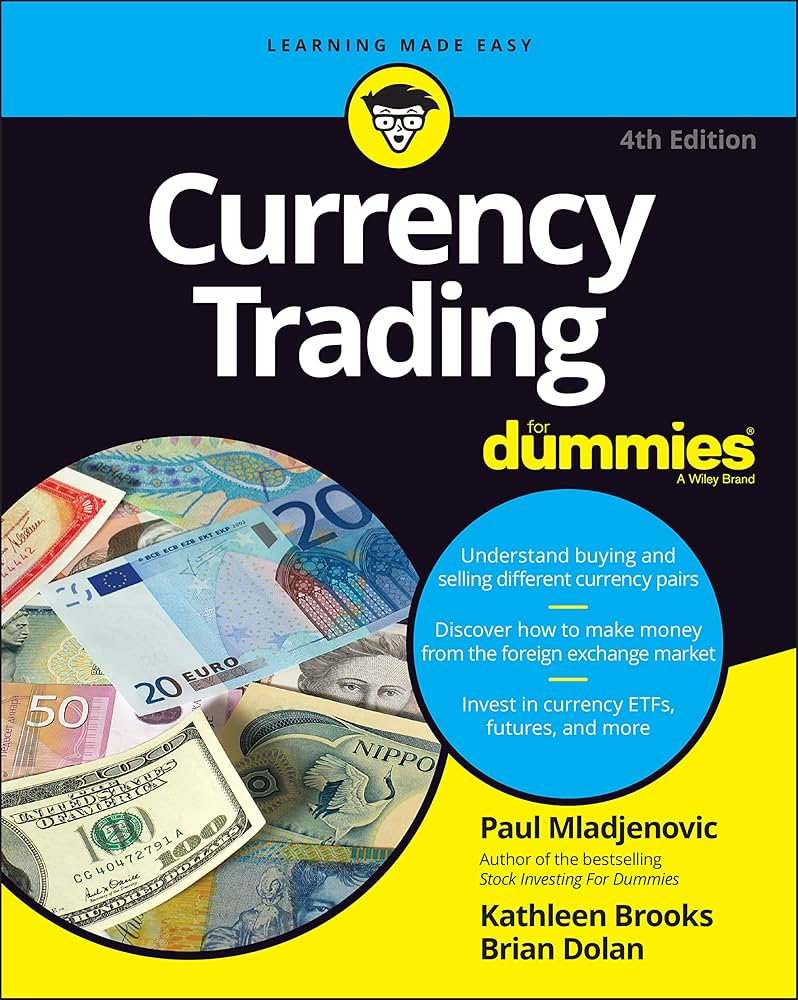
You can find the most effective starting point for new forex traders right here. At WR Trading, we send every complete beginner to Currency Trading for Dummies first, before any strategy book, before any technical analysis, before any YouTube channel. It builds the vocabulary and market knowledge that makes everything else learnable.
Kathleen Brooks is a financial markets analyst with deep expertise in FX strategy. Brian Dolan spent years at Forex.com developing educational content for new traders. Together, they have produced a book that removes the jargon barrier without oversimplifying the content. The book covers how the forex market works, who the participants are, how trades are executed, what bid/ask spreads mean, and how leverage functions.
It introduces 4 key trading approaches (technical analysis, fundamental analysis, sentiment analysis, and order flow) and explains when each is most useful.
We like the structure, short chapters, consistent layout, and summary boxes suit forex well because the subject has significant terminology overhead. We’re less wild about the fact that the strategy content is too basic for anyone beyond a beginner stage. That limitation is intentional. Currency Trading for Dummies is not a strategy book, it’s the foundation on which strategy books become understandable.
Pros
- Best entry-level forex book, removes jargon barrier without losing accuracy
- Covers market mechanics, leverage, spreads, sessions, and basic strategy in sequence
- Vetted by institutional traders on Volatility.RED alongside retail community consensus
- 4th edition (2015) updated for modern platforms and regulatory environment
Cons
- Strategy content too basic for intermediate or advanced traders
- Not updated post-2015, some platform references are dated
- Designed to be read once and moved beyond, limited long-term reference value
What Readers Say
“I knew absolutely nothing about forex when I picked this up. By the end I understood currency pairs, leverage, how to read economic data, and why the dollar moves the way it does. It’s the only beginner forex book I’d recommend without hesitation.”
– Amazon reviewer
Book Summary
Currency Trading for Dummies covers the forex market from zero prior knowledge. It explains the 4 main participant groups (central banks, commercial banks, institutional investors, and retail traders) and the different goals that drive each. Leverage gets a dedicated, honest section: a 1% market move produces a 10% account move at 10:1 leverage.
The 3 main trading sessions (London, New York, Tokyo) are explained with their distinct volume and volatility characteristics. The book ends with a 5-element trading plan framework (entry criteria, exit criteria, position size, stop level, and target) that reduces emotional decision-making from day one.
| Detail | Information |
|---|---|
| Authors | Kathleen Brooks & Brian Dolan |
| Published | 4th Edition, 2015 |
| Publisher | For Dummies / Wiley |
| Pages | ~384 |
| Price range | $20 – $30 (print) | $12 – $20 (ebook) |
| Best for | Complete beginners with no prior forex or financial markets knowledge |
| Focus | Forex market mechanics, leverage, sessions, basic strategy, risk management |
| Community status | Recommended on r/Forex and Volatility.RED beginner lists |
| Where to buy | Amazon |
Best Forex Trading Books for Trading Psychology?
The 3 best books for forex trading psychology are Trading in the Zone, Market Wizards, and Reminiscences of a Stock Operator.See our full [Best Psychology Trading Books] breakdown for more
Trading in the Zone by Mark Douglas is the most direct forex trading psychology book available. It does not teach strategy, but teaches traders to think in probabilities, to eliminate fear and euphoria from their decision-making, and to execute a proven edge consistently. We recommend it first to every trader at WR Trading because psychological failure causes far more forex account losses than poor strategy does.
Market Wizards addresses psychology through contrast: 17 professional traders describe how they manage losses, control position size under pressure, and maintain discipline through losing streaks. Reminiscences of a Stock Operator delivers the same lessons through narrative, and the psychological patterns Jesse Livermore describes are identical to those any EUR/USD trader faces today.
Forex Trading Books vs Mentoring: Why You Still Need A Trading Coach
Every book on this list was written by someone who learned from live markets, real losses, and thousands of trades. Books compress that experience into text. A trading coach transmits it directly in real time, against your actual trades, your actual mistakes, and your actual psychological patterns.
Books give you 4 things: vocabulary, market knowledge, strategic frameworks, and awareness of psychological pitfalls. A trading coach gives you 3 things books cannot: real-time feedback on your execution, correction of your specific errors, and accountability through losing streaks.
The forex traders who improve fastest combine both. The reading foundation from the books in this guide accelerates mentoring, because you arrive with context and understanding. WR Trading mentoring then converts that foundation into a live, consistent currency trading strategy. Discover our mentoring program and take the step from book knowledge to real trading profitability.

