


Find the best trading books for your level in our complete WR Trading guide. We’ve reviewed, compared, and tested the most widely recommended titles available today, evaluating each across content quality, author credentials, costs, real-world applicability, and beginner-friendliness. We also factored in every trading category, including forex, stocks, crypto, day trading, swing trading, technical analysis, and psychology.
Whether you’re a complete beginner learning the mechanics of your first position or an experienced trader looking to close the gaps in your strategy or psychology, the right book compresses years of market experience into a structured and repeatable framework. Indeed, books are 1 of the 3 most effective accelerators of a trader’s development, alongside mentoring and live practice.
The best Trading Books at a glance:
- Trading in the Zone by Mark Douglas: Best overall and best for trading psychology
- Technical Analysis of the Financial Markets by John J. Murphy: Best technical reference textbook, best foundation for all styles
- Market Wizards by Jack D. Schwager: Best for mindset and professional discipline, an industry classic
- The New Trading for a Living by Dr. Alexander Elder: Best all-in-one manual, best for intermediate traders
- Reminiscences of a Stock Operator by Edwin Lefèvre: Best for stock trading and psychology
- Day Trading and Swing Trading the Currency Market by Kathy Lien: Best for forex strategy, best for beginner to intermediate traders
- How to Day Trade for a Living by Andrew Aziz: Best for day traders and beginners, best practical starter book
- The Psychology of Money by Morgan Housel: Best for long-term investing mindset, best for stock and crypto traders
- Japanese Candlestick Charting Technique by Steve Nison: Best for candlestick mastery, best charting reference
- One Good Trade by Mike Bellafiore: Best for trading process and consistency, best for developing traders
Here we present the 10 best trading books available today, selected across every major trading topic and experience level, based on 3 consistent criteria:
- Relevance to traders, from complete novices to professional level.
- Breadth of coverage across asset classes and trading topics.
- Volume of positive reviews across Amazon. Goodreads, Reddit, and trader communities.
1. Trading in the Zone by Mark Douglas
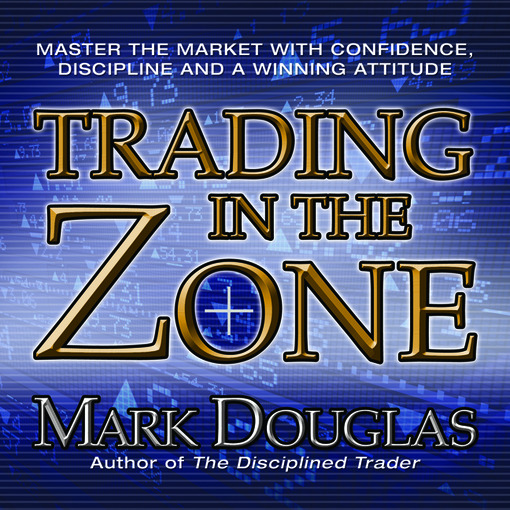
Trading in the Zone is our top pick on this list, and the first book we hand to every trader who comes through WR Trading, regardless of experience level or market. The reason is simple: it addresses the single biggest cause of trading failure, and it has nothing to do with strategy. It’s psychology.
Rather than dispensing trade setups, Douglas wants traders to start thinking in terms of probability. Put another way, key to his philosophy is that a clearly defined edge will give you consistent results over a number of trades, rather than hoping for any individual trade to provide solid guarantees. In a nutshell, Douglas highlights the 5 core drivers of professional trading behavior:
- Accepting that anything can happen in any trade
- Avoiding day-dreaming into hope (you don’t need to know what will happen next in order to make money now, in this trade)
- Understanding that wins and losses are randomly distributed when you operate within your defined edge
- Understanding that the same edge will also increase the probability of this outcome rather than that one
- Understanding that each market moment is unique
We rate this book above every other on this list simply because it answers a persistent question heard from traders at every level: why am I still losing money when I have a good working strategy? The only downside to Douglas’ offering is that there are zero trade setups on offer, and he repeats his core outline in every chapter. He does this on purpose, however, as he wants to keep traders away from assuming the content is just another strategy tweak, and also because he’s trying to dissolve existing trading habits. The repetition is hugely intentional.
Almost every trader we speak with can tell you that this book appears richer upon the second read, and richer still with the third. Once you actually experience the psychological patterns Douglas describes in live trading, rereading the book takes on deeper meaning, and becomes far more persuasive and habit-changing.
Pros
- Speaks to the root cause of inconsistent trading outcomes, namely trading psychology, not flawed strategies
- Applies to any and every market, timeframe, and every trading style
- Can be read in a weekend, but provides repeated value for years
- The single most recommended book across r/Forex, r/Daytrading, Goodreads, and trader forums worldwide
Cons
- Won’t give you anything on strategy or trade setups
- Repetitive, as Douglas’ core arguments saturate every chapter
- Can seem quite abstract for beginners without any live trading chops
What Readers Say
This book literally changed my trading overnight. Discipline, control, and a probabilistic mindset. These are the things that will make you profitable in the markets.
– Goodreads reviewer
Book Summary
Trading in the Zone will prime you to understand fear and euphoria as the 2 destructive emotions that ruin trading performance. Douglas wants to make you a casino, rather than a gambler, and with that mindset, you’ll operate within a framework of clear definition and consistent execution. His concept of thinking in probabilities (evaluating an edge over a sample of 25 traders rather than judging any individual outcome) is the most important mindset shift any trader can make.
This book is most powerful for traders who already have clear strategies and an edge, yet still experience lacklustre performance overall.
| Detail | Information |
|---|---|
| Author | Mark Douglas |
| Published | 2000 |
| Publisher | Prentice Hall Press |
| Pages | 240 |
| Price range | $15 – $25 (print) | $10 – $15 (ebook) |
| Best for | All levels, especially traders with a strategy who still lose consistently |
| WR Trading rating | 4.8 / 5 |
| Focus | Trading psychology, probabilistic mindset, emotional discipline |
| Where to buy | Amazon |
2. Technical Analysis of the Financial Markets by John J. Murphy
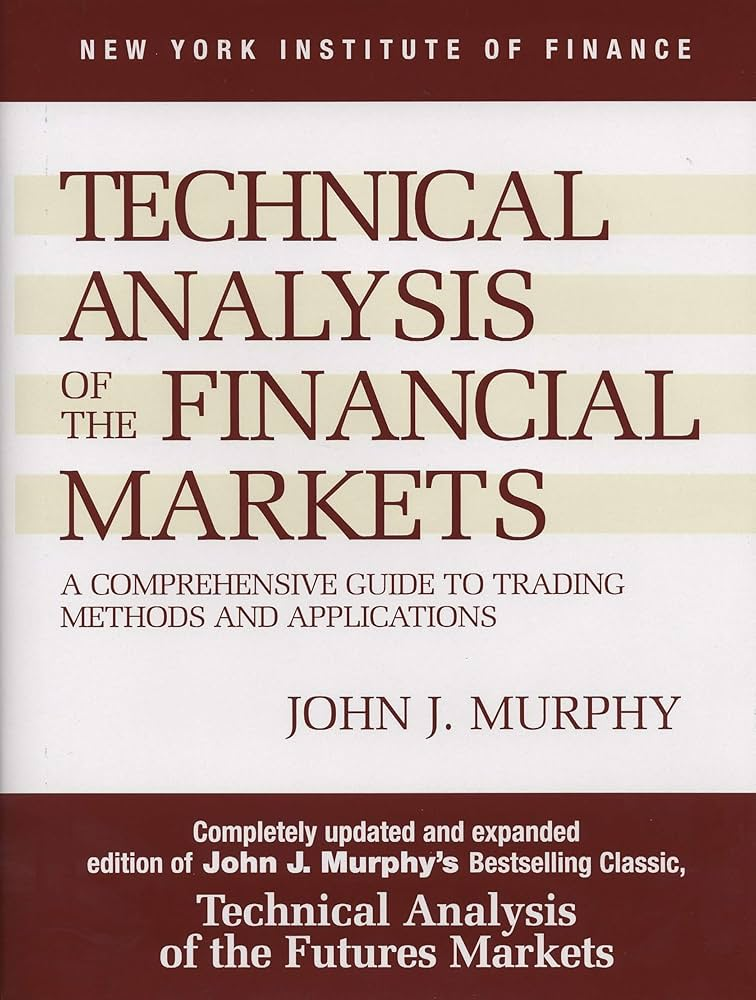
This is the standard reference text for technical analysis, and we recommend it as the foundational study for every chart-based trader, before they develop any strategy. Murphy was a technical analyst for CNBC and the New York Institute of Finance for decades. This book covers over 576 pages of technical methodology applicable to every asset class, including forex, crypto, stocks, commodities, and indices.
John J. Murphy covers every major concept in technical analysis: trend identification, chart patterns, candlestick analysis, moving averages, oscillators, volume interpretation, and intermarket relationships. The intermarket analysis section (explaining how bonds, commodities, and currencies connect to one another) is especially valuable for traders across all markets. In our experience, this aspect isn’t covered anywhere else in this kind of depth.
The book build each new concept on the previous, functioning simultaneously as a curriculum and a permanent reference library.
We like the comprehensiveness. No other single book covers technical analysis with this breadth. We know that it predates algorithmic trading and some modern market microstructure realities, but the foundational concepts (support and resistance, trend structure, pattern recognition) remain fully valid and applicable to every chart a trader encounters today.
Pros
- The most comprehensive technical analysis explanation available between 2 covers
- Intermarket analysis section clearly depicts the commodity-bond-currency relationship
- Applicable to forex, stocks, crypto, commodities and indices, every liquid market
- Industry-standard reference text, cited on Investopedia, TradingView, and across trading communities
Cons
- 600+ pages, dense, a detailed read, study reference
- Predates modern algorithmic trading and thus doesn’t include a mention of some current market realities
- Covers all asset classes equally, and will be a harder read for thos focused on any single market
What Readers Say
Murphy’s book is the go-to reference for technical analysis. Every pattern, every indicator, covered in the depth that no online course can match.
– TradingView community review
Book Summary
Technical Analysis of the Financial Markets presents traders with the 3 pillars of technical analysis (trend, momentum, and pattern) and traders usually treat the first read as a study exercise. Building each concept on the last, the layout is such that Murphy also becomes the go-to reference point when traders need guidance on indicators or chart patterns. The intermarket analysis section transforms how traders interpret market relationships. A rising dollar affects gold, bonds, and emerging markets in predictable ways that the author explains with clarity. The book functions as both a complete curriculum for a new technical trader and a lifelong reference for experienced ones.
| Detail | Information |
|---|---|
| Author | John J. Murphy |
| Published | 1999 (2nd edition) |
| Publisher | New York Institute of Finance |
| Pages | 600+ |
| Price range | $40 – $60 (print) | $25 – $40 (ebook) |
| Best for | Beginners building a technical foundation; intermediate traders filling gaps |
| WR Trading rating | 4.7 / 5 |
| Focus | Chart patterns, indicators, trends, intermarket analysis |
| Status | Industry-standard reference text for technical analysis |
3. Market Wizards by Jack D. Schwager
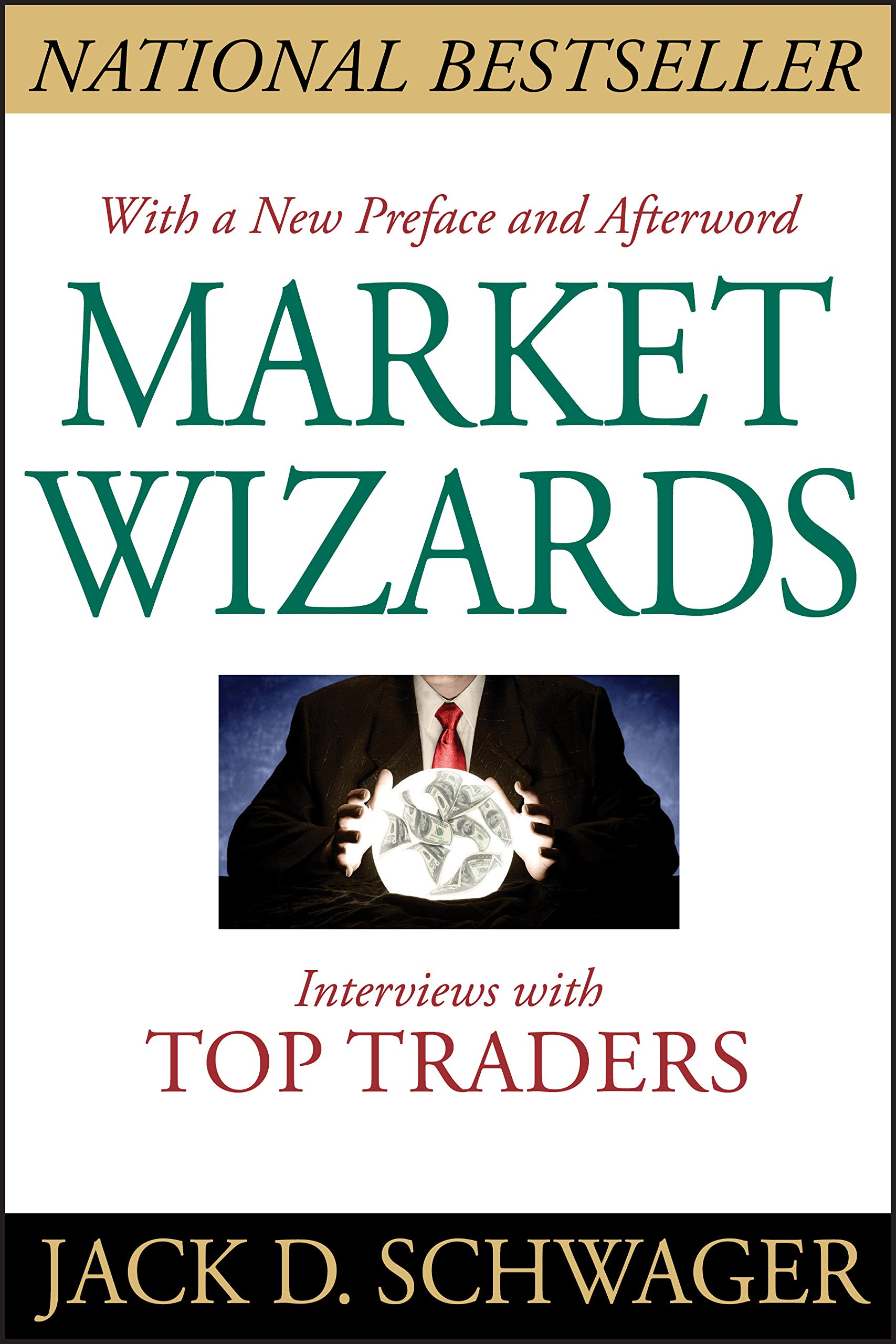
Market Wizards is third on our list and earns its place because no other book we’ve reviewed comes close to showing (through real interviews with real traders) what separates consistent winners from everyone else. We include it on every WR Trading reading list. Its value lies not in strategy, but in the psychological markers and risk philosophy that define professional performance.
The book details Schwager’s interviews with 17 accomplished traders across forex, futures, equities, and global macro. Not only are there 4 sequels to the original, but that original has been in print for 35+ years. For traders across all markets, 3 insights recur in nearly every interview:
- Position sizing matters more than entry selection
- Patience is a defining skill
- The ability to accept a loss without succumbing to an immediate need to make it back is a separating characteristic of professional traders
We like the fact that the book contains 17 diverse approaches to trading, showing clearly that there’s no 1 right road to success. The common factors are discipline and risk management rather than some strategy “secret”. We like the pre-1980s interview contexts somewhat less, as some chapters cover market environments that feel less directly relevant to modern trading.
The chapters featuring Paul Tudor Jones, Ed Seykota, and Bruce Kovner are the most frequently cited on Reddit and trading forums by traders at every level.
Pros
- 17 different profitable approaches prove there is no single road alone to profit
- Will alter a traders loss and risk perceptions more effectively than a rules-based guide
- Paul Tudor Jones, Ed Seykota, and Bruce Kovner chapters relevant to every market
- 35+ years in print, an endorsement few can match for industry literature
Cons
- Not market-specific, will frustrate dedicated traders who dwell in their niche
- Some interviews cover market conditions of the pre-1990s and feel almost foreign today
- Beginners without any technical foundation might experience the content as too abstract
What Readers Say
I’ve reread this at least 4 times over 10 years of trading. Every time I come back to it I get something different out of it, because my experience level has changed. The chapter with Ed Seykota alone is worth more than most trading courses.
– Amazon reviewer
Book Summary
Market Wizards is a study in that which separates winning traders from the rest, given over in an enjoyable read as a series of interviews. Especially for traders fixated on a specific strategy, Schwager highlights discipline, a defined edge, and the ability to stay the course under pressure as being far more important. All of the traders interviewed also prioritize capital preservation, which might sound redundant, yet is the token of a mindset few traders actually manifest. The successful traders interviewed trade each day with a mind to protect what they have, rather than going liquid in pursuit of what the might have at the day’s end.
This book will be most transformative for those who are comfortable in their strategy, yet find that consistent profitability still eludes them.
| Detail | Information |
|---|---|
| Author | Jack D. Schwager |
| Published | 1989; updated 2012 |
| Publisher | Wiley |
| Pages | 485 |
| Price range | $20 – $35 (print) | $12 – $20 (ebook) |
| Best for | All levels, most valuable after 6+ months of active trading |
| WR Trading rating | 4.3+ / 5 |
4. The New Trading for a Living by Dr. Alexander Elder
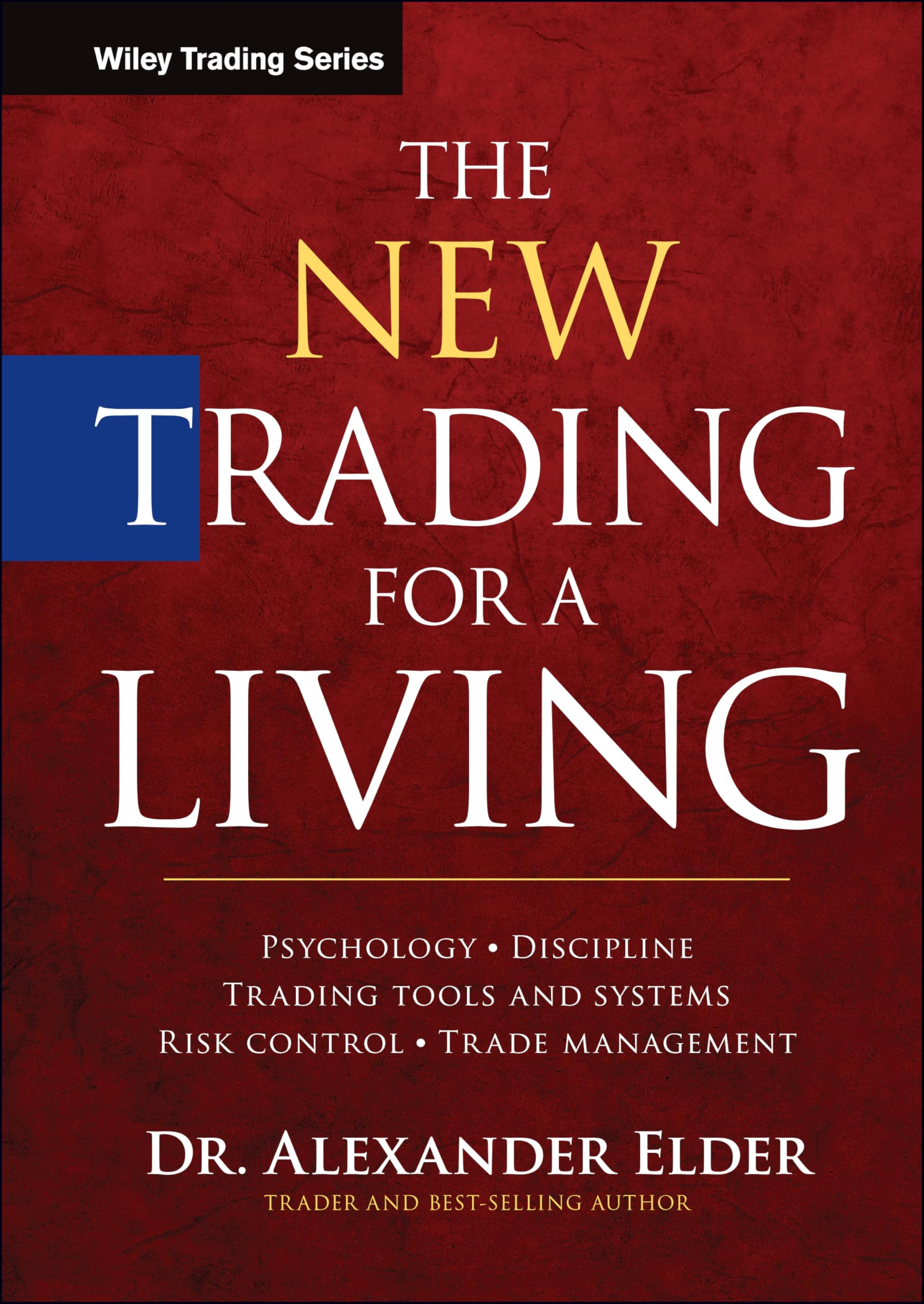
This is the most comprehensive trading manual in a single volume. We point intermediate traders toward The New Trading for a Living when they need one book that covers psychology, technical strategy, and risk management together in a structured coherent framework.
Dr. Alexander Elder is a psychiatrist who gravitated toward professional trading, and both of his skills shine through in his offering. His clinical training informs the psychology chapters, which go further than most training books in explaining the self-destructive patterns that cause intelligent people to make incoherent trading decisions. The Triple Screen trading system (that uses 3 timeframes to align trend direction with time of trade entry) is the book’s most frequently mentioned contribution to trader development.
We like his 2 risk rules more than almost any other guiding principle available in trading literature. The 2% Rule dictates that no more than 2% of your trading balance is ever pegged on any single trade. The 6% Rule in turn mandates that you cease trading for 30 days if ever your total drawdown hits 6%. Taken together, these 2 stipulations form a capital preservation framework that will allow more traders to stay trading long enough to develop some innate skills. The writing is a bit academic in parts, and the psychology sections read a lot like parts of Trading in the Zone without adding new intel. Nonetheless, neither of these aspects diminish the book’s value as the most integrated single-volume framework available.
The weekly chart is used to peg the trend direction, the daily chart identifies pullback entry points, while the intraday chart provides the specific entry trigger. Elder’s 3-timeframe discipline eliminates most of the counter-trend trades that damage beginner and intermediate accounts.
Pro
- Psychology, strategy, and risk management covered and well defined
- The 2% and 6% rules are the most eminently applicable and valuable risk management formulas found in any trading book
- Triple Screen system eradicates counter-trend trades
- Algorithmic trading dynamics are included in the updated 2014 edition
Cons
- An academic tone permeates the content in places
- Multiple timeframes incorporated into the Triple Screen system makes things more complicated for beginners
- Psychological sections have noticeable overlap with Trading in the Zone
What Readers Say
If I was doomed to pick only a single book on trading, I would seriously consider Alexander Elder’s The New Trading for a Living. My impression is that, so far, this is one of the best books in the genre of general trading that I came across.
– Goodreads reviewer
Book Summary
The New Trading for a Living presents 3 interconnected disciplines that define successful trading. Mastering psychology comes first. Elder argues that there is no winning strategy without psychological understanding, since most losses are rooted in behavior rather than failures of analysis. Said technical analysis comes second, with detailed coverage of trend indicators, oscillators, and how to combine multiple tools without creating analysis paralysis. Risk management comes third, with the 2% and 6% rules capping drawdown. The Triple Screen system connects all 3 disciplines into a single decision framework that traders apply from the first chart they open each morning.
| Detail | Information |
|---|---|
| Author | Dr. Alexander Elder |
| Published | Updated edition 2014 |
| Publisher | Wiley |
| Pages | 352 |
| Price range | $30 – $45 (print) | $18 – $28 (ebook) |
| Best for | Intermediate traders looking to settle psychology, strategy, and risk management into a single comprehensive understanding |
| Focus | Trading psychology, technical analysis, Triple Screen system, 2%/6% rules |
| WR Trading rating | 4.3 / 5 |
5. Reminiscences of a Stock Operator by Edwin Lefèvre
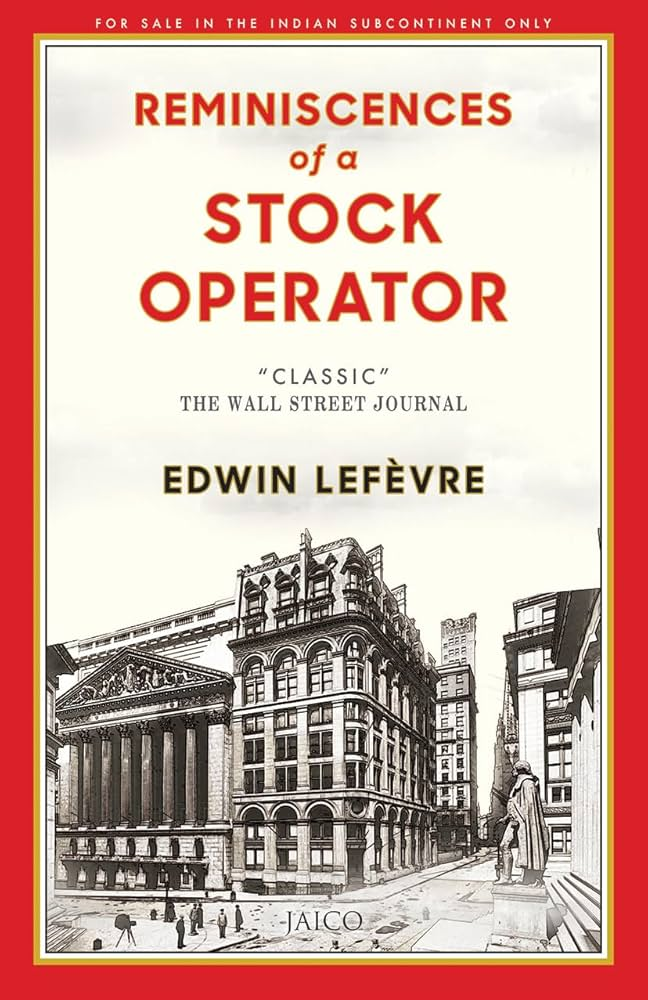
This book is a classic, still highly rated today (after 100 years in print) among all committed trader communities. At WR Trading, we recommend Reminiscences of a Stock Operator to every trader facing the perpetual human psychology that always drives markets, and who wants a foundation that no amount of technical analysis can fully replace.
The book is a fictionalized biography of Jesse Livermore, one of the most extraordinary traders in history, who built up and subsequently lost fortunes in stocks and commodities many times over. Livermore progresses from being a bucket-shop tape reader to making millions short-selling the 1929 crash, detailing lessons he gleans from both his successes and his wholesale failures. Traders across every market will recognize every psychological pattern Livermore describes (the temptation to average down on losing trades, the impulse to take profits too early when you’re winning, the destructive effects of “tips” and outside opinions, and the overconfidence prompted by a winning streak).
We like that this book gives over market wisdom through a narrative, as the lived experience of trading instead of rules and how-to instructions. Reading it results in a level of internalization that technical manuals seldom attain. At around $15 (or less) for most editions, Reminiscences of a Stock Operator is the highest-value book on the list. The book’s age depicts market mechanics that are sometimes outdated, along with some terminology, but the lessons on psychology are fully evergreen.
Pros
- Over 100 years in print, the greatest endorsement in trading and many other literature types
- Teaches market wisdom through a deep-etching narrative structure
- Timeless wisdom on the risks of tips, the mistake of averaging down, following trends and managing positions
- Usually under $15 in most editions, the highest value-for-money book on this list
Cons
- Published 103 years ago, some aspects dated
- No formulaic methodology, no strategy or risk management systems laid out
- Most valuable and impactful after accumulating some trading experience
What Readers Say
There is nothing like losing all you have in the world for teaching you what not to do. And when you know what not to do in order not to lose money, you begin to learn what to do in order to win. Did you get that? You begin to learn!
– Goodreads reviewer
Book Summary
Reminiscences of a Stock Operator details Jesse Livermore’s trading journey, from teenage bucket-shop tape reader to taking hugely successful short positions in the 1907 panic nd the 1929 crash. Livermore’s wisdom can be summarized in 5 points:
- Big money comes from big moves, not constant fiddling
- If you’re convinced of the direction, go big in your position
- Trading against the trend loses more money than any other trading activity
- Taking tips and leaning on others’ opinions makes you headless, and broke
- The market has always been a device for moving money from emotional traders to stoic ones
| Detail | Information |
|---|---|
| Author | Edwin Lefèvre |
| Published | 1923; republished, multiple editions |
| Publisher | Various, widely available |
| Pages | ~290 (varies by edition) |
| Price range | $8 – $15 (print) | $3 – $10 (ebook) |
| Best for | All levels, most impactful after 3–6 months of actual live trading |
| WR Trading rating | 4.3 / 5 |
| Focus | Correct trading mindset, identifying and following trends, managing a position, mastering emotions |
| Status | Over 100 years in print, the original and most widely read trading classic |
6. Day Trading and Swing Trading the Currency Market by Kathy Lien
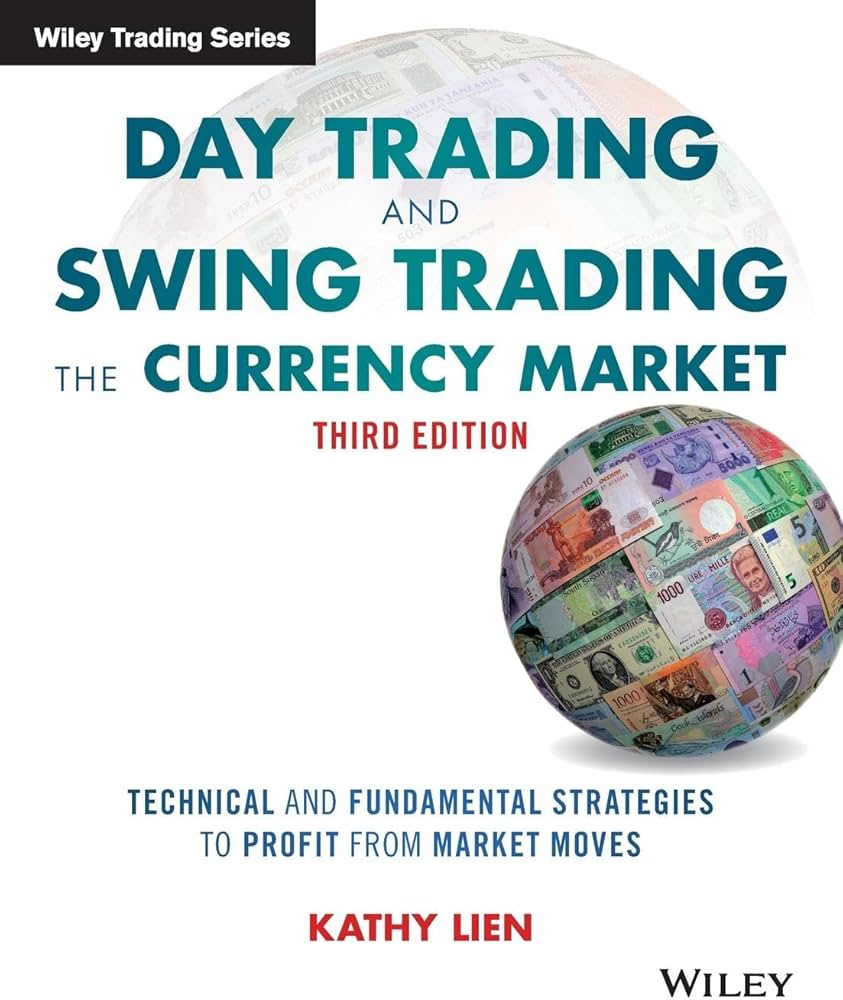
At WR Trading, we recommend this book as the principal strategy read for traders who want a forex-specific, strategy-driven framework beyond foundational concepts. Kathy Lien is a former JP Morgan trader and ex-chief strategist at DailyFX. She brings genuine institutional experience down to a widely accessible level. Now in its 3rd edition (2015), this book walks through both fundamental and technical analysis in a single volume, something rare in trading books.
Where most trading books make chart patterns their primary focus, Lien deals with crucial macroeconomics too:
- Interest rate differentials
- Central bank policy
- Major economic data releases (NFP, CPI, PMI)
She also breaks the book down pair by forex pair (EUR/USD, GBP/USD, USD/JPY, and others) explaining the 4 to 6 economic drivers behind each one. This pair-by-pair structure is consistently cited as the standout feature by experienced forex traders.
We like the 2-pronged approach (with macro fundamentals and technical strategy in one book). It’s less great that some chart-based strategy examples feel dated by the time new editions arrive, but that’s a minor consideration. The macroeconomic and fundamental content, however, holds up across all editions, and forms one of the most useful single-volume forex strategy resources available.
Pros
- Combines technical and fundamental analysis into a single read
- Written by someone who was at the coalface, not a retail “instructor”
- Repeatedly recommended by the r/Forex community and many others
Cons
- Some examples depicting chart-based strategies feel a little old
- The post-2015 central bank policy changes aren’t captured by the 3rd (latest) edition
- The focus is on swing/day trading timeframes, so scalpers will find limited value
What Readers Say
I found Lien’s technical strategies particularly useful as advanced techniques and I have not read of them elsewhere in other books, making them a valuable asset in a trader’s arsenal.
– Amazon reviewer
Book Summary
Day Trading and Swing Trading the Currency Market teaches traders how to view currency pairs move. Not just how to read their charts, but why currency pairs move the way they do.
Lien points to the London, New York, and Tokyo session overlaps as the 3 optimal trading windows, explains the macro drivers behind each major pair, and primes day and swing traders with some eminently workable strategies. She also highlights how anticipated interest rates perform as the most persistent diver behind broad currency trends, and this focus is something that has fundamentally altered how thousands of traders now interpret central bank announcements and other major economic data releases.
| Detail | Information |
|---|---|
| Author | Kathy Lien |
| Published | 3rd Edition, 2015 |
| Publisher | Wiley |
| Pages | 368 |
| Price range | $30 – $45 (print) | $20 – $30 (ebook) |
| Best for | Beginner to intermediate traders building a forex-specific strategy foundation |
| WR Trading rating | 4.2 / 5 |
7. How to Day Trade for a Living by Andrew Aziz
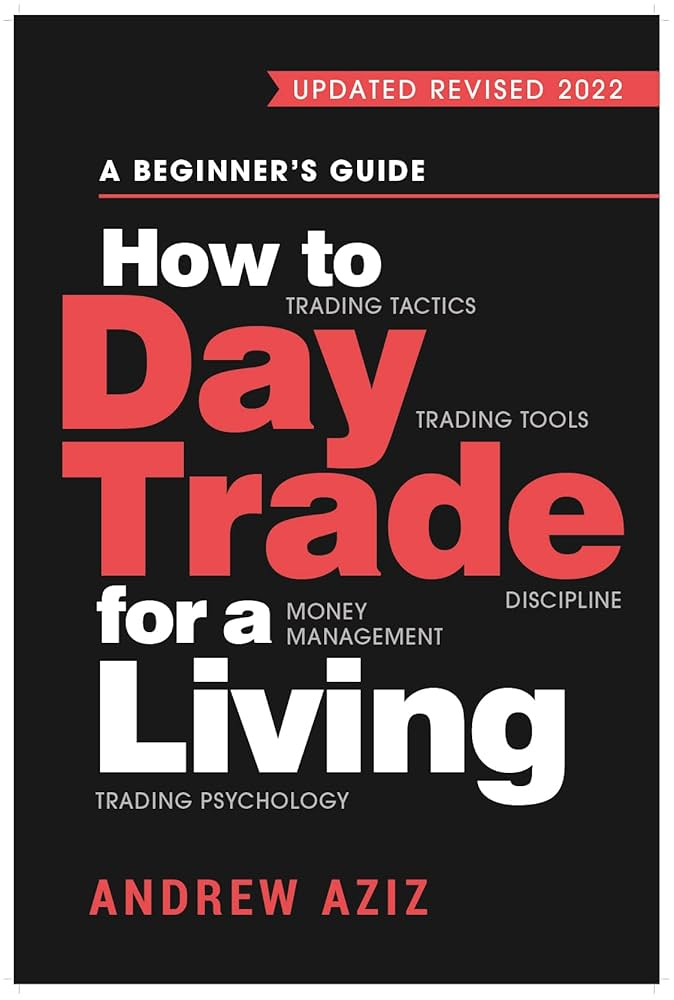
This is the book we always recommend to novice day traders who want to both grasp the dynamics and flesh out a working strategy. The founder of Bear Bull Traders online, Aziz is actually an engineering PhD. Investopedia speaks highly of his offered day trading course, and it has to be said that the Bear Bull community is highly active and enjoys a good reputation for legitimate strategy and results.
The book has been translated into over a dozen languages, and ranked among the top for financial authors for 7 years in a row. We like the fact that Aziz is specific, avoids abstract meanderings, and concentrates on 6 hardnosed intraday strategies. They come replete with good detail (signals for entry, identifying when to exit, correct stop-loss placement) and real examples of sample traders per strategy. The 6 strategies covered are:
- ABCD pattern
- Bull Flag Breakout
- VWAP trend trade
- Fallen Angel reversal
- Opening Range Breakout
- Moving Average trend trade
Aziz also points to how to select stocks based on a news catalyst and ensuing high relative volume. Focusing on stocks in play like these is what Aziz defines as a key filter to separate out actionable setups from the broad market noise.
We also like Aziz’shonesty about the need for a minimum of 6 months demo training and the fact that there’s no profit waterfall, even for competent traders. On the downside, it’s fair to say that the strategies he gives over are geared for highly volatile, trending markets, whereas guidance for choppy conditions is a bit thinner. There is a sequel titled Advanced Techniques in Day Trading that fills in the gaps, however.
Pros
- Aziz provides 6 concrete strategies with entry and exit (and management) laid out
- An honest presentation of trading that advocates months of training before going live
- The relative volume and VWAP information is an immediately valuable mindset shift
- A highly recommended book, compulsory beginner reading and extremely valuable for everyone else too
Cons
- The strategies Aziz gives out perform best in volatile, trending markets
- Strong US equities focus only
- Reading the sequel becomes mandatory after the initial vcolume is digested and applied
What Readers Say
Great book to get started and just learn some basics about day trading.
– r/Daytrading reviewer
Book Summary
How to Day Trade for a Living will teach you how to identify high-probability intraday setups using 3 principal filters (news or earnings of a stock, above-average relative volume, and a clean technical structure). Combined with the stipulation that no more than 2% of your account balanced goes into any one trade, along with a 2:1 risk/reward ratio for a trade to be eligible, Aziz gives over a tight, actionable approach, where VWAP is used as a dynamic support and resistance level that informs both retail and institutional traders.
| Detail | Information |
|---|---|
| Author | Andrew Aziz |
| Published | 2016 (updated editions available) |
| Publisher | CreateSpace / Bear Bull Traders |
| Pages | ~180 |
| Price range | $10 – $20 (print) | $5 – $10 (ebook) |
| Best for | Novices starting their day trading journey |
| WR Trading rating | 4.1 / 5 |
| Focus | Intraday strategies, stocks in play, VWAP, risk management |
8. The Psychology of Money by Morgan Housel
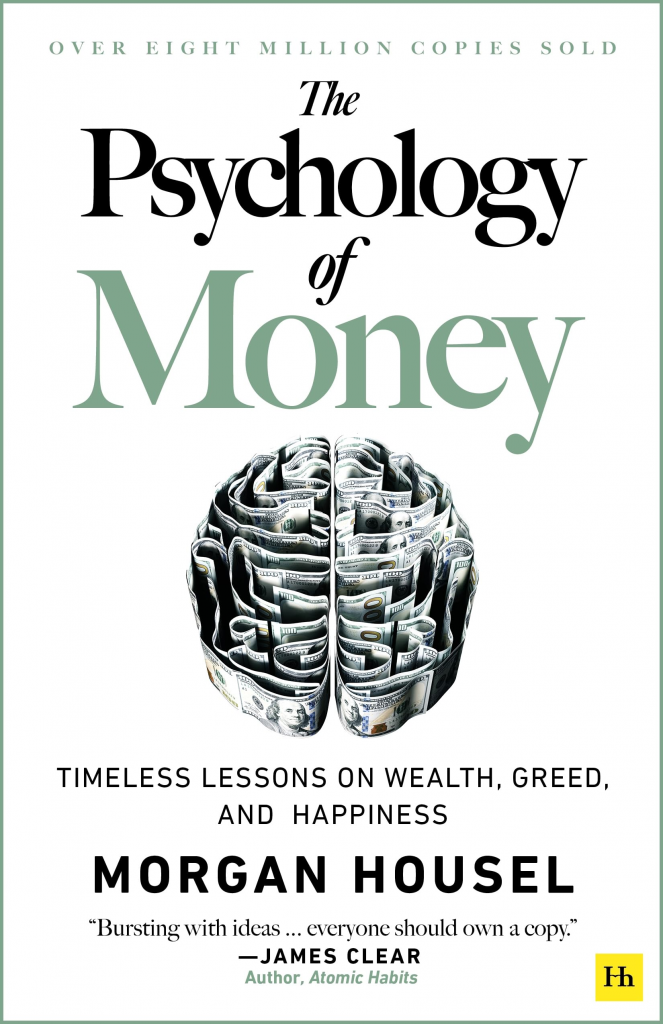
At WR Trading, we include this title on our general reading list because it addresses the behavioral dimension of wealth-building that most trading literature ignores: how traders and investors think about money itself, not just individual trades. Morgan Hoousel is a partner at The Collaborative Fund. He;s also a former columnist at The Wall Street Journal and The Motley Fool. The book has sold over 4 million copies since publication in 2020, making it 1 of the fastest selling personal finance and trading-adjacent titles ever published.
Housel’s argument is that financial success depends less on intelligence and more on behavior. He gives over 19 short chapters, each covering a specific way in which human psychology undermines financial decision-making. The chapters on compounding, tail events (that a small number of outcomes drive the majority of results), and the importance of staying in the market long enough to actually benefit from those tail events are the most directly applicable to traders and investors managing real capital in any asset class.
We like the book’s accessibility. It’s the most readable title on this list and the most likely to be finished by traders who rarely read non-fiction in full. We like less that it’s not a trading strategy book (it gives out no setups, indicators, or execution frameworks). it’s ultimate value lies in being able to reframe how traders think about risk, time, and money.
Pros
- 4 million+ copies sold, the most commercially validated book on this list since publication
- 19 concrete behavioral insights directly applicable to trading and investing decisions
- Most accessible and readable title on this list, high completion rate
- Particularly relevant for swing traders, stock traders, and crypto traders with longer time horizons
Cons
- Not a trading strategy book, as it has no setups, indicators, or execution tips to offer
- Focused on wealth accumulation and long-term investing as opposed to shorter-term trading
- Less directly applicable to day traders and scalpers than swing and position traders
What Readers Say
This is the book I wish I had read before I started trading. It explains why smart people make bad financial decisions, and once you understand that, you start catching yourself in the act.
– Amazon reviewer
Book Summary
The Psychology of Money presents 19 short essays on the ways human behavior shapes financial outcomes. The most important insight for traders is the concept of tail events. In investing, as in trading, a small number of outcomes (winning positions, winning periods, key decisions) drive the majority of total results. Housel argues that staying in the game long enough to be present for those tail events is more important than optimizing any individual decision.
The chapter on compounding and patience is the most directly relevant to traders managing drawdowns, and the chapter on reasonable vs rational financial decision-making explains why the most mathematically optimal trading decision is not always the one a trader can actually execute under emotional pressure.
| Detail | Information |
|---|---|
| Author | Morgan Housel |
| Published | 2020 |
| Publisher | Harriman House |
| Pages | 256 |
| Price range | $15 – $25 (print) | $10 – $15 (ebook) |
| Best for | Stock, crypto, and swing traders; anyone managing a portfolio across time |
| WR Trading rating | 4 / 5 |
| Focus | Behavioral finance, wealth psychology, long-term thinking, risk tolerance |
9. Japanese Candlestick Charting Techniques by Steve Nison
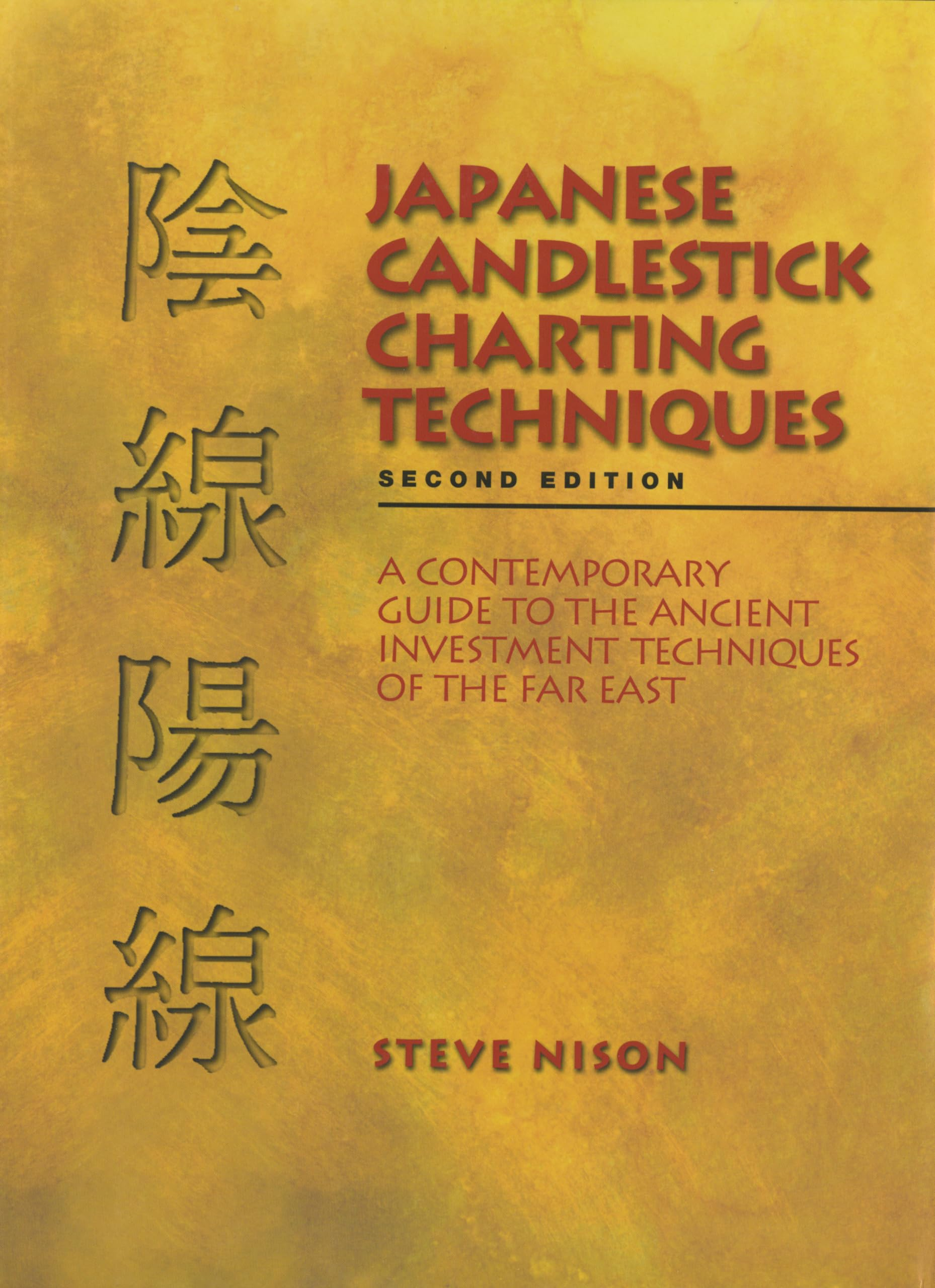
This is the defining title when it comes to understanding candlesticks, and at WR Trading it’s considered required reading for chart traders. Nison is the guy largely responsible for making Japanese candlestick charts the obvious default component of Western financial markets they so often are today. Prior to Nison’s publication in 1991, candlesticks were very much an exclusively Japanese trader tool, hard as that might be to imagine nowadays.
Nison covers 50+ patterns in 4 categories:
- Single-candle reversal signals
- 2-candle reversal signals
- 3-candle patterns
- Multi-candle consolidation patterns
Understanding the methodology’s origins and what candlesticks are telling you about buyer/seller behavior will give you a more accurate and meaningful read of daily charts. We really like the exhaustive approach taken by Nison. You aren’t going to get this kind of detailed coverage from any online course, not even in a different, speedier format, like a YouTube clip. It can be a sticky read as Nison’s tone is dry in places, it’s meant to be a reference, like a dictionary or subject textbook. Treat it as a study resource and candlestick charting will take on a new clarity forever more.
Pros
- The first and still most thorough exegesis of candlestick charting
- Covers over 50 patterns and explains what’s happening in the markets when the pattern appears
- Applies to any asset depicted on a candlestick chart
- It’s a return-to resource, a very generous base of knowledge from which to build actual charting experience
Cons
- A dry and sometimes sluggish read, the desire to master candlesticks must drive you, since the text won’t engage in the classic sense
- Some of the examples depicted are dated
- There is no strategic section, no setups
What Readers Say
I put off reading this for years thinking candlesticks were just shapes. This book completely changed how I read a chart. Nison explains the psychology behind every pattern. Once you understand that, you can’t unsee it.
– Amazon reviewer
Book Summary
Japanese Candlestick Charting Techniques is a direct-to-the-source explanation of how price action depicts market psychology.It clearly extrapolates the push/pull of buyers and sellers, and Nison points to the Hammer, Doji, and Shooting Star as the 3 most dependable 1-candle reversal signals. That said, he is adamant that 1 candle is not enough, as he mandates that traders always wait for confirmation from the candle following before entering a trade. The book also does a great job of teaching traders how to combine Western technical analysis with candlestick charting so as to further solidify the signals the charts are giving you.
| Detail | Information |
|---|---|
| Author | Steve Nison |
| Published | 1991; 2nd edition 2001 |
| Publisher | Prentice Hall Press |
| Pages | 315 |
| Price range | $35 – $55 (print) | $20 – $30 (ebook) |
| Best for | All levels, critical reading for any chart-based trader |
| WR Trading rating | 4 / 5 |
| Focus | Candlestick pattern recognition, chart interpretation based on market psychology |
| Status | First brought Japanese candlestick charting to Western markets |
10. One Good Trade by Mike Bellafiore
We recommend One Good Trade to every developing trader who has moved beyond the beginner stage but hasn’t yet found consistency (which describes most intermediate traders at some point in their development). Mike Bellafiore is a co-founder of SMB Capital, one of New York’s most respected prop firms. The book draws directly from SMB’s training program, and presents the internal philosophy the firm uses to develop professional traders from scratch.
While “one good trade” might seem to imply a “one big score” approach, nothing could be further from the truth. The book’s central concept of the one good trade philosophy means that a trader’s job is to make one good trade at a time, executed according to a defined process, rather than focusing on P&L or daily results. This process-over-outcome framework is the psychological shift most developing traders need but rarely encounter in strategy-focused resources. Bellafiore covers trader development from the perspective of someone who has trained 100s of professional traders, identifying the 5 most common reasons traders fail to reach consistency, and the specific habits that separate those who make it from those who don’t.
We like the insider perspective. Bellafiore writes from inside a professional trading firm, not from a retail education platform. The content reflects how professional traders are actually trained, not how retail educators believe they should be schooled. We are less enthusiastic about the books US equities’ focus, and the fact that some of the firm-specific context (direct access trading, Level 2, hot keys) is more relevant to prop desk traders than retail traders on standard platforms.
Pros
- Written by a co-founder of SMB Capital, a genuine professional trading firm perspective
- Process-over-outcome framework is the most important mindset shift for developing traders
- 5 specific failure patterns identified, immediately actionable self-diagnosis for intermediate traders
- Rare insider view of how pro traders are actually trained
Cons
- US equities and prop desk focused, some context will be less relevant to the average retail trader
- Less applicable to forex, crypto, or commodity traders
- Not a beginner boo, assumes basic market knowledge and some live trading experience
What Readers Say
Bellafiore writes about trading the way it actually is inside a professional firm. The one good trade concept sounds simple but it changes everything about how you approach each session.
– Amazon reviewer
Book Summary
One Good Trade builds its entire framework around the idea that consistency comes from process, not from outcomes, which (if you think about it) is an obvious truth, no matter that most traders like to believe otherwise. Bellafiore identifies 5 common reasons developing traders fail to reach consistency:
- Trading too many setups instead of focusing on their A-setup
- Adding to losing positions
- Ignoring the market context
- Abandoning their process after a losing streak
- Failing to study their own trades
The book explains how SMB Capital’s training addresses each of these failure patterns, and provides a practical framework for developing traders to diagnose and correct the same patterns in their own trading.
| Detail | Information |
|---|---|
| Author | Mike Bellafiore |
| Published | 2010 |
| Publisher | FT Press |
| Pages | 288 |
| Price range | $20 – $35 (print) | $12 – $20 (ebook) |
| Best for | Intermediate traders struggling with consistency who have basic market knowledge |
| WR Trading rating | 4 / 5 |
| Focus | Trading process, consistency, professional trader development, failure patterns |
| Community status | Recommended by prop trading communities and on r/Daytrading |
Which Type of Trading Book Should You Avoid?
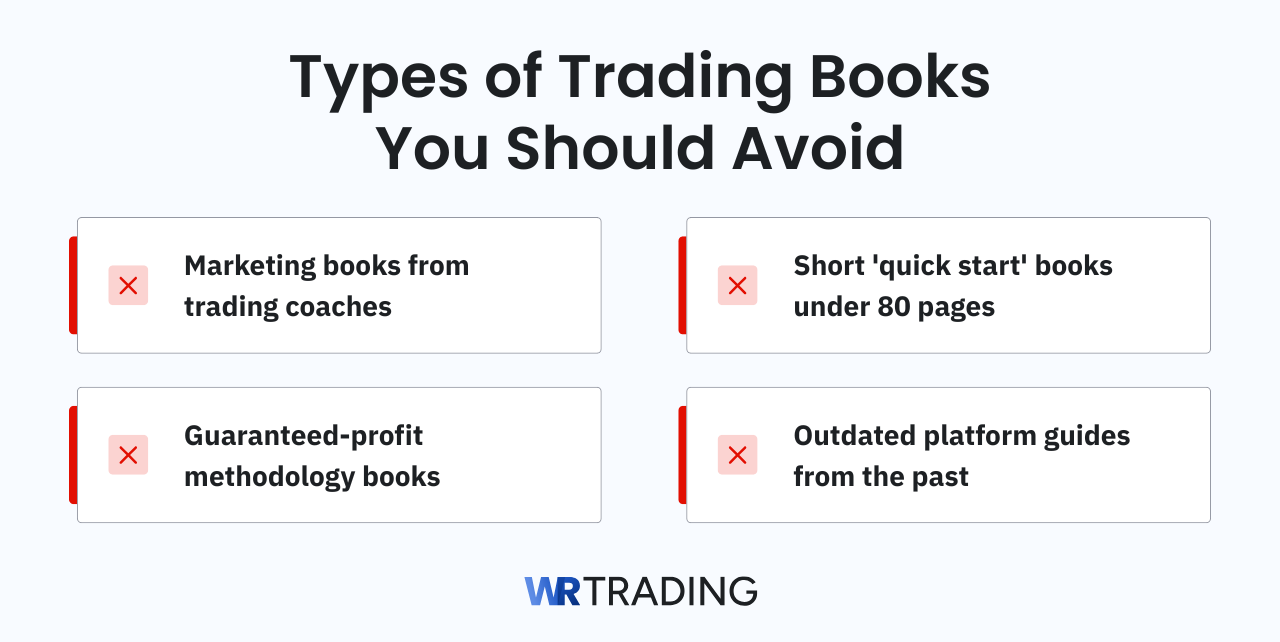
The trading book market is rife with low-quality content, moreso than almost any other financial education category. At WR Trading, we’ve narrowed down 4 dubious categories that are more often than not best to avoid, since they’ll deliver no value:
- Marketing books from trading coaches. These are very often books written with the aim of funneling readers into a buy-now situation, where the author is selling an online course, exclusive platform access, or a tipping service. They seldom have useful strategy content and are saturated with unverifiable claims around performance. The content will rarely (if ever) allow anyone to trade independently, as of course that’s not the aim of the publication.
- Short ‘quick start’ books under 80 pages. Books that claim to be able to teach you day/swing/forex trading over the weekend are not legitimate resources. Trading any asset class along any strategy demands actual study and live practice. Anyone suggesting otherwise is after Amazon rankings and/or sales, and has no business providing trader “education”.
- Guaranteed-profit methodology books. Any trading book that apparently contains a system that produces guaranteed profits is fiction. It might be a nice sci-fi fantasy read, but markets are dynamic. If profits could be guaranteed, why would anyone on Earth bother working a job? No system will rake in profits under all market conditions.
- Outdated platform guides. Titles published prior to 2015 (usually those focused on Level 2 screen layouts, specific broker interfaces, or order routing systems) are largely redundant now. The mechanics of platforms get old quickly. The foundation of trading (risk management, risk to reward, price action, psychological influence) doesn’t.
What Are the Costs of Trading Books?
Trading books range in price from relatively cheap (under $10) to more pricey (over $60), based on thneir format and depth of content. The 3 broad price ranges you’ll encounter are:
- Under $15: Beginner introductions and reprints of classics, for example Reminiscences of a Stock Operator ($8–$15) and Trading in the Zone’s budget editions.
- $15 – $35: In this (mid-)range you’ll find books on trading psychology and strategy, like One Good Trade ($20–$30) and Trading in the Zone ($15–$25). Market Wizards ($20–$35) also sits in this grouping.
- $35 – $60: This bracket contains pro-grade textbooks and books addressing the institutional-perspective. Examples include Japanese Candlestick Charting Techniques ($35–$55) and Technical Analysis of the Financial Markets ($40–$60).
Ebooks are typically a lot cheaper than their print counterparts in all categories. Audiobooks of the title are also often available, and usually land at $15–$25. purchasing 3 or 4 well chosen books on this list will allow you to grasp the details of technical analysis, strategy, and psychology, for an investment that won’t exceed $120. it’s an excellent investment, considering the returns.
What Are the Best Trading Books for Beginners?
The best trading books for beginners are How to Day Trade for a Living (it’s subtitled A Beginner’s Guide to Trading Tools and Tactics etc.), Trading in the Zone, and Day Trading and Swing Trading the Currency Market, in that order.
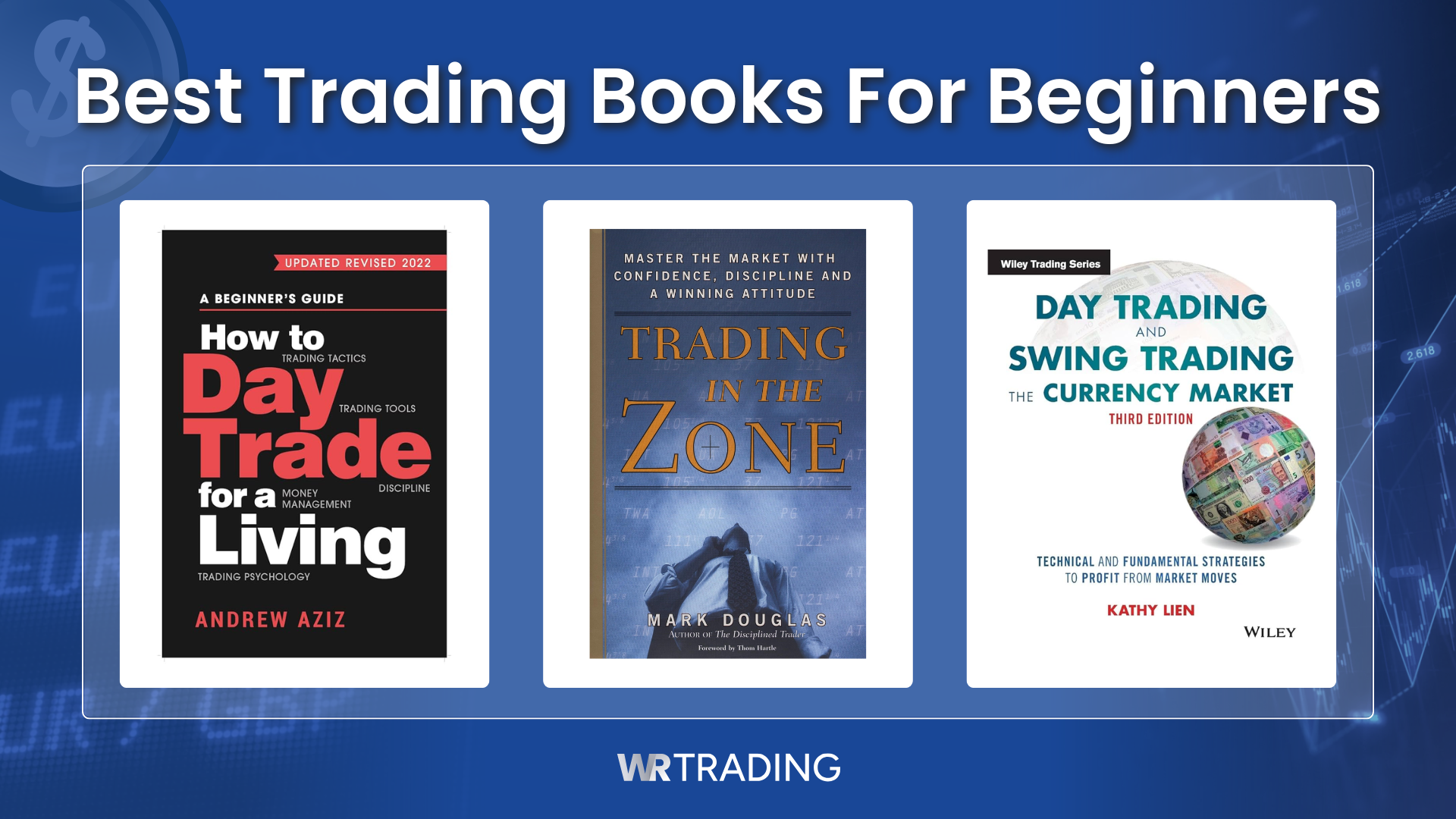
Reading Aziz first provides beginners with a good overview of the tools and tactics of trading, as well as the notions of intraday setups based on legitimate strategies. Trading in the Zone then highlights the psychological dimension of trading, seasoning the innate enthusiasm spurred by Aziz. Kathy Lien’s offering, Day Trading and Swing Trading the Currency Market, rounds out a beginner’s first reading stint, as it comes in as a reassuring voice with tremendous authority and practical know-how.
What Are the Best Trading Books for Advanced Traders?
The 3 best trading books for seasoned traders would be Technical Analysis of the Financial Markets, Market Wizards, and One Good Trade, preferably read in that order.
Technical Analysis of the Financial Markets is a reference work, both a refresher and a constant improver of a professional’s edge. Market Wizards is precisely the kind of inspirational yet legitimate voice of peers that pro traders need to constantly hear. One Good Trade, the last entry, might be geared towards developing traders, but every professional can benefit from regularly analysing themselves against a strict process-oriented approach to the markets.
Which Books Can Be Used for Mental Discipline in Trading?
To build your mental discipline, the best 3 titles on this list would be Trading in the Zone, Market Wizards, and Reminiscences of a Stock Operator.
Trading in the Zone’s premise is the elimination of the habits that typically bury traders by their own hand. Market Wizards continues this theme, in a sense, bacause it shows the commonality of the failures experienced by 17 very diverse and successful traders, and (in some cases) how they learned from those failures and changed their habits. Reminiscences of a Stock Operator is a classic, and a singular narrative impression in trading literature. It forever brands traders with an acute understanding of just how essential discipline is in trading.
Can I Download Trading Books as PDFs?
Yes. There are some platforms that offer (legal) PDF downloads of thousands of titles, including many trading books. 2 resources worth checking are pdfroom.com and pdfdrive.com, both of which index completely free versions of numerous trading books. For better prices on titles, Amazon Kindle is always an option, while Google Play Books, other resellers, and often the publisher’s own website offer official ebook versions as PDF or epub format downloads.
Some older titles (including Reminiscences of a Stock Operator (1923)) are now in the public domain, and you can download them completely free from Project Gutenberg and other internet archives.
Will Trading Books Help You Become a Successful Trader?
Yes, just as learning how to read charts will aid your trading too. Put differently, books alone won’t make you a successful trader. Trading books contextualize your desire to trade, and can give you a foundation built on understanding trading psychology, market knowledge and vocabulary, trading strategies, and the imperative of risk management principles. The 10 books in this list give over everything you’ll need to understand in order to open a trading position with actual money.
Books are limited in 3 important ways, however.
- They are essentially descriptive, and no matter that they outline principles and strategies, pattern recognition can only come from live trading.
- Reading a book will never fully replicate the flow of emotions associated with the act of putting your money into a trade.
- They are also based upon the experiences of the writers, and might not necessarily reflect what you are facing in the markets today, or this week.
At WR Trading, we’ve seen this pattern repeatedly with the traders we mentor. Those who combine structured reading with live practice, even on a demo account, build a framework that holds under pressure. Those who read alone, without applying, tend to reset every time market conditions shift.
Why Trading Books Can’t Replace Mentoring
The books listed here carry a fortune of wisdom and essential content every trader needs as second nature. That content was produced by someone who was at the coalface, who traded the financial markets, and learned through successes and failures what they are giving over in the pages they have written. Trading literature is essentially compressed experience, formatted as learning, a study guide. Mentoring, however, takes compressed experience and gives it over directly, in a manner that accelerates development and actual results.
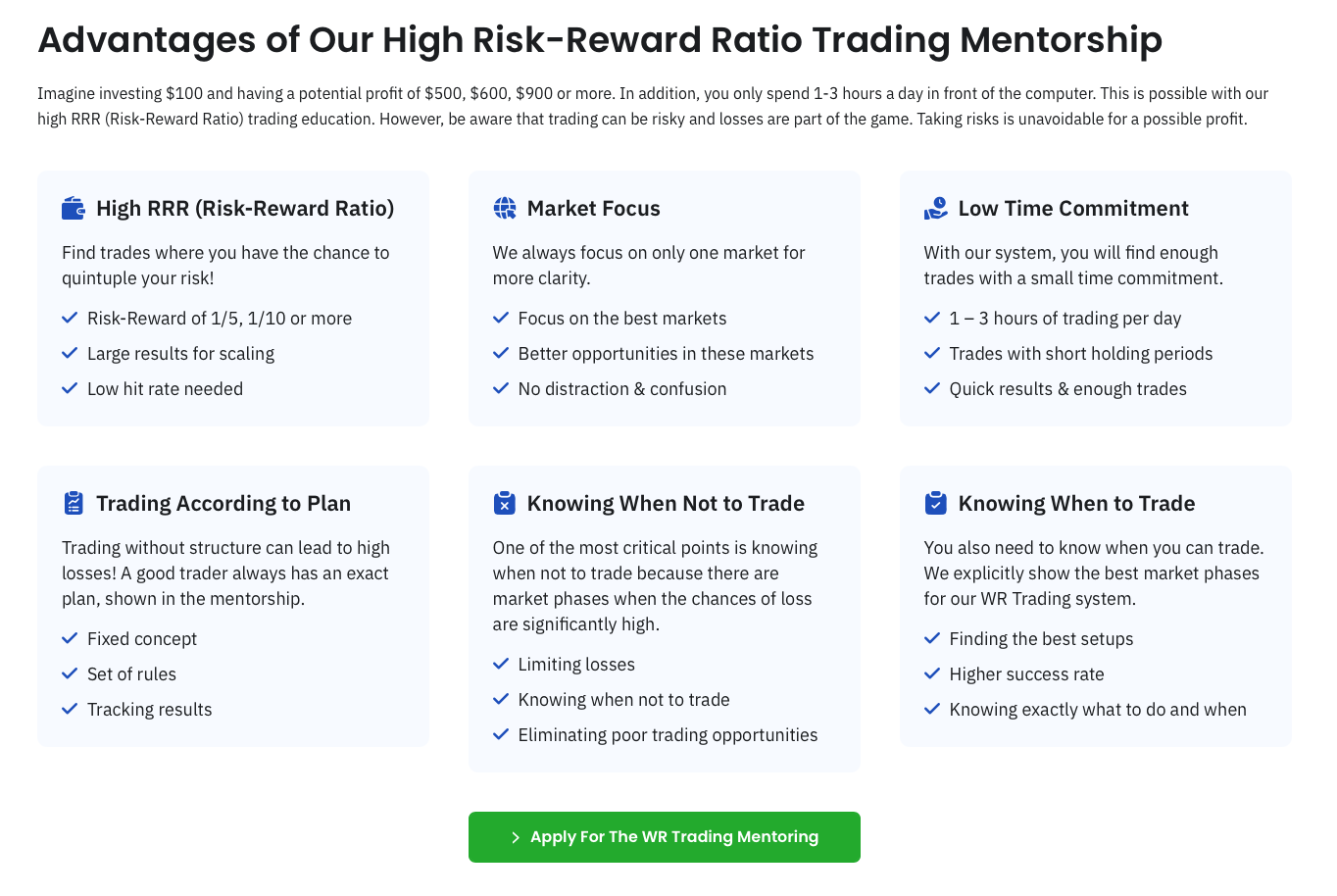
At WR Trading, our recommended reading lists are aides to our mentoring program, because traders who start with a strong reading foundation learn and develop faster. Books provide the vocabulary and conceptual understanding that accelerates actual trading under a mentoring guide. The mentoring feedback loop is something that books can never provide, yet it’s the fastest route to trading success you can take.
The books listed here are highly recommended for building a foundational understanding of financial treading, but mentoring from a seasoned trader is what will transform that foundation into a profitable trading career.
Conclusion
Preparedness and a solid foundational understanding are crucial in trading. The 10 books listed here cover the essential 4 core competencies a successful trader will need:
- Foundational understanding
- Market knowledge
- Technical skill
- Psychological discipline
It’s because no one book can ever hope to cover all 4 equally well that diverse yet channelled reading is so important to your overall development as a trader.
The top 2 books that are the most often cited titles across every platform we researched (Amazon, Reddit, Goodreads, TradingView, many other trader forums) are Trading in the Zone for psychology, and Market Wizards to gain perspective. That being said, you’ll find all of the above titles frequently mentioned in trader forums, each one bringing a unique perspective, making them all worthwhile reads for every trader at every level. If we can glean anything from Market Wizards, it’s that even highly successful pro traders are never so smug as to assume they have nothing to gain from rereading, nor do they ever consider themselves beyond learning something new.
Financial trading is a skill, and it takes practice, constant learning, and application to improve. These books will build the foundation that every consistently profitable trader needs in order to get there.,
To find more books on trading in different categories, we prepared these different top lists for you:

