


Find the best trading psychology books here, in our complete WR Trading guide. In this review, we compare all of the most recommended titles in the genre to give you the 10 best reads that will up your trading game.
The books we review here have been written specifically to address the psychological aspect of trading.
We selected these 10 titles based on 3 criteria specific to trading psychology:
- Depth of psychological insight (how directly the book addresses the emotional behavioral patterns that generate trading losses).
- Applicability across markets and experience levels, from complete beginners developing their first framework to advanced traders eliminating stubborn mental leaks.
- Validation from active trading communities, including Reddit’s f/Forex, r/Daytrading, Amazon, and Goodreads.
These Are The 10 Best Trading Psychology Books Listed:
- Trading in the Zone by Mark Douglas: Best overall and best for probabilistic mindset
- The Disciplined Trader by Mark Douglas: Best for understanding limiting beliefs, best foundation for beginners
- Best Loser Wins by Tom Hougaard: Best for advanced traders, best modern mindset book
- The Mental Game of Trading by Jared Tendler: Best practical system, best for solving specific emotional problems
- The Daily Trading Coach by Brett N. Steenbarger: Best for self-coaching, best structured daily practice
- The Psychology of Trading by Brett N. Steenbarger: Best clinical perspective, best for serious self-analysis
- Thinking, Fast and Slow by Daniel Kahneman: Best foundational science
- Market Mind Games by Denise Shull: Best neuropsychological perspective, best for advanced emotional intelligence
- Trading for a Living by Dr. Alexander Elder: Best all-in-one manual, best for intermediate traders
We selected these 10 titles based on 3 criteria specific to trading psychology:
- Depth of psychological insight (how directly the book addresses the emotional behavioral patterns that generate trading losses).
- Applicability across markets and experience levels, from complete beginners developing their first framework to advanced traders eliminating stubborn mental leaks.
- Validation from active trading communities, including Reddit’s f/Forex, r/Daytrading, Amazon, and Goodreads.
1. Trading in the Zone by Mark Douglas
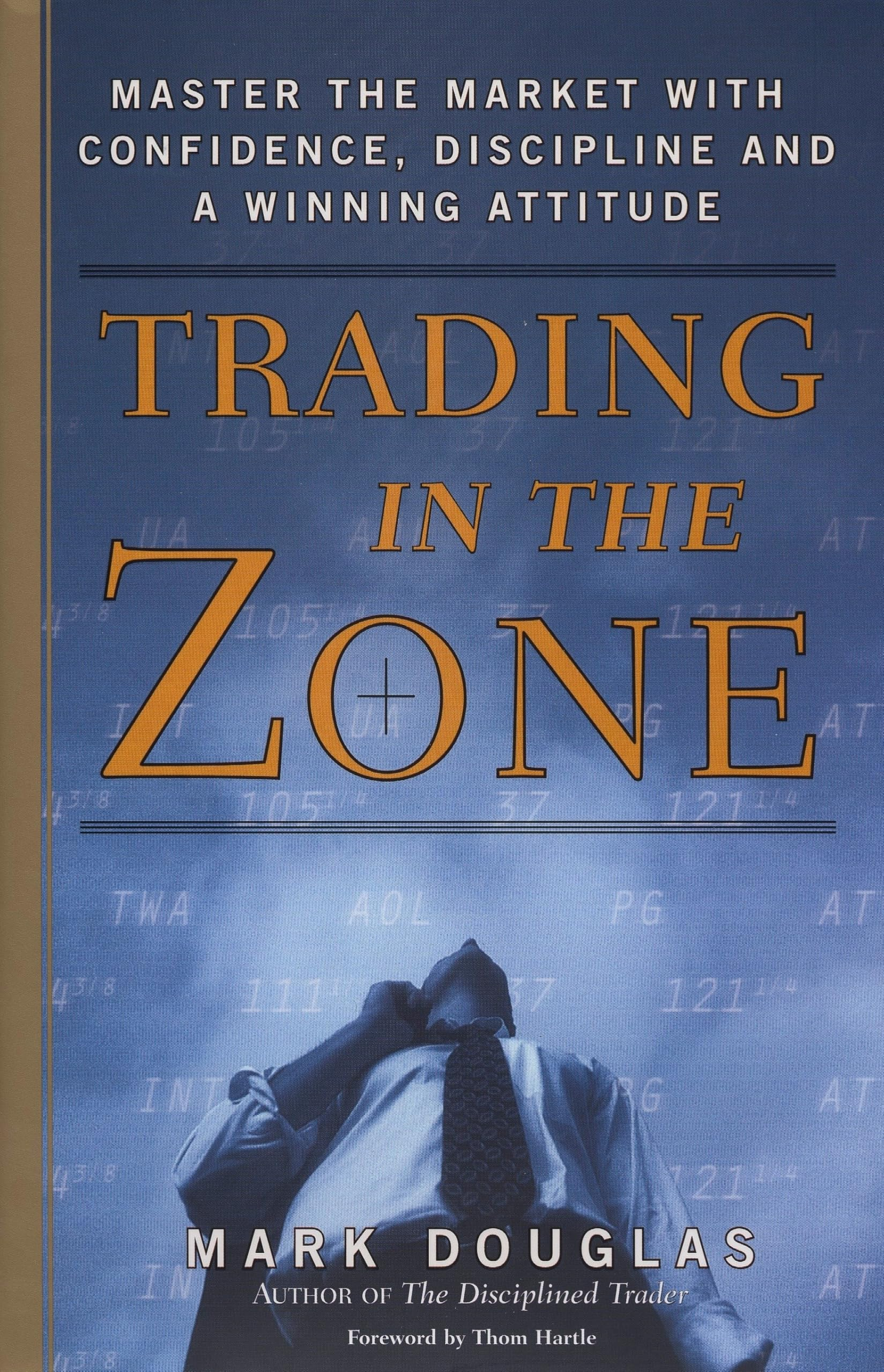
Mark Douglas built this book around a single, uncomfortable truth: most traders lose money not because their strategy is broken, but because their mind is. Trading in the Zone sits at the top of our list at WR Trading because it is the one book that addresses the actual source of inconsistent performance, and it does so with a precision no other trading psychology text has matched.
The book’s central project is a complete restructuring of how traders relate to uncertainty. Douglas argues that the market does not produce reliable outcomes on individual trades, it produces reliable outcomes across a large enough sample of trades, provided a trader has a genuine edge and executes it without interference. That potential interference is always psychological. Fear causes premature exits. Greed causes oversized positions. Overconfidence follows a winning streak. Hesitation follows a losing one. Douglas does not treat these as character flaws. He treats them as the predictable output of a mind that has not yet learned to think in probabilities.
The framework he builds to correct this is grounded in 5 core beliefs that he argues every consistently profitable trader holds:
- That any individual trade can produce any outcome
- That not knowing what comes next is not a barrier to making money
- That an edge simply tilts probability in one direction, nothing more
- That wins and losses across a defined edge are randomly distributed
- And that each market moment is genuinely distinct from every other.
When these 5 beliefs are genuinely internalized (not intellectually acknowledged, but actually lived) the emotional reactions that sabotage performance lose their grip. At WR Trading, we put this book in front of every trader we work with, regardless of their level. The traders who benefit most are those who already have a working strategy and still can’t find consistency. Douglas answers exactly that problem.
Our one honest reservation is that the book contains no setups, no strategies, and no technical content whatsoever. It is also deeply repetitive. Douglas circles back to his core arguments in every chapter. He does this deliberately, because he is trying to dissolve entrenched mental habits rather than add new knowledge. Knowing that doesn’t make the repetition less noticeable on a first read. It does, however, make a second read considerably more valuable.
Pros
- Identifies the psychological root of trading failure with more precision than any other book in the genre
- The probabilistic framework applies equally to every market, asset class, and trading style
- Short enough to finish in a weekend, genuinely richer on every subsequent read
- Consistently rated the most important trading book ever written across r/Forex, r/Daytrading, Amazon, and Goodreads
Cons
- Zero technical content, no setups, no indicators, no strategy of any kind
- The repetitive chapter structure tests patience, particularly on a first read
- Traders with no live trading experience will find the psychological patterns Douglas describes abstract until they’ve actually experienced them at the desk
What Readers Say
I’ve read hundreds of trading books. This is the only one I return to every year. Not because I forgot what’s in it, but because my relationship with what’s in it keeps changing as my trading evolves.
— Amazon reviewer
Book Summary
Trading in the Zone teaches traders to stop measuring their performance trade by trade and start measuring it across a series. Douglas argues that a genuine edge does not guarantee any individual outcome, it only tilts probability across enough repetitions. The trader’s job is to execute that edge without psychological interference, which requires holding 5 core beliefs simultaneously. The book’s practical goal is to make these 5 beliefs operational (not just understood, but genuinely felt) so that the fear, greed, and hesitation that override execution lose their power.
| Detail | Information |
|---|---|
| Author | Mark Douglas |
| Published | 2000 |
| Publisher | Prentice Hall Press |
| Pages | 240 |
| Price Range | $15 – $25 (print) | $10 – $15 (ebook) |
| Best For | All levels, especially traders who still lose regularly in spite of sharp strategy |
| Goodreads Rating | 4.31 / 5 (9,700+ ratings) |
| Focus | Probabilistic mindset, emotional control, psychology of trading |
| WR Trading Rating | 4.8 / 5 |
| Where to buy | Amazon |
2. The Disciplined Trader by Mark Douglas
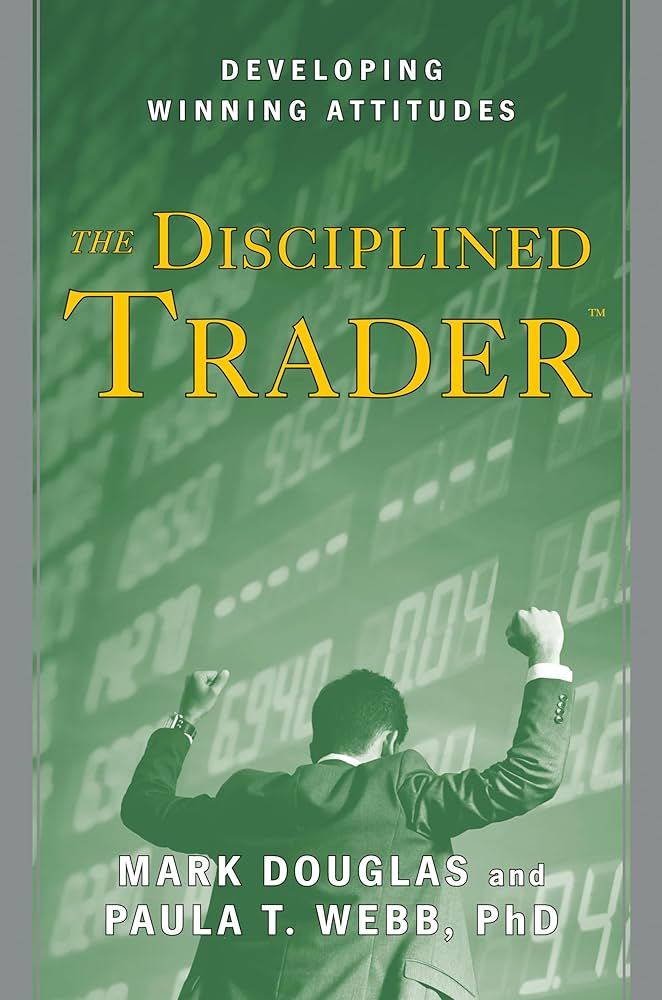
The Disciplined Trader is where trading psychology as a field began. Published in 1990, it was the first book ever written to address the psychological nature of how successful traders think. It remains an industry classic. If Trading in the Zone is Douglas at his most refined, The Disciplined Trader is Douglas at his most foundational. For traders who want to understand how and why their mind works against them in the markets, this is the place to start.
Douglas examines why 90%+ of traders can’t keep and consistently grow their trading accounts. His argument centers on limiting beliefs, unconscious patterns of thought that create fear, hesitation, and self-sabotage at exactly the moments when discipline is most needed. He takes traders through a step-by-step process to identify whst is actually holding them back. The book predates Trading in the Zone and is somewhat denser, but it lays the conceptual groundwork that makes its sequel so effective. We recommend reading this one first if you’re approaching trading psychology seriously for the first time.
We like the depth of the foundational argument. Douglas makes a convincing case for trading success being 80% psychology and 20% methodology. What we like less is the writing style, which can feel academic and slow by modern standards.push through it. The ideas hold up entirely.
Pros
- The first book ever written on trading psychology, the field’s founding text
- Step-by-step examination of limiting beliefs and how to identify and remove them
- Builds the conceptual foundation that makes Trading in the Zone more powerful
- Applies to any market and every level of trader
Cons
- Dense writing style, slower and more academic than its sequel
- Less accessible for complete beginners than Trading in the Zone
- Published 1990, some market references will seem dated
What Readers Say
Harder going than Trading in the Zone, but I think this one actually goes deeper. It explains why you keep making the same mistakes even after you know you’re making them. That’s a different question entirely, and Douglas answers it.
— Goodreads reviewer
Book Summary
The Disciplined Trader examines the specific mental architecture that causes traders to act against their own best interests, repeatedly and predictably. Douglas argues that the human mind arrives at the markets carrying a lifetime of beliefs, expectations, and emotional associations that have nothing to do with trading, and everything to do with how it performs. Limiting beliefs operate below conscious awareness, producing fear before entries, hope instead of stop-losses, and self-sabotage disguised as decision-making.
The book leads traders through a step-by-step examination of these belief structures: where they come from, how they express themselves in trading behaviour, and how to systematically update or dismantle them. Douglas makes the case with conviction that trading success is 80% the product of psychological work and 20% the product of methodology.
| Detail | Information |
|---|---|
| Author | Mark Douglas & Paula T. Webb |
| Published | 1990 |
| Publisher | Prentice Hall Press |
| Pages | 240 |
| Price Range | $18 – $30 (print) | $12 – $18 (ebook) |
| Best For | Beginners building a psychological foundation; traders wanting to understand their limiting beliefs |
| Focus | Limiting beliefs, emotional control, building trading discipline |
| WR Trading Rating | 4.8 / 5 |
| Where to buy | Amazon |
3. Best Loser Wins by Tom Hougaard
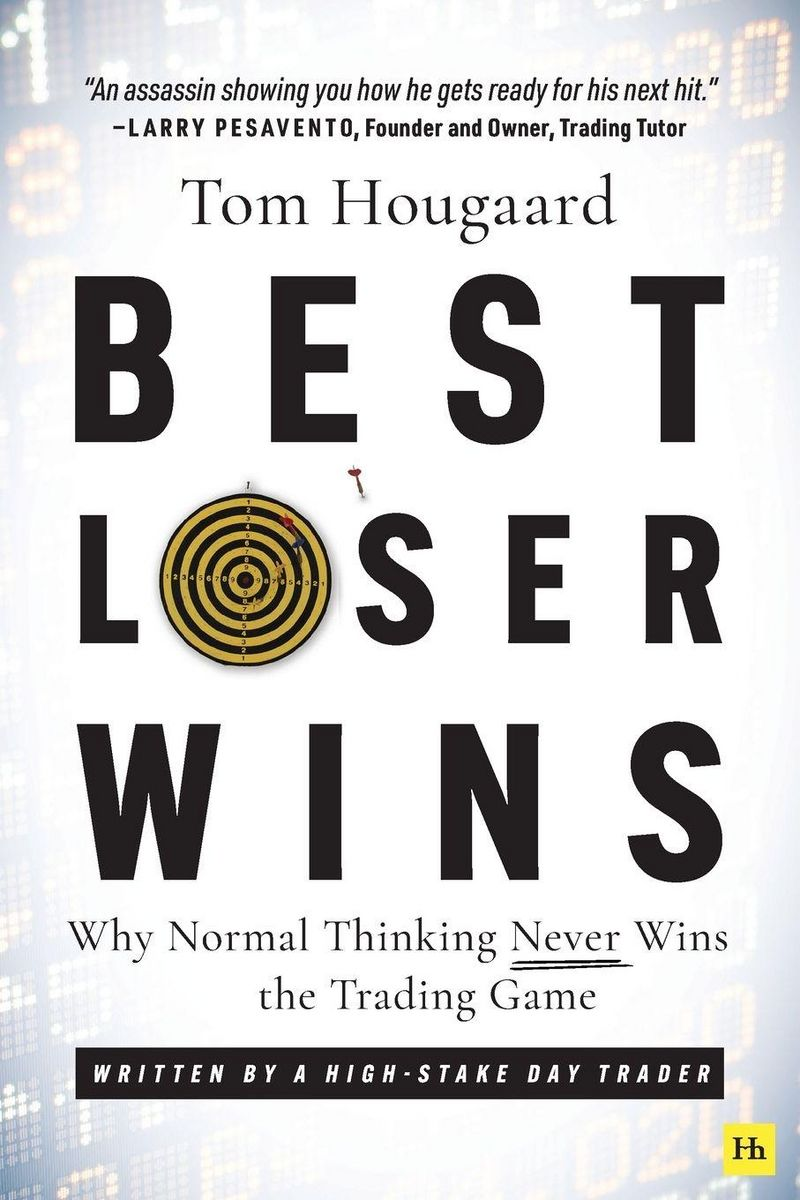
Best Loser Wins is the most original and confrontational trading psychology book published in the last decade, and it earns 3rd place on our list for exactly that reason. Tom Hougaard is a former JPMorgan and City Index Chief Market Strategist who has competed in and won multiple trading competitions, including one in which he turned the equivalent of $30,000 into more than $1.3 million in a single year. This is not a theoretical work. It’s written by someone whose psychological framework has been tested under extreme pressure with real money.
Hougaard’s central argument is this: normal thinking produces normal results. The traders who consistently outperform all others think differently. Specifically, they have reframed their relationship with losses. The book argues that most traders lose not because they lack technical knowledge, but because they don’t understand what the markets do to their minds. He provides a blueprint for building a belief system that tolerates and ultimately embraces losing trades as a path to consistency. The book is personal, occasionally uncomfortable, and highly readable.
We like its honesty. Hougaard writes with a directness rare in trading books and his track record gives the psychological arguments real weight. We like it less for beginners though. This book is for traders who already have a strategy and have identified their psychological weaknesses. Reading it without live trading experience diminishes its impact significantly.
Pros
- Written by a proven high-stakes trader with a documented, verified track record
- Directly addresses the counterintuitive mindset shift required for consistent profitability
- Highly readable and personal, less abstract than most trading books
- Strongly recommended across trading communities as the best modern contribution to the genre
Cons
- Not suited to complete beginners without any live trading experience
- Less structured than Steenbarger’s or Tendler’s works (see below), not a step-by-step system
- Some traders find the style uncomfortably confrontational
What Readers Say
I have genuinely never read a trading book this honest. Most of them are written by people who want you to think they’ve figured it out. Hougaard writes like someone who’s still in it, still risking real money, and has just decided to tell you exactly what that feels like and why most people can’t handle it.
— Amazon reviewer
Book Summary
Best Loser Wins is built on a single counterintuitive proposition: that the traders who succeed long-term have fundamentally changed their relationship with losing, while those who fail are perpetually trying to avoid it. Hougaard draws on his own documented trading career (live-streamed, publicly accountable) to show what a genuinely recalibrated trading mindset looks like in practice. The book covers the specific thought patterns that separate consistent performers from the rest: the ability to hold a winning position without needing to bank it, the capacity to close a losing one without needing it to come back first, and the mental discipline to treat each trade as a single data point rather than a verdict on your abilities. This is not a strategy book and does not pretend to be.
| Detail | Information |
|---|---|
| Author | Tom Hougaard |
| Published | 2022 |
| Publisher | Harriman House |
| Pages | 264 |
| Price Range | $20 – $30 (print) | $12 – $18 (ebook) |
| Best For | Intermediate to advanced traders wanting a modern, experience-based mindset overhaul |
| Focus | Loss acceptance, mind management, belief system transformation |
| WR Trading Rating | 4.7 / 5 |
| Where to buy | Amazon |
4. The Mental Game of Trading by Jared Tendler
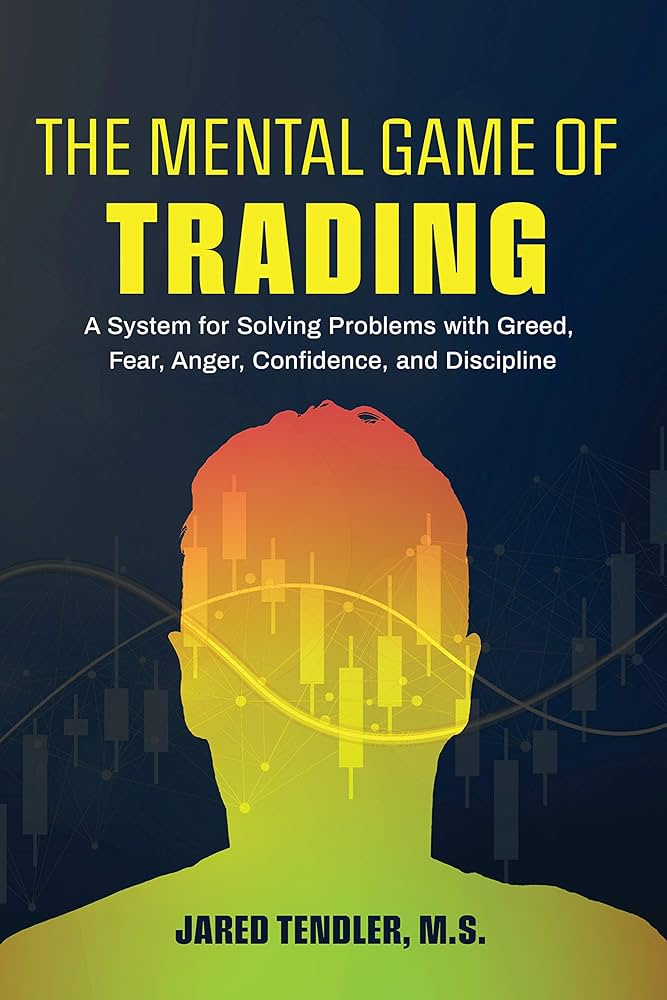
The Mental Game of Trading earns 4th place because it does something no other book on this list does: it gives traders a concrete step-by-step system for diagnosing and eliminating specific psychological challenges to trading successfully. Where Douglas tells you what your mindset should be, Tendler shows you how to get there. Jared Tendler is a performance coach who first developed his methodology in poker before applying it to financial; trading. The system transfers with impressive precision.
Tendler’s approach is built on a simple but powerful premise: the reason traders keep making the same costly mistakes is not laziness or lack of discipline, it’s because the true source of those mistakes is misidentified. Errors like chasing price, cutting winners short, overtrading, and breaking risk management rules don’t stem from strategy gaps. They stem from greed, fear, anger, or confidence problems. This book teaches traders to look past the obvious symptoms to find the actual cause, and then provides a systematic process for eliminating it. Real storied from traders around the world , who applied the system and improved, are embedded throughout.
What we like most is the applicability. The system works for forex, crypto, and futures traders regardless of experience. What we must point to, however, is that it requires genuine emotional self-examination, which many traders are going to find uncomfortable. Those who commit to the process, however, report meaningful improvements in their trading consistency.
Pros
- The only trading psychology book that provides a complete diagnostic and elimination system for emotional problems
- Applicable to stocks, forex, futures, crypto, and options traders at every level
- Real trader case studies demonstrate the system’s effectiveness across diverse issues traders face
- Highly regarded in trading communities as the most practically actionable psychology book available
Cons
- Requires genuine emotional honesty and self-examination, resistant traders get limited value
- Less inspiring than Douglas or Hougaard, more clinical and structured
- The system takes time to implement, not a quick fix
What Readers Say
Every other trading psychology book told me what my problem was. This one actually showed me how to fix it. That’s a completely different thing, and I didn’t realize how different until I worked through the system.
— Goodreads reviewer
Book Summary
The Mental Game of Trading is structured as a diagnostic and repair manual for trading psychology. Tendler’s core argument is that emotional trading errors (chasing entries, holding losers, abandoning a strategy mid-session) are not caused by weak willpower but by misidentified root causes. A trader who labels their problem as “lack of discipline” will never solve it, because discipline is a symptom description, not a cause.
The book teaches traders to look beneath the symptom to find the actual driver, which Tendler identifies as belonging to one of five categories: fear, greed, anger, confidence problems, or motivational issues. Each category has a specific diagnostic process and a specific corrective path. The system is drawn from Tendler’s background coaching high-stakes poker players and applied with precision to financial trading. The emotional mechanics, he demonstrates, are identical.
| Detail | Information |
|---|---|
| Author | Jared Tendler |
| Published | 2021 |
| Publisher | JT Press |
| Pages | 328 |
| Price Range | $20 – $30 (print) | $10 – $15 (ebook) |
| Best For | Traders with recurring psychological mistakes who want a structured system to eliminate them |
| Focus | Greed, fear, anger, confidence, discipline, root-cause diagnosis and elimination |
| WR Trading Rating | 4.6 / 5 |
| Where to buy | Amazon |
5. The Daily Trading Coach by Brett N. Steenbarger
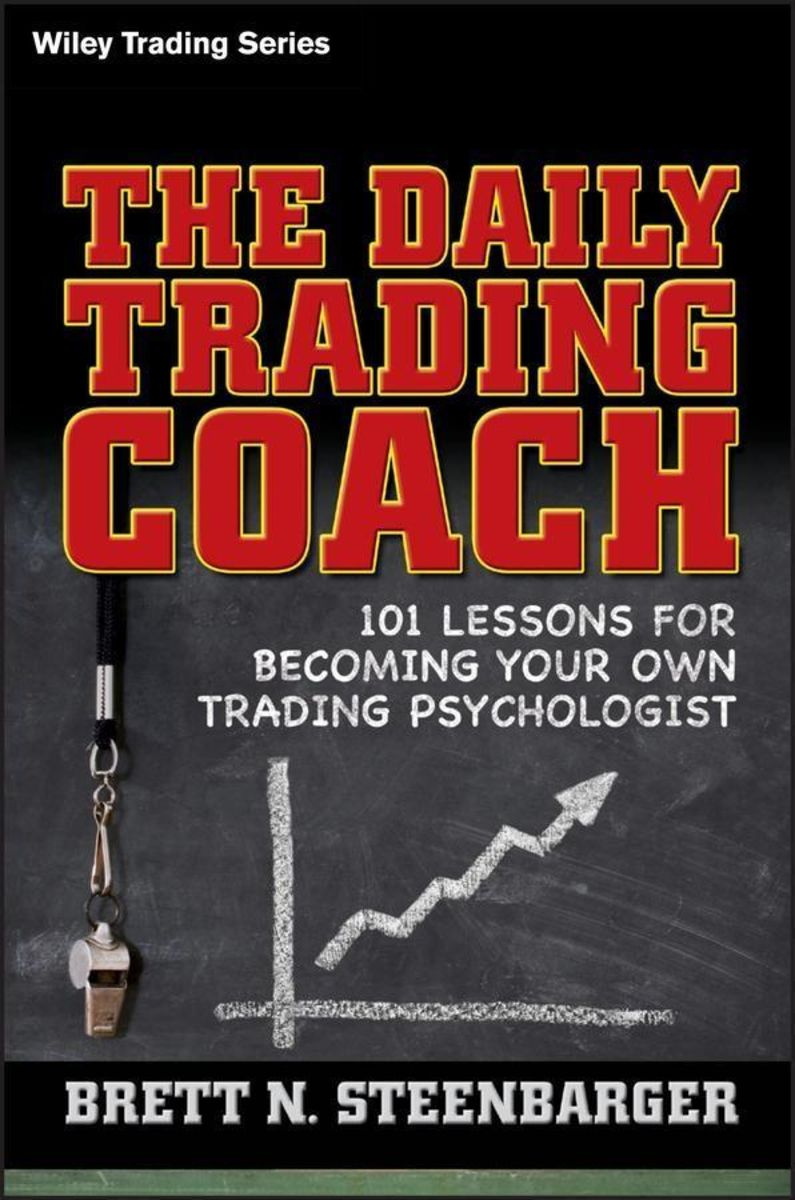
The Daily Trading Coach takes 5th place as as the most practically structured book on this list. Brett Steenbarger holds a PhD in clinical psychology and is Associate Professor of Psychiatry and Behavioral Sciences at SUNY Upstate Medical University. He is also an active trader who has coached traders in hedge funds, prop trading groups, and investment bank settings. The combination of clinical expertise plus live market coaching experience produces a book unlike anything else in the trading psychology genre.
The book is structured as 101 lessons, each addressing a specific challenge traders face. Each lesson identifies the challenge, provides an approach for meeting it, and gives a concrete suggestion for implementation. The format is designed for repeat use. This is a book traders keep on their desk and return to when specific problems surface. Topics covered across the 101 lessons include coping with losing streaks, managing performance anxiety, building self-discipline, learning from both winning and losing trades, and developing the continuous improvement mindset of a professional.
We like the format. No other book makes it this easy to isolate and address a specific psychological problem. We like less that the individual lessons can feel brief when a problem demands deeper examination. In those cases, Steenbarger’s other works provide the necessary depth.
Pros
- 101 structured lessons address specific daily psychological challenges
- Written by a clinical psychologist who actively coaches professional traders
- Designed for ongoing reference, more useful the longer you trade
- 368 pages of dense, practical content with no filler
Cons
- Individual lessons can feel brief for complex psychological issues
- Less narrative and inspiring than Douglas or Hougaard, more workbook than story
- Most valuable to traders with some live experience, less impactful before trading begins
What Readers Say
I’ve kept this on my desk for three years. I don’t read it cover to cover, I open it to whichever lesson matches what I’m dealing with that week. It’s the most useful book I own as an active trader.
— Amazon reviewer
Book Summary
The Daily Trading Coach is structured as 101 self-contained lessons, each addressing a specific psychological challenge active traders face. The format reflects Steenbarger’s central argument: that becoming a better trader is an ongoing process of self-coaching, not a single conceptual breakthrough. Each lesson follows the same structure (identify the challenge, understand its psychological mechanism, apply a concrete technique to address it).
The topics span the full range of active trading psychology: how to process a losing streak without compounding it, how to maintain focus across a long session, how to extract genuine learning from both wins and losses, how to build the kind of performance journal that actually improves results over time. The book is designed to be returned to repeatedly throughout a trading career, gaining relevance as experience accumulates.
| Detail | Information |
|---|---|
| Author | Brett N. Steenbarger, PhD |
| Published | 2009 |
| Publisher | John Wiley & Sons |
| Pages | 368 |
| Price Range | $25 – $40 (print) | $15 – $25 (ebook) |
| Best For | Active traders wanting a structured daily self-coaching practice |
| Focus | Self-coaching, performance improvement, emotional resilience, daily mental discipline |
| WR Trading Rating | 4.5 / 5 |
| Where to buy | Amazon |
6. The Psychology of Trading by Brett N. Steenbarger
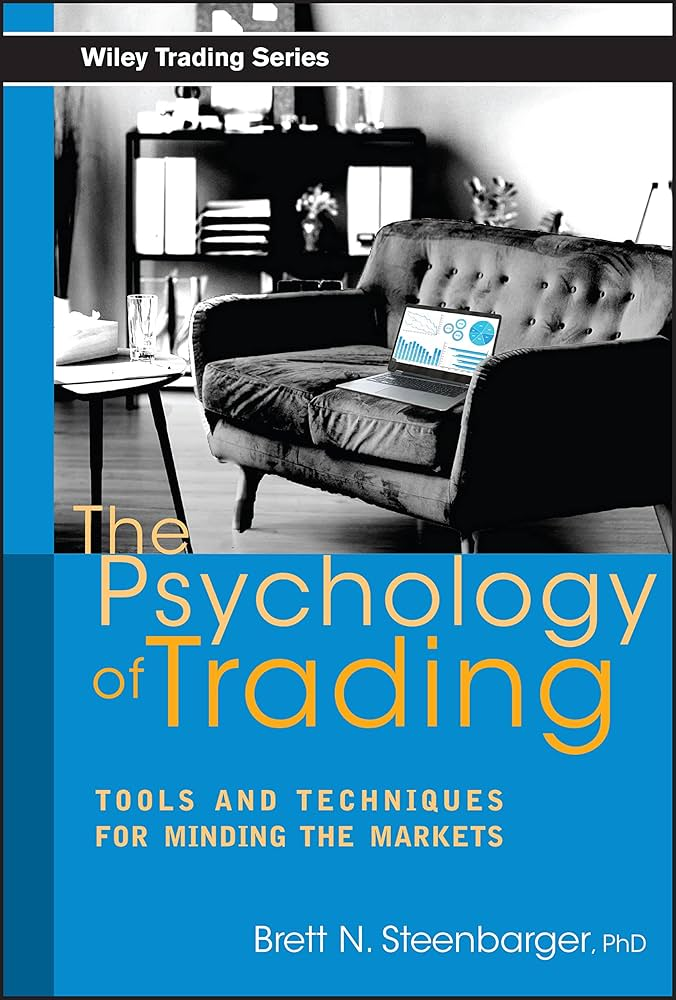
Steenbarger’s first book earns 6th place as the most clinically rigorous work on trading psychology available. Where The Daily Trading Coach is structured for daily reference, The Psychology of Trading is a deeper clinical examination of the patterns that undermine trading performance. It combines Steenbarger’s academic background in clinical psychology with direct observations from his work coaching professional traders, making it essential reading for any trader who wants to understand not just what they’re doing wrong, but why.
The book treats traders as performers rather than investors, examining the emotional and cognitive patterns that differentiate consistent performers from those who plateau or decline. Steenbarger covers 3 core themes:
- Identifying the psychological patterns unique to each trader’s failure mode
- Using those patterns as data to improve rather than as evidence of inadequacy
- Building a practice-based approach to continuous development
The clinical framework, drawn from established psychological research, gives the advice a rigour that more intuitive trading psychology books lack.
We like the depth and the scientific grounding. This is the book for traders serious enough about improvement to examine their own psychology with genuine precision. We like it less as a starting point. Read Douglas or Hougaard first to build the conceptual framework, then come to Steenbarger for the clinical application.
Pros
- The most clinically rigorous trading psychology book available
- Treats trading performance as a learnable, improvable skill, not a fixed talent
- Directly applicable to identifying and addressing each trader’s specific choke point
- Written by an academic psychologist who actively trades and coaches professional traders
Cons
- Dense and clinical, less accessible to casual readers
- Best read after building a foundation with Douglas or Hougaard
- Some case studies reflect trading environments that predate modern algorithmic market structure
What Readers Say
Steenbarger treats trading as a performance discipline, not a financial one, and that reframe changed everything about how I approached my own development. I’ve read it twice and flagged more pages the second time than the first.
— Goodreads reviewer
Book Summary
The Psychology of Trading applies clinical psychology to trading performance with a rigour that distinguishes it from every other book in the genre. Steenbarger treats the trader as a performer (comparable to an athlete or musician) whose results are the product of psychological patterns that can be identified, studied, and modified.
The book examines the specific emotional and cognitive failure modes that prevent traders from translating knowledge into consistent results. For each pattern, Steenbarger provides both a clinical explanation of its origin and a practice-based approach to changing it. The framework is grounded in established psychological research rather than trading folklore, which gives the advice a depth and precision that more intuitive approaches lack.
| Detail | Information |
|---|---|
| Author | Brett N. Steenbarger, PhD |
| Published | 2003 |
| Publisher | John Wiley & Sons |
| Pages | 320 |
| Price Range | $30 – $45 (print) | $20 – $30 (ebook) |
| Best For | Intermediate to advanced traders wanting a clinical framework for self-analysis |
| Focus | Performance psychology, pattern identification, trading-specific emotional failure modes |
| WR Trading Rating | 4.5 / 5 |
| Where to buy | Amazon |
7. The Psychology of Money by Morgan Housel
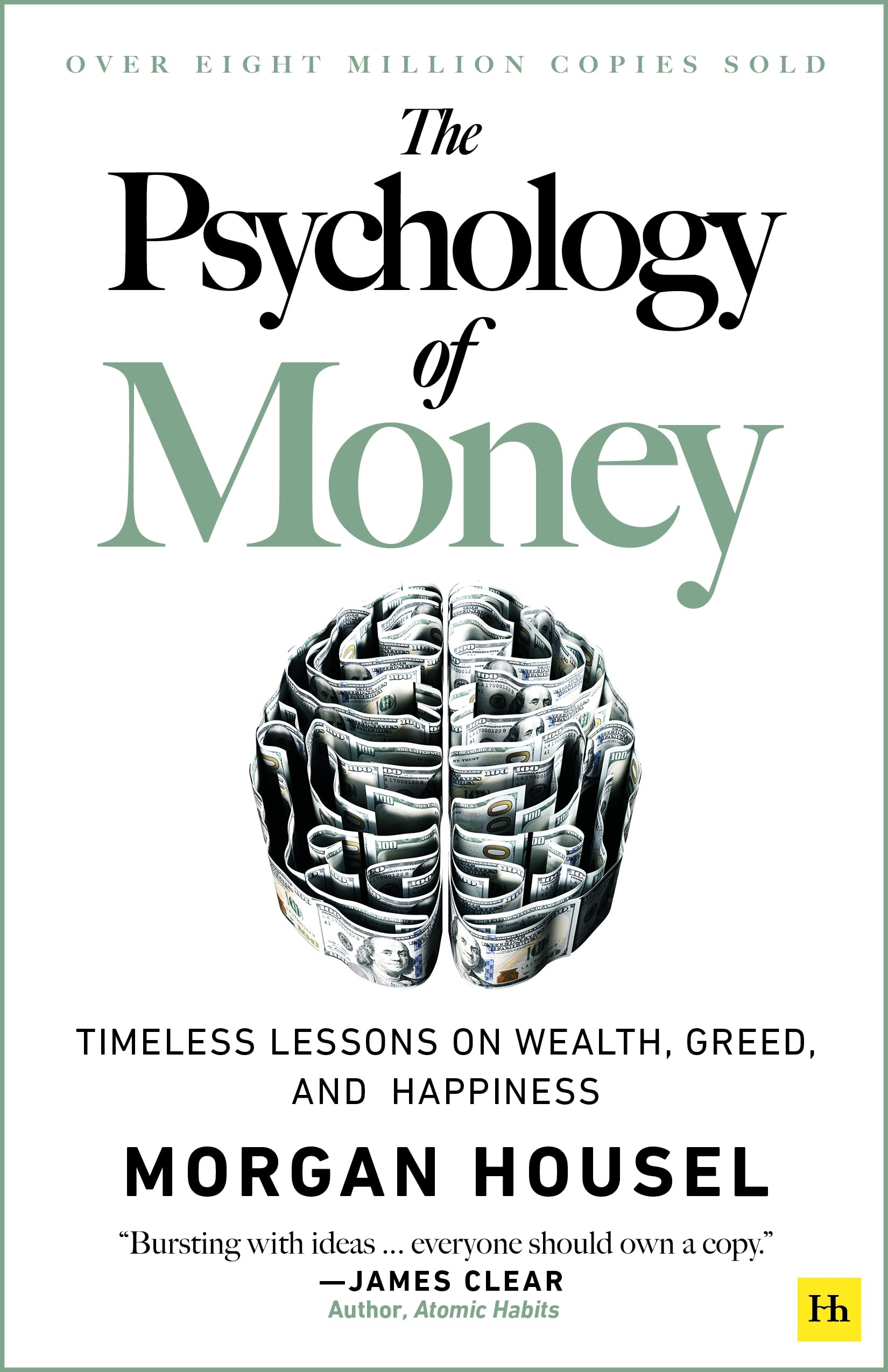
The Psychology of Money earns its place on a trading psychology list precisely because it approaches the subject from a direction no dedicated trading book does. Morgan Housel is not a trader. He is a financial writer and investor whose background at The Collaborative Fund and The Wall Street Journal gave him a long and detailed view of how ordinary people (and professionals) make financial decisions that contradict their own interests. The 19 chapters of this book are a sustained examination of why that happens.
For traders specifically, the book’s value lies in what it reveals about the emotional mechanics beneath financial decisions. Housel’s core argument is that behaviour, far more than knowledge, determines financial outcomes. A trader can understand a strategy perfectly yet execute it badly, because the psychological conditions of a live trade (real money, real uncertainty, real loss) activate patterns that no amount of analysis prepares you for. Housel maps those patterns with unusual clarity.
His treatment of loss aversion explains why traders hold losing positions far beyond any rational justification. His chapters on ego and wealth explain why traders size up after a winning run, chasing the feeling of being right rather than managing risk. His analysis of narrative bias (the stories we construct to justify the decisions we’ve already made emotionally) is one of the most direct explanations available for why traders rationalize bad trades, rather than close them.
None of this is packaged as trading advice. That is both the book’s limitation and its quiet strength. Because Housel is not writing for traders, he has no incentive to flatten the psychology into actionable rules. The picture he draws is more honest for it. We like the accessibility. This is the most readable book on this list by a considerable margin, and the one most likely to be finished. What we like less is that it offers no trading-specific application. Pair it with Douglas or Tendler and it deepens both considerably.
Pros
- The most readable book on this list, high completion rate, genuine staying power
- Behavioral finance concepts map directly onto trading: loss aversion, ego, narrative bias, and the psychology of staying solvent
- No trading background required, accessible to beginners and experienced traders equally
- Over 4 million copies sold, making it the most widely read work on financial psychology available
Cons
- Not written for traders, the application to active trading requires the reader to make the connections themselves
- No market-specific content, no risk frameworks, no execution psychology
- Less directly useful to day traders and scalpers than to swing and position traders with longer decision horizons.
What Readers Say
I recommended this to a friend who doesn’t trade at all and to a friend who has traded for fifteen years. Both of them came back and said it was one of the most useful books they’d read. That tells you something about how well Housel understands what actually drives financial behaviour.
— Amazon reviewer
Book Summary
The Psychology of Money presents 19 short essays on the ways human psychology distorts financial decision-making, drawn from Housel’s study of how people across every income level and experience bracket think about, earn, spend, and lose money. For traders, the most directly applicable chapters address loss aversion and why the pain of a financial loss is neurologically disproportionate to its actual size; the role of ego in financial decisions and how the need to feel right keeps losing positions open far beyond any rational justification; and the concept of narrative bias (the stories people construct after the fact to explain decisions that were made emotionally in the moment).
Housel’s writing is unusual in financial literature for its clarity and its refusal to simplify. The book does not provide trading rules or frameworks. What it provides is a forensically honest account of why intelligent people make bad financial decisions, which is the question that sits beneath most trading psychology problems.
| Detail | Information |
|---|---|
| Author | Morgan Housel |
| Published | 2020 |
| Publisher | Harriman House |
| Pages | 256 |
| Price Range | $12 – $20 (print) | $8 – $15 (ebook) |
| Best For | All levels, particularly traders who want to understand the behavioural roots of financial decision-making |
| Focus | Behavioural finance, loss aversion, ego, financial decision-making under uncertainty |
| WR Trading Rating | 4 / 5 |
| Where to buy | Amazon |
8. Thinking, Fast and Slow by Daniel Kahneman
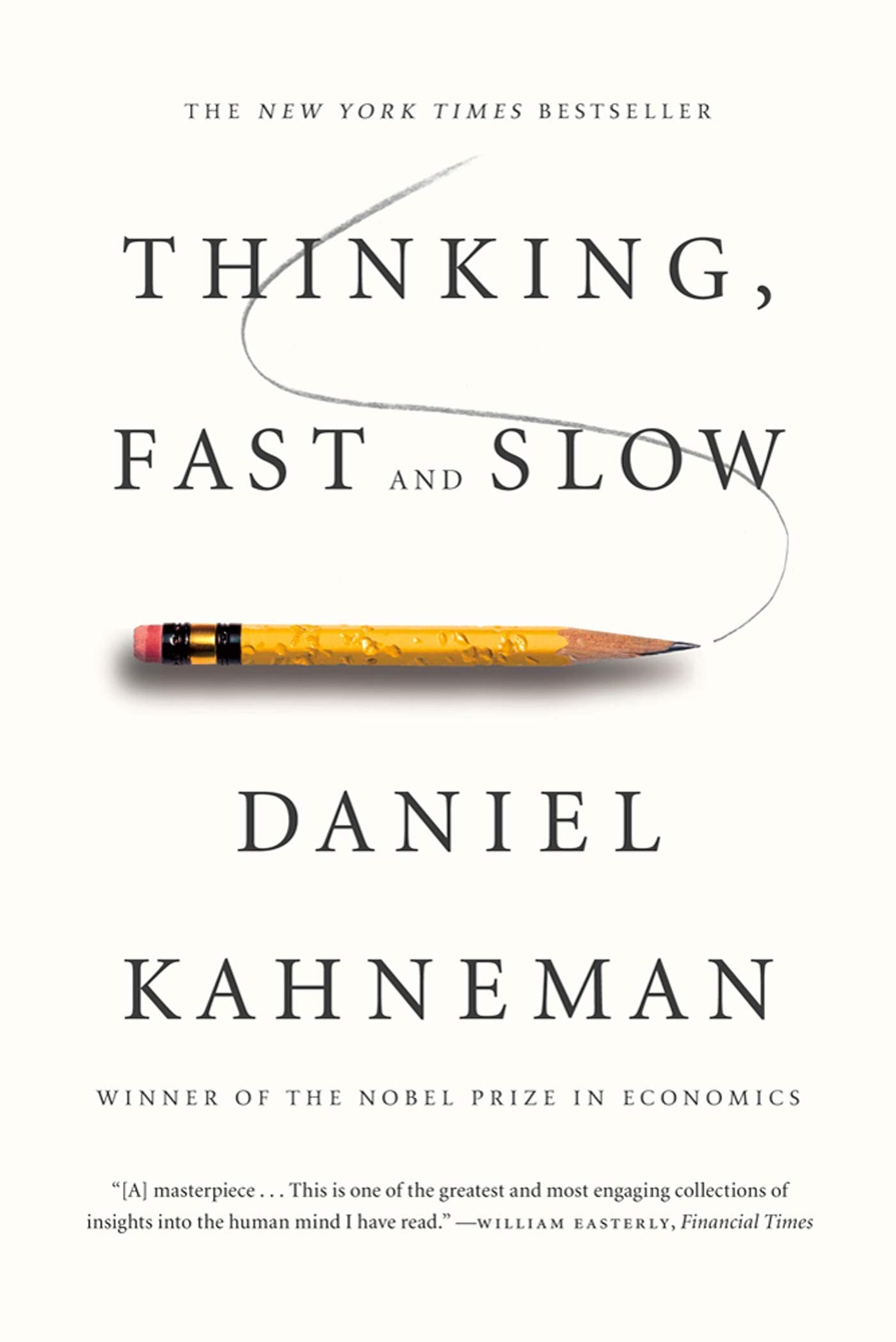
Coming in at a deserved 8th place is Kahneman’s work, as the deepest scientific work on this list. Daniel Kahneman is a Nobel Prize-winning psychologist whose research on cognitive bias, prospect theory, and decision-making under uncertainty is the academic backbone of everything the trading psychology books above are built on. Reading this book gives you the science behind the symptoms. Published in 2011, it’s sold over 2.6 million copies and remains one of the most influential non-fiction books of the century to date.
Kahneman introduces the 2 systems that drive human thinking. System 1 is fast, intuitive, and emotional. System 2 is slower, deliberate, and logical. Most trading decisions (especially under pressure) are made by System 1, which is powerful but riddled with systematic biases. Loss aversion, overconfidence, the halo effect, anchoring, and confirmation bias are among them. Understanding how and why System 1 overrides System 2 in high-stakes moments gives traders a scientific model for every psychological error they’ve ever made. Kahneman’s research on prospect theory (that losses feel approximately twice as powerful as equivalent gains) directly explains why traders hold losing positions too long, and close winning positions too early.
We like the scientific rigour and depth of explanation. We like it less as an active trading reference. This is a book to read and absorb, not a daily handbook. Read it once, absorb the framework, and it will change how you understand every psychological error you encounter in your trading.
Pros
- Nobel Prize-winning science, the academic foundation behind all trading psychology advice
- Prospect theory explains the loss aversion pattern that costs traders more than any other bias
- System 1 vs System 2 framework provides a precise model for emotional decision-making under pressure
- 2.6+ million copies sold, one of the most validated works on human decision-making available
Cons
- Not written for traders, requires active translation of the research into trading contexts
- 499 pages of dense academic content, a significant time investment
- Less immediately actionable than Tendler or Steenbarger
What Readers Say
Once you understand the two-system model, you start seeing it everywhere in your own trading. Every impulse entry, every rationalised hold, every overconfident position size…System 1, System 1, System 1. The book doesn’t tell you how to fix those things, but it makes them impossible to pretend you don’t understand.
— r/Daytrading reviewer
Book Summary
Thinking, Fast and Slow documents Kahneman’s decades of research into how human beings make decisions, and why those decisions are far less rational than we believe them to be. The book’s organising framework divides cognition into two systems: System 1, which operates automatically, emotionally, and without conscious effort, and System 2, which is deliberate, analytical, and effortful.
Most trading decisions (particularly those made under pressure, during fast-moving markets, or following a loss) are System 1 outputs dressed in System 2 justifications. Kahneman’s research on prospect theory is the chapter of most direct relevance to traders: his finding that losses register psychologically as approximately twice as powerful as equivalent gains explains, with scientific precision, why traders hold losing positions and close winning ones at exactly the wrong moments. The book does not address trading. It addresses the cognitive architecture that makes trading psychologically difficult for every human being who attempts it.
| Detail | Information |
|---|---|
| Author | Daniel Kahneman |
| Published | 2011 |
| Publisher | Farrar, Straus and Giroux |
| Pages | 499 |
| Price Range | $15 – $25 (print) | $10 – $15 (ebook) |
| Best For | Advanced traders wanting the scientific foundation beneath trading psychology |
| Focus | Cognitive biases, System 1 vs System 2 thinking, prospect theory, decision-making under uncertainty |
| WR Trading Rating | 4 / 5 |
| Where to buy | Amazon |
9. Market Mind Games by Denise Shull
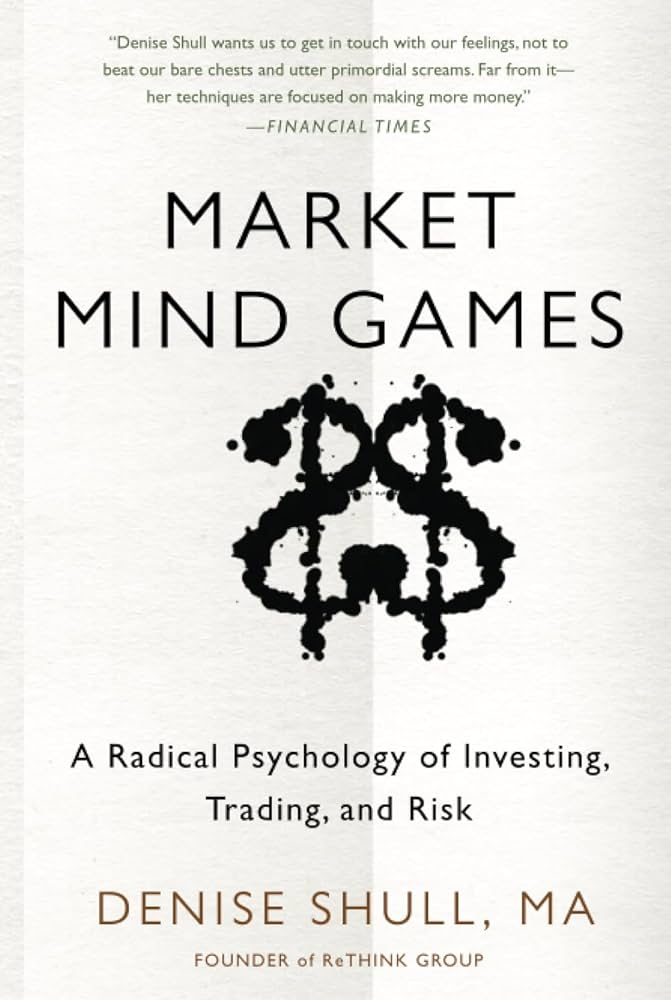
Market Mind Games occupies 9th place as the most unconventional and advanced entry on this list. Denise Shull is a performance coach with a background in neuroscience and psychoanalysis who works with hedge fund managers, professional athletes, and institutional traders. Her approach is built on the neuropsychological framework that insists traders’ emotions are not hindrances to be suppressed, but rather data to be decoded and used.
Most trading psychology books tell traders to control their emotions. Shull argues that this is the wrong goal entirely. Emotions, she contends, are the market’s signal. When you feel fear before entering a trade, that feeling contains information about your risk assessment, your past experience, and your read of the current market. Suppressing it loses that information. Instead, Shull teaches traders to understand what their emotions are telling them and incorporate that information into their decision-making process. The neuropsychological research underpinning this approach gives it a scientific credibility that distinguishes it sharply from the broader self-help genre.
We like the originality and institutional-level thinking. This is the book for traders who have already mastered emotional control and want the next level of psychological sophistication. We like it less for beginners, as the concepts require trading experience to land with impact.
Pros
- Unique neuropsychological framework, treats emotions as data instead of obstacles
- Draws on Shull’s work with the professional trading fraternity
- Challenges the conventional ‘suppress your emotions’ advice with scientific evidence
- The most sophisticated trading psychology perspective on this list
Cons
- Not for beginners, the neuropsychological concepts require a foundation to absorb
- More abstract than other books listed here, less immediately actionable
- The emotional reframing approach takes significant practice before delivering results
What Readers Say
This is not an easy read and it is not meant to be. Shull is making a genuinely different argument from every other trading psychology book I’ve encountered, that emotions aren’t the enemy of good trading decisions, they’re part of the information. It took me a while to fully accept that, but once I did it changed how I interpret my own reactions at the desk.
— Amazon reviewer
Book Summary
Market Mind Games challenges the foundational assumption of most trading psychology literature: that emotional control is the goal. Shull argues, drawing on neuroscience and psychoanalytic research, that this assumption is not only wrong but counterproductive. Emotions, she contends, are not noise that interferes with rational market analysis, they are signals.
When a trader feels anxiety before a position, that feeling contains genuine information. Suppressing it discards that information. The book teaches traders to decode their emotional responses rather than override them, to ask what a feeling is telling them about the market rather than how to make it stop. Shull applies this framework through her work with institutional traders and hedge fund managers, which gives the neuropsychological argument a practical grounding that pure academic treatments of the subject rarely achieve.
| Detail | Information |
|---|---|
| Author | Denise Shull |
| Published | 2012 |
| Publisher | McGraw-Hill |
| Pages | 256 |
| Price Range | $20 – $35 (print) | $12 – $20 (ebook) |
| Best For | Advanced traders with existing psychological frameworks looking for the next level |
| Focus | Neuropsychology, emotional intelligence, emotions as market data, decision-making under pressure |
| WR Trading Rating | 4 / 5 |
| Where to buy | Amazon |
10. Trading for a Living by Dr. Alexander Elder
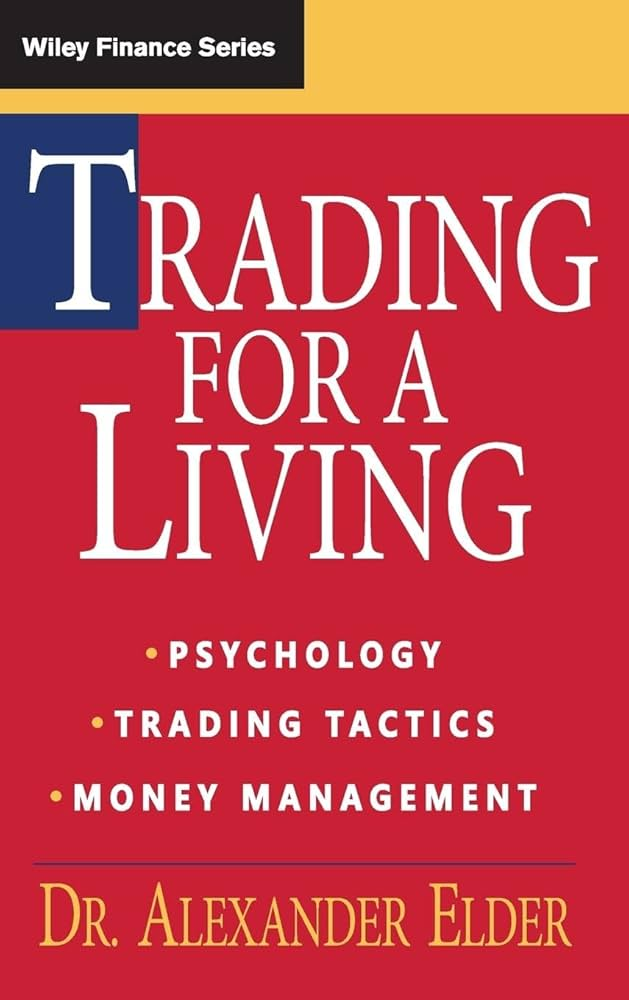
Alexander Elder came to trading from psychiatry, and that background is not incidental to this book. Indeed, it’s the book’s entire foundation. Where most trading manuals treat psychology as a chapter to get through before reaching the strategies, Elder treats it as the primary obstacle every trader faces, and structures everything that follows around that premise. Trading for a Living earns the 10th and final place on this list because it is the one book that situates trading psychology inside a complete operational framework, rather than treating it in isolation.
Elder’s clinical training shapes the psychology section in ways that distinguish it from every other general trading book. He does not simply tell traders to control their emotions, he examines the specific psychological mechanisms that cause intelligent, disciplined people to make incoherent decisions under market pressure.
The patterns he identifies (the euphoria of a winning run producing oversized positions, the paralysis following a loss producing missed entries, the rationalization of a deteriorating trade producing catastrophic drawdowns) are described with the precision of someone who has spent a career studying how human behaviour breaks down under stress. These sections read differently from the equivalent chapters in most trading books, because they are written by someone who was trained to diagnose behavioral pathology before he was ever a trader.
The risk management framework Elder builds around this psychology is equally direct. His 2% Rule (never risk more than 2% of total account equity on any single trade) and his 6% Rule (stop trading for the month the moment total drawdown hits 6%) are the most clinically grounded risk management guidelines in any trading book.
We like the integration. For a trader building everything from first principles, this book provides context that pure psychology books don’t, connecting the mental dimension directly to specific technical and risk decisions. The limitation is depth: for rigorous psychological examination, Douglas and Steenbarger go further. For rigorous technical analysis, Murphy goes further. Elder’s value is the coherence of the whole.
Pros
- The only book on this list written by a practising psychiatrist who is also a professional trader
- Psychology chapters examine the clinical mechanisms behind trading failure, not just the symptoms
- The 2% and 6% rules are the most defensible risk management framework in any trading book
- Provides context for how psychology connects to specific technical and risk decisions that’s missing from pure psychology books
Cons
- Less psychological depth than Douglas or Steenbarger for traders focused exclusively on mindset
- Triple Screen technical system involves multiple timeframes, more complex than most beginners need initially
- Some psychological sections cover ground familiar to readers of Trading in the Zone, without extending it significantly
What Readers Say
Elder is a psychiatrist who trades, and you feel that on every page of the psychology section. He’s not describing emotional patterns from the outside, he’s describing them the way someone trained to diagnose them would. That section alone is worth the price of the book.
— Goodreads reviewer
Book Summary
Trading for a Living opens with a diagnosis: most traders fail not because their strategies are inadequate, but because their psychological state at the moment of decision overrides everything their strategy tells them to do. Elder’s clinical background produces a level of precision in this section that separates it from comparable chapters in other trading books. He identifies the specific emotional states (the euphoria of consecutive wins, the paralysis of consecutive losses, the magical thinking that keeps a deteriorating position open) and traces each to its psychological mechanism rather than simply labeling it as a bad habit.
His risk rules (the 2% and 6% limits) are presented not merely as mathematical guardrails but as psychological ones: they exist to prevent the emotional damage of large losses from compounding into the behavioral damage of revenge trading, oversizing, and strategy abandonment. Elder’s core argument is that a trader who has not addressed the psychological dimension is not a trader with a strategy problem, they’re a trader with a self-regulation problem, and no strategy upgrade will fix it.
| Detail | Information |
|---|---|
| Author | Dr. Alexander Elder |
| Published | 1993 (updated editions available) |
| Publisher | John Wiley & Sons |
| Pages | 288 |
| Price Range | $25 – $40 (print) | $18 – $28 (ebook) |
| Best For | Intermediate traders wanting psychology, risk management, and technical analysis in 1 volume |
| Focus | Trading psychology, risk management, technical analysis, integrated framework |
| WR Trading Rating | 4 / 5 |
| Where to buy | Amazon |
How Can Trading Psychology Books Improve Your Trading Psychology?
Trading psychology books improve your trading mindset by giving you a framework for why you make the decisions you make under pressure. Without that framework, traders repeat the same errors indefinitely, not because they lack discipline, but because they misunderstand the cause of the problem.
At WR Trading, we’ve seen this consistently among the traders we work with. The pattern is almost always the same: a technically competent trader, with a clear strategy, who loses money at a rate that doesn’t match their setup quality. The gap is invariably psychological. A good trading psychology book narrows that gap in 4 concrete ways:
- It names the emotional patterns (fear, greed, revenge trading, overconfidence) that you’ve experienced but never been able to articulate precisely. Naming a pattern is the first step to interrupting it.
- It provides a model for why those patterns exist. Kahneman’s System 1 vs System 2, Douglas’ probabilistic mindset, and Tendler’s root-cause diagnosis system each give traders a way to understand their errors as predictable, correctable phenomena rather than character flaws.
- It gives you a practice framework. Steenbarger’s 101 lessons, Tendler’s step-by-step elimination system, and Elder’s 5-pillar integration all provide structured approaches that improve with repetition.
- It accelerates experience. Reading how other traders have identified and resolved the same patterns you’re struggling with compresses what would otherwise have taken years of trial and error into weeks of study.
Start with Trading in the Zone. Read it once to absorb the framework. Trade live for 3 months. Read it again. The second read will be a different book, because you’ll recognize everything Douglas describes from your own experience.
Are Books on Trading Psychology Worth It?
Yes, with one important condition. Trading psychology books are worth it when a trader is also trading live, applying what they read, and failing in real time. A book read in isolation from live practice delivers roughly 20% of its potential value. The same book read alongside an active trading journal (while you’re experiencing the emotional patterns described) delivers the other 80%.
The honest caveat is this: surprisingly few genuinely good books on trading psychology have been written. The genre is flooded with generic self-help content repackaged with trading examples. The 10 books on our list represent the meaningful exceptions. These are books written by people who have either traded professionally, coached active traders, or both. Be critical. Avoid books by trading coaches whose primary business model is selling courses. The red flag is any book that promises consistent profits through mindset change alone (without acknowledging the role of genuine market edge and risk management).
For further reading and more categories, check our top book lists:
Books vs Mentoring: What’s Better to Improve Your Mindset?
Books and mentoring improve your mindset and trading performance in fundamentally different ways. Understanding the difference will allow you to use each one effectively.
| Factor | Books | Mentoring |
|---|---|---|
| What they deliver | Framework and theory | Personalized feedback and correction |
| Cost | $10 – $60 per book | Ongoing investment, varies by programme |
| Speed of impact | Slow, requires application through live trading | Fast, feedback is immediate and specific |
| Correction | None, books don’t know your specific patterns | Direct, mentor identifies your exact failure modes |
| Access | Available anywhere, anytime | Requires a qualified mentor with live trading experience |
| Depth on psychology | High, dedicated books cover specific topics in detail | Variable, depends on the mentor’s training |
| Best for | Building a foundational framework; understanding concepts | Eliminating specific, recurring errors under live conditions |
| Limitation | Cannot tell you why your last trade failed | Cannot replace the conceptual foundation books provide |
Books give you the theory. Mentoring gives you the correction. A trader who reads Trading in the Zone without mentoring understands the psychological framework, but has no one to point out when they’re violating it in real time. Similarly, a trader who receives mentoring without reading doesn’t have the vocabulary or conceptual structure to understand why the feedback applies. The 2 are not alternatives, they’re complements.
Get the Best Mindset with WR Trading Mentoring
At WR Trading, we’ve worked with hundreds of traders operating in every market and with diverse experience levels. The pattern we most often see is: the strategy works, the setup is clear, yet the trade still goes wrong. In almost every case, it’s a psychological issue, not a technical failure.
Our mentoring program is built around exactly this gap. We don’t just teach strategy. We identify each trader’s specific psychological failure modes (the recurring emotional patterns that undermine performance regardless of technical competence) and we build personalized approaches to eliminate them. The books on this list are the foundation. WR Trading Mentoring is where the real work happens, with real trades, real feedback, and a coach who has seen every pattern on this list play out in live market conditions.
If you’re serious about developing a consistently profitable mindset, reading these books is the right starting point. The next step is working with someone who can show you exactly where your own psychology is costing you money, and how to fix it.

