


Find the best day trading books for every level, from complete beginner to professional day trader. At WR Trading, we have read, tested, and compared the most recommended titles on intraday strategies, trading psychology, risk management, and execution, so you know exactly which book belongs at which stage of your development.
We read and ranked the 10 best day trading books for 2026, from beginner guides to advanced strategy manuals, with honest pros, cons, and buying links.
We selected these 10 books based on 3 criteria specific to day trading:
- Direct applicability to intraday trading (strategies, setups, and execution, not generic investing theory)
- Honesty about the realities of day trading: failure rates, the learning curve, and what consistent profitability actually requires
- Validation from active day trading communities, including Reddit’s r/Daytrading, r/StockMarket, Amazon, and Goodreads
Whether you are just starting out or looking to learn how to improve your day trading, this guide covers every level. These are the 10 best day trading books listed:
These are the 10 best day trading books listed:
- How to Day Trade for a Living by Andrew Aziz: Best overall for beginners, best practical starter book
- How to Day Trade: The Plain Truth by Ross Cameron: Best real-world account, best for honest expectations
- Trading in the Zone by Mark Douglas: Best for trading psychology, essential at any level
- Advanced Techniques in Day Trading by Andrew Aziz: Best direct sequel, best for traders outgrowing the basics
- Mastering the Trade by John F. Carter: Best for advanced technical strategies, best for timing precision
- The New Trading for a Living by Dr. Alexander Elder: Best all-in-one manual, best for intermediate traders
- Trading Price Action Trends by Al Brooks: Best for price action mastery, best advanced reference
- Market Wizards by Jack D. Schwager: Best for mindset and perspective, industry classic
- A Beginner’s Guide to Day Trading Online by Toni Turner: Best for complete beginners, best step-by-step introduction
- Reminiscences of a Stock Operator by Edwin Lefèvre: Best classic, best for timeless market wisdom
We selected these 10 books based on 3 criteria specific to day trading:
- Direct applicability to intraday trading (strategies, setups, and execution, not generic investing theory)
- Honesty about the realities of day trading: failure rates, the learning curve, and what consistent profitability actually requires
- Validation from active day trading communities, including Reddit’s r/Daytrading, r/StockMarket, Amazon, and Goodreads
Whether you are just starting out or looking to learn how to improve your day trading, this guide covers every level.
1. How to Day Trade for a Living by Andrew Aziz
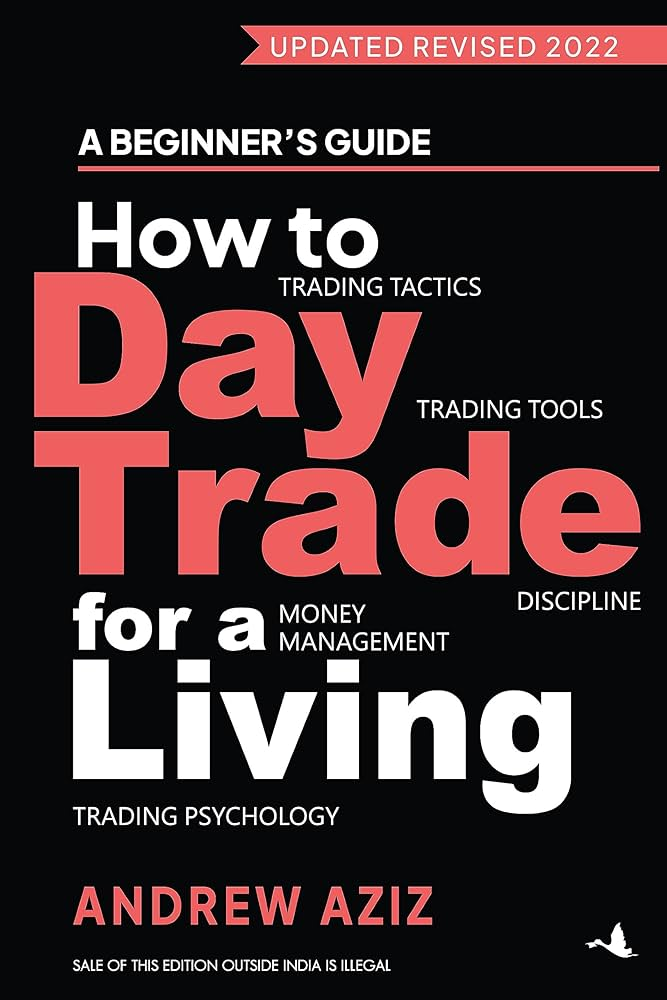
We recommend this book as the first strategy-focused read for anyone entering day trading for the first time. Andrew Aziz holds a PhD in engineering and founded Bear Bull Traders, one of the most active independent trader communities online. Investopedia named Bear Bull Traders the best overall online day trading course in both 2021 and 2022. The book has been published in 13 languages and Aziz has ranked in Amazon’s top 100 business and finance authors for 7 consecutive years.
The book’s strength is its specificity. We appreciate that Aziz does not teach abstract principles but rather 6 concrete intraday strategies in detail, with entry signals, exit criteria, stop-loss placement, and real trade examples for each. The 6 strategies covered are the ABCD pattern, Bull Flag Breakout, VWAP trend trade, Fallen Angel reversal, Opening Range Breakout, and Moving Average trend trade.
Each strategy includes discussion of when it works, when it fails, and how to identify qualifying setups. The focus on stocks in play (those with high relative volume and a news catalyst) is the key filter that separates actionable setups from noise.
We like the book’s honesty. Aziz does not promise easy profits. He recommends 6 months of simulated trading before going live, a piece of advice most beginners ignore (and most experienced traders wish they had followed). We’re not wild about the fact that the strategies perform better in trending markets (and that the book fails to address how to adapt when volatility conditions change), but the sequel, Advanced Techniques in Day Trading, addresses those gaps directly.
Pros
- 6 concrete intraday strategies with full entry, exit, and stop-loss rules
- Honest about difficulty, recommending 6 months simulation before live trading
- VWAP and relative volume concepts are directly actionable from day one
- Amazon #1 best-seller in trading for multiple years, indeed the most validated beginner book available
Cons
- Strategies perform best in trending, high-volatility markets, with less guidance for choppy conditions
- Does not cover futures, forex, or crypto (focused on US equities)
- Sequel needed for traders who outgrow the foundational strategies
What Readers Say
Day trading is not a strategy to get rich quickly, and day trading is not easy. It is a serious business and you should treat it as such.
– Andrew Aziz, quoted by Goodreads reviewers as the book’s most important line
Book Summary
How to Day Trade for a Living teaches traders to identify high-probability intraday setups using 3 primary filters:
- A stock must have a catalyst (news or earnings)
- Above-average relative volume
- A clean technical structure
The 2% risk rule (risking no more than 2% of account equity per trade) and the 2:1 reward-to-risk requirement for every entry are the 2 non-negotiable risk management rules Aziz establishes from the first chapter. VWAP is presented as the most important single indicator for intraday trading, functioning as a dynamic support and resistance level that both retail and institutional traders reference throughout the session.
| Detail | Information |
|---|---|
| Author | Andrew Aziz |
| Published | 2016 (updated editions available) |
| Publisher | CreateSpace / Bear Bull Traders |
| Pages | ~180 |
| Price range | $10 – $20 (print) | $5 – $10 (ebook) |
| Best for | Complete beginners starting their day trading journey |
| Goodreads rating | 4.09 / 5 (3,800+ ratings) |
| Focus | Intraday strategies, VWAP, stocks in play, risk management |
| Where to buy | Amazon |
2. How to Day Trade: The Plain Truth by Ross Cameron
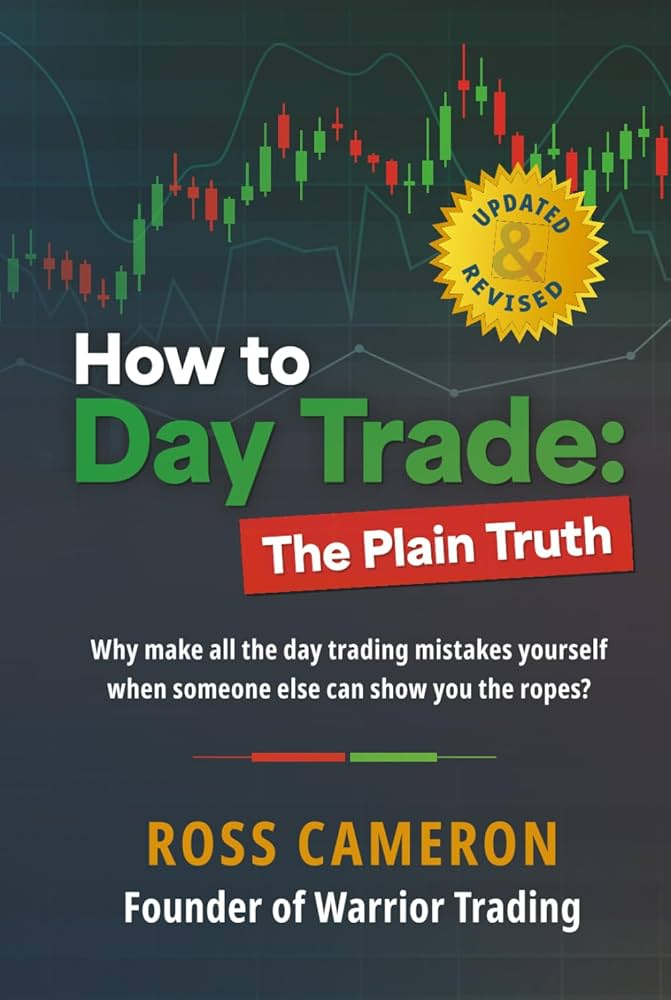
At WR Trading, we recommend How to Day Trade: The Plain Truth alongside Aziz’s book for beginners, because where Aziz teaches the mechanics, Cameron teaches the reality. Ross Cameron is the founder of Warrior Trading and one of the most transparent traders in the industry. He turned a $583 account into over $10 million in audited, verified day trading profits. Not a hypothetical backtest, but a documented live trading track record across more than 20,000 trades.
The book covers Cameron’s momentum trading methodology, focused on small-cap stocks with strong pre-market activity, high relative volume, and clean technical setups. He identifies 20 specific guardrails (rules he developed from his own losses) that protect traders from the most common and expensive mistakes. The momentum-focused, breakout-driven approach is best suited to traders who want fast, defined setups with tight stops and clear entry triggers.
Cameron’s emphasis on mastering 1 strategy deeply before adding complexity is one of the most practically useful pieces of advice in any day trading book.
We like the verified track record that backs up the book’s claims (something rare in day trading literature) and Cameron’s brutal honesty. We also like the balance between inspiration and realism, as Cameron is explicit that most traders fail, that the profession is difficult, and that his results are not typical. We don’t really like that the book is relatively short (217 pages) and some traders feel it leaves strategic depth to the YouTube channel and Warrior Trading courses, rather than fully delivering it in print.
Pros
- Written by a trader with a verified, audited 7-figure day trading track record
- 20 specific guardrails drawn from real losses that are immediately actionable
- Exceptionally honest about failure rates and the difficulty of the profession
- Momentum trading methodology explained clearly with specific criteria
Cons
- Short at 217 pages (some strategic depth lives in the Warrior Trading course ecosystem)
- Focused on small-cap momentum stocks, less applicable to futures or forex traders
- Cameron’s results are extraordinary and explicitly described as not typical
What Readers Say
This book is unique among day trading books. It is written by someone with documented success from more than 20,000 trades, the winning ones and the losing ones.
– Amazon reviewer
Book Summary
How to Day Trade: The Plain Truth documents Ross Cameron’s journey from architectural student to full-time day trader, and extracts the 20 guardrails he used to transform inconsistent results into a systematic, repeatable approach. His core trading criteria are straightforward:
- Focus only on stocks already moving, not stocks that might move
- Use tight stop-loss orders and maintain a 2:1 profit-to-loss ratio on every trade
- Size down immediately during losing streaks (Cameron calls this Trader Rehab) rather than increasing size to recover losses faster.
The book ends with Cameron’s honest assessment of who day trading suits and who it does not, which alone makes it worth reading before committing capital.
| Detail | Information |
|---|---|
| Author | Ross Cameron |
| Published | 2023 (The Plain Truth edition) |
| Publisher | Warrior Trading |
| Pages | 217 |
| Price range | $15 – $25 (print) | $8 – $15 (ebook) |
| Best for | Beginners wanting an honest, verified account before committing to day trading |
| Focus | Momentum trading, small-cap stocks, guardrails, realistic expectations |
| Community status | 1M+ YouTube subscribers; Warrior Trading ranked by Investopedia as most comprehensive day trading course |
| Where to buy | Amazon |
3. Trading in the Zone by Mark Douglas
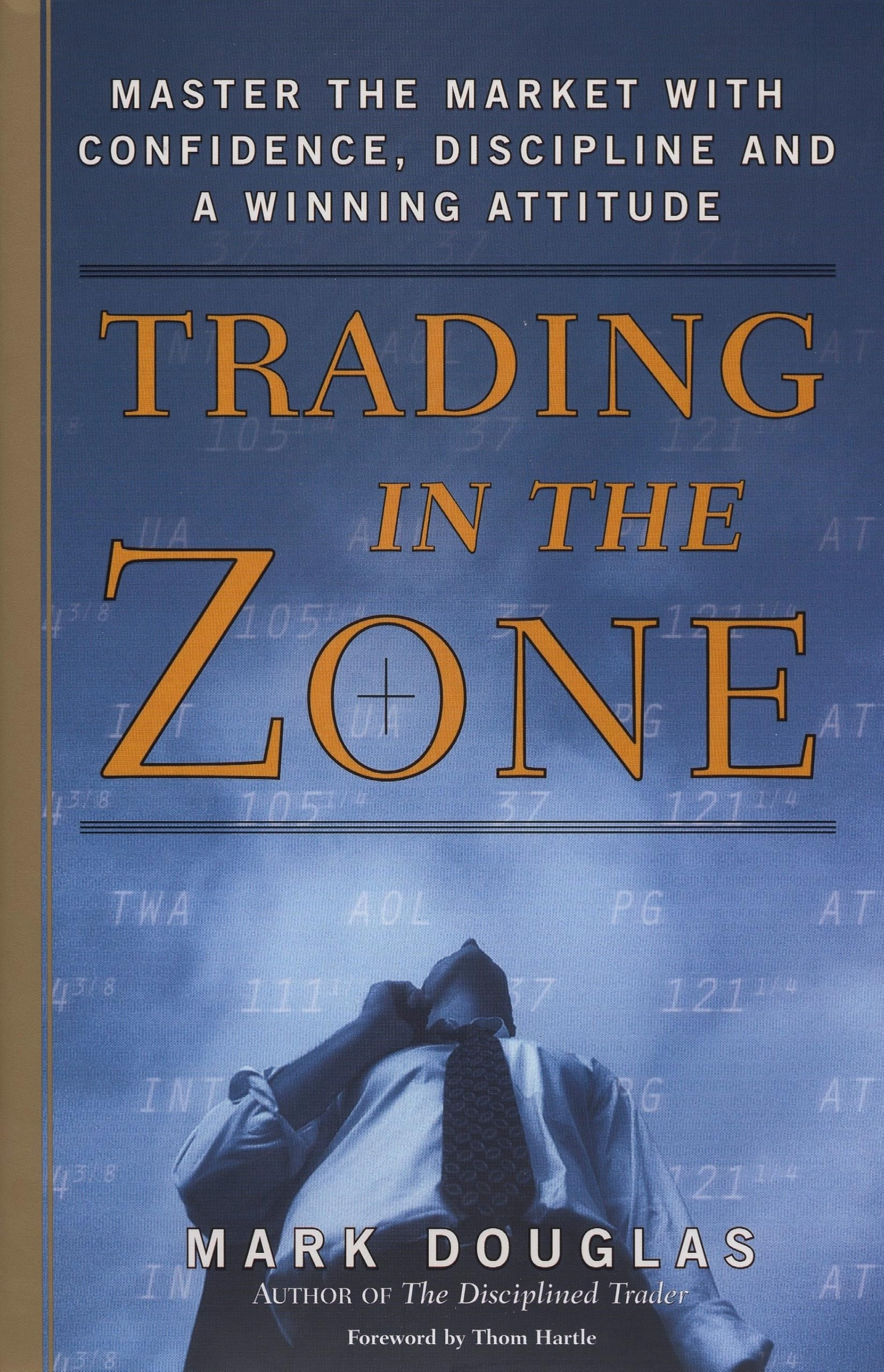
You’ll find likely the most important book ever written on trading psychology in Trading in the Zone. We fully recommend Trading in the Zone to every trader regardless of their experience, because the psychological dimension of day trading is the single most common reason that technically competent traders still lose money. Mark Douglas addresses this with a precision and depth that no other trading book reaches.
Day trading creates more frequent psychological pressure than almost any other trading style. A day trader makes 5 to 20 or more decisions per session. Each decision carries the potential for fear, greed, revenge trading, or overconfidence. Douglas identifies these 4 emotional states as the primary source of inconsistent results and provides a framework for eliminating them, not through willpower, but through a fundamental shift in how traders understand probability and risk.
His concept of thinking in probabilities (evaluating an edge over a sample of 25 trades rather than judging any individual trade outcome) is the single most important mindset shift a day trader can make.
We like this book because it explains why traders who have a working strategy still lose money. The answer is psychological in almost every case. We do not like that it contains no trade setups and repeats its central arguments across multiple chapters. That repetition is deliberate, since Douglas wrote this book to replace habits, not just convey information. Most traders in the WR Trading community report that the book’s impact is significantly greater on a second reading, once they have actually experienced the psychological patterns Douglas describes.
Pros
- Addresses the root cause of inconsistent trading performance, psychology, not strategy
- The 25-trade sample size concept is one of the most practically useful ideas in any trading book
- Applicable to every market, every timeframe, and every style
- The single most recommended book in r/Daytrading, r/Forex, and many others
Cons
- Contains no trade setups, strategies, or technical analysis
- Repetitive structure, with core arguments revisited multiple times throughout
- Abstract for complete beginners without any prior trading experience
What Readers Say
The concepts in this book relate to more than the financial markets, they relate to every decision you make in life. Everything we decide to do offers both risk and reward.
– Goodreads reviewer
Book Summary
Trading in the Zone teaches traders to adopt a probabilistic mindset. To behave like a casino rather than a gambler. Douglas identifies 5 fundamental truths that define professional trading behaviour:
- First, anything can happen on any individual trade.
- Second, a trader does not need to know what happens next to make money.
- Third, wins and losses distribute randomly within any defined edge.
- Fourth, an edge increases the probability of one outcome over another, nothing more.
- Fifth, every moment in the market is unique.
Internalizing these 5 truths is the core transformation the book attempts to produce. Fear and euphoria are presented as the 2 most destructive emotional states a trader experiences, and the framework for eliminating both is the book’s primary practical contribution.
| Detail | Information |
|---|---|
| Author | Mark Douglas |
| Published | 2000 |
| Publisher | Prentice Hall Press |
| Pages | 240 |
| Price range | $15 – $25 (print) | $10 – $15 (ebook) |
| Best for | All levels, especially traders with a strategy who still lose consistently |
| Goodreads rating | 4.31 / 5 (9,700+ ratings) |
| Focus | Trading psychology, probabilistic mindset, emotional discipline |
| Where to buy | Amazon |
4. Advanced Techniques in Day Trading by Andrew Aziz
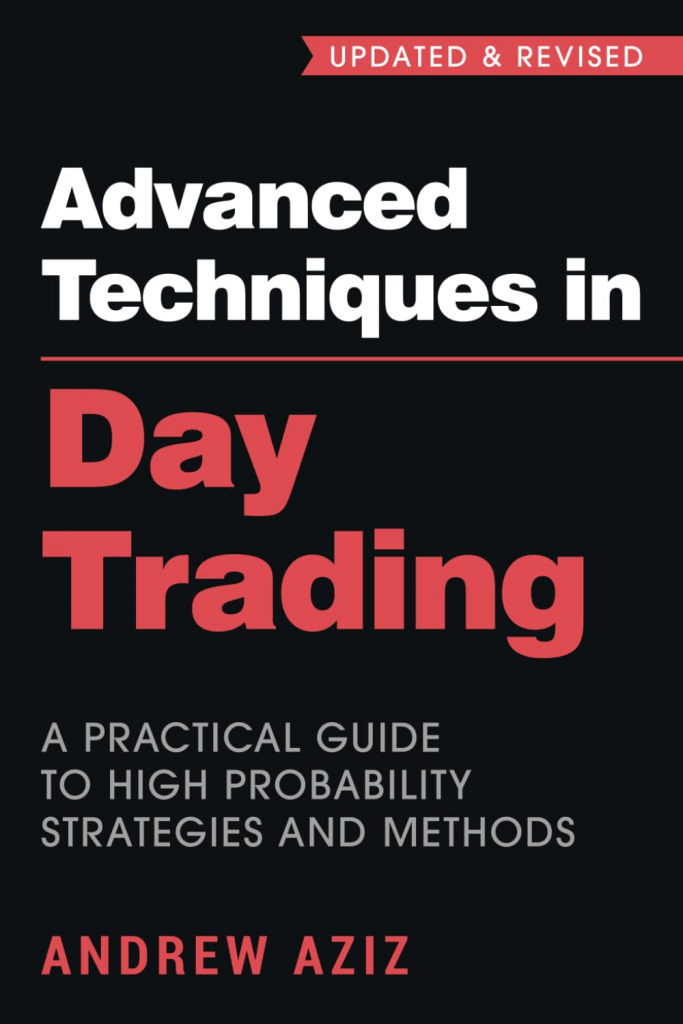
This is the essential follow-up to How to Day Trade for a Living. We recommend Advanced Techniques in Day Trading to every trader who has worked through Aziz’s first book and found it too basic, which typically happens within 3 to 6 months of active trading. This sequel delivers exactly what its title promises: greater depth on the original strategies plus 3 additional setups not covered in the first volume (all of which we tested extensively).
Aziz expands on 5 strategies from the first book in more detail, covering the specific conditions under which each setup works best, the common failure patterns to avoid, and how to adapt them to different volatility environments. The 3 new strategies introduced (the Reversal trade, the Red-to-Green Move, and the VWAP Reversal) address intraday patterns that more experienced traders encounter once they have mastered the foundational setups.
Particularly useful is the chapter on trade management: Aziz goes deeper on how to scale out of positions, trail stops, and protect profits on larger winning trades.
We like that this book bridges the gap between beginner and intermediate, a space that most day trading books ignore entirely, jumping directly from basics to advanced content. What we feel isn’t so great is that traders who have not first read the original book will find gaps in conceptual context. An upgraded single volume would have been nice. The 2 books work together as a sequence, and skipping volume one weakens the impact of this one.
Pros
- Bridges the beginner-to-intermediate gap that most day trading books ignore
- 3 new strategies plus deeper coverage of the original 5 setups
- Trade management chapter is one of the most practical in any day trading book
- Consistent with the first book’s methodology, no contradictions to unlearn
Cons
- Requires reading How to Day Trade for a Living first (context gaps if read alone)
- Still focused on US equities, not really applicable to futures or forex
- Some readers feel even this volume leaves further depth to Aziz’s online courses
What Readers Say
All in all, a very helpful book for me… This is more of a guide for self-starters who have already investigated day trading, but need someone more experienced to put the pieces together for them.
– Goodreads reviewer
Book Summary
Advanced Techniques in Day Trading builds on the VWAP framework and the stocks-in-play filter from the first book and develops them into a more complete intraday trading system. The Reversal trade (entering against a sharp intraday move at a clear exhaustion point) is the most discussed new setup and the most demanding to execute correctly. The Red-to-Green Move teaches traders to identify stocks reversing from early session losses into positive territory, which produces some of the day’s strongest momentum setups. The trade management framework (scaling out at defined levels rather than exiting all at once) is the most consistently praised chapter by experienced readers.
| Detail | Information |
|---|---|
| Author | Andrew Aziz |
| Published | 2018 |
| Publisher | Bear Bull Traders |
| Pages | ~220 |
| Price range | $10 – $20 (print) | $5 – $10 (ebook) |
| Best for | Traders who have completed How to Day Trade for a Living and want more depth |
| Focus | Advanced intraday strategies, reversals, Red-to-Green, trade management |
| Prerequisite | How to Day Trade for a Living (Aziz, 2016) |
| Where to buy | Amazon |
5. Mastering the Trade by John F. Carter
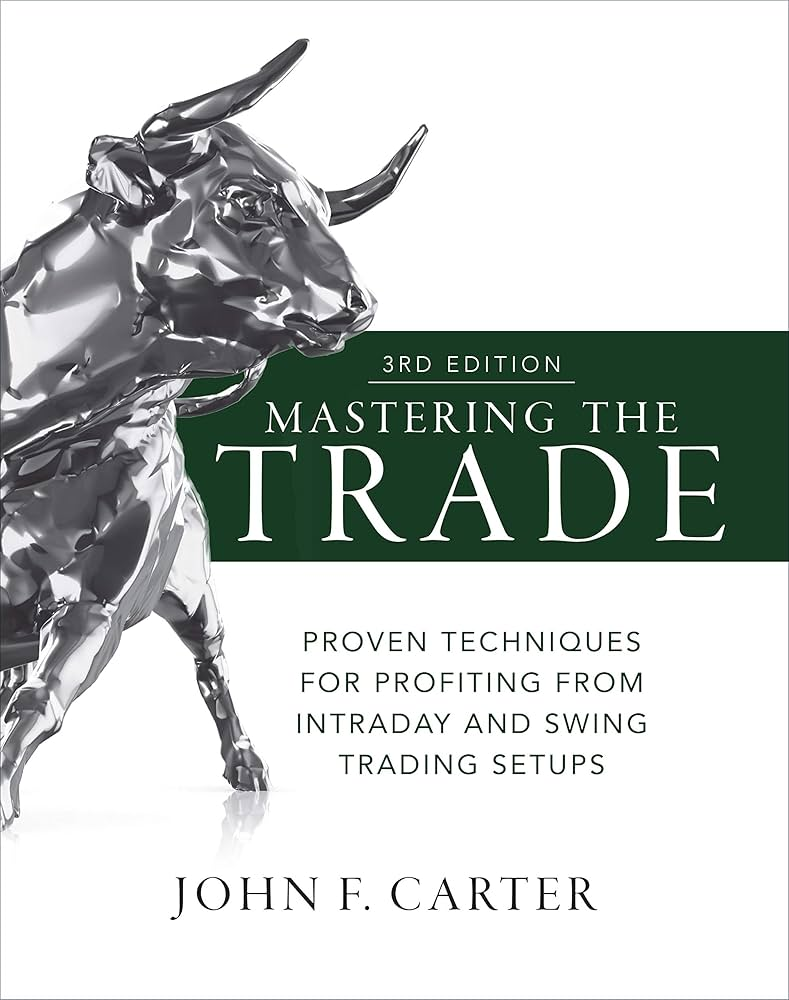
This is is the most technically demanding day trading book on our list. At WR Trading, we recommend Mastering the Trade to traders who have already built a basic strategy framework and are ready to develop higher-probability setups with more precise entry timing. John Carter is a professional trader who developed the TTM Squeeze indicator (now a standard tool in most advanced day trading setups) and has traded equities, futures, and options professionally for decades.
Carter’s central concept is market timing: identifying exactly when to enter a trade, not just which direction to trade. The TTM Squeeze identifies periods of low volatility (compression) that precede explosive directional moves. Carter builds an entry framework around 4 timing tools: the Squeeze itself, candlestick pattern triggers, momentum oscillator confirmation, and volume-based validation.
He provides specific entry, exit, and stop-loss rules for every setup described, and this level of specificity separates this book from more conceptual texts.
We like Carter’s emphasis on trade management after entry (the decisions made once a position is open). His framework for scaling out of positions at defined targets while trailing stops on the remainder reflects genuine professional-level trade management that most books barely mention. We’re not wild about the fact that beginners who attempt this book without foundational knowledge report that it moves too fast and assumes too much background. This book rewards traders who arrive with experience.
Pros
- TTM Squeeze indicator methodology explained by the trader who created it
- Specific entry, exit, and stop rules for every setup, no vague principles
- Trade management framework is the most detailed of any book on this list
- Covers equities, futures, and options, a wider application than most day trading books
Cons
- Too demanding for beginners (it assumes significant prior technical knowledge)
- TTM Squeeze requires access to specialized charting tools for full implementation
- 3rd edition (2019) is updated but some original examples use pre-2010 market data
What Readers Say
Carter’s writing is specific and actionable. Every setup comes with defined entry rules, exit criteria, and stop placement, not vague principles you have to interpret yourself.
– Amazon reviewer
Book Summary
Mastering the Trade presents a trading framework built around 3 market states (trending, consolidating, and reversing), each of which requires different strategies and indicators. Carter argues that identifying which state the market is currently in is the first decision a trader makes each session, and that most losses result from applying the wrong strategy to the wrong market condition. The TTM Squeeze identifies the transition from consolidation to trend (the highest-probability entry point in Carter’s system). Trade management after entry, including scaling out at defined levels and trailing the remainder, is presented as more important than entry selection in determining overall trade profitability.
| Detail | Information |
|---|---|
| Author | John F. Carter |
| Published | 2005; 3rd edition 2019 |
| Publisher | McGraw-Hill |
| Pages | ~400 |
| Price range | $30 – $50 (print) | $20 – $35 (ebook) |
| Best for | Intermediate to advanced traders seeking precise timing frameworks |
| Focus | TTM Squeeze, market timing, trade management, multi-market strategies |
| Community status | Consistently recommended on various trader community forums |
| Where to buy | Amazon |
6. The New Trading for a Living by Dr. Alexander Elder
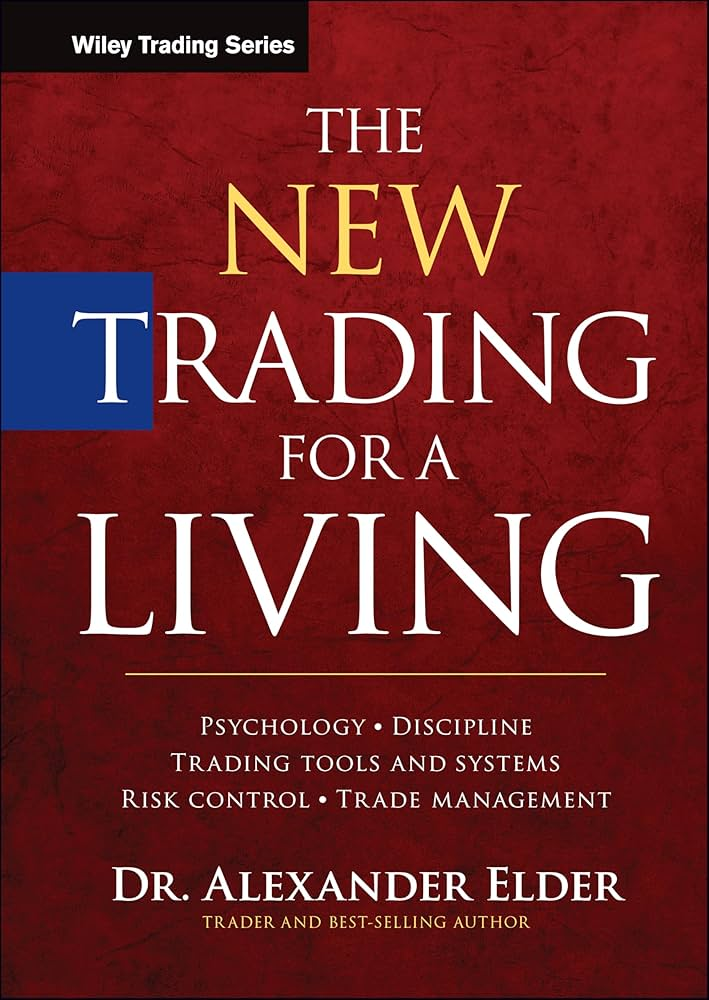
This is the most complete single-volume day trading manual available. We point intermediate traders toward The New Trading for a Living when they need one book that covers psychology, technical strategy, and risk management together in a structured, coherent framework, without having to piece together 3 separate resources.
Dr. Alexander Elder is a psychiatrist who became a professional trader, and that combination defines the book’s approach. His clinical training shapes the psychology chapters, which go further than most trading books in explaining the self-destructive patterns that cause intelligent people to make irrational trading decisions. The Triple Screen trading system, which uses 3 timeframes to align trend direction and entry timing, is the book’s most cited practical contribution. The weekly chart identifies trend direction.
The daily chart identifies pullback entry points. The intraday chart provides the specific entry trigger. This 3-timeframe discipline eliminates most of the countertrend trades that damage beginner and intermediate accounts.
We like Elder’s 2 risk rules above almost any others in trading literature. The 2% Rule (never risk more than 2% of account equity on a single trade) and the 6% Rule (stop trading for the month if total drawdown reaches 6%) together create a capital preservation framework that keeps traders in the game long enough to develop real skill. On the flip side, we know that some readers find the writing academic in places, and that the psychological sections partially overlap with Trading in the Zone without adding significant new ground.
Pros
- Psychology, strategy, and risk management in a single coherent framework
- The 2% and 6% rules are among the most practically important risk management guidelines in any book
- Triple Screen system directly eliminates countertrend trades, one of the most common and costly mistakes
- Updated 2014 edition incorporates algorithmic trading dynamics absent from the 1993 original
Cons
- Writing is academic in places (the pacing is slower than Aziz or Cameron)
- Triple Screen’s multiple timeframes increase complexity for newer traders
- Psychological sections partially overlap with Trading in the Zone
What Readers Say
The most complete day trading book I have found. Psychology, strategy, and risk management with equal depth. Nothing else covers all 3 this well.
– Goodreads reviewer
Book Summary
The New Trading for a Living presents trading as a system of 3 interconnected disciplines. Mastering psychology comes first. Elder argues that no strategy compensates for psychological weakness, and that most losses are rooted in behaviour rather than analysis. Technical analysis comes second, with detailed coverage of trend indicators, oscillators, and how to combine multiple tools without creating analysis paralysis.
Risk management comes third, with the 2% and 6% rules creating a floor below which drawdown cannot accelerate. The Triple Screen system connects all 3 disciplines into a single decision framework that traders apply from the first chart they open each morning.
| Detail | Information |
|---|---|
| Author | Dr. Alexander Elder |
| Published | Updated edition 2014 |
| Publisher | Wiley |
| Pages | 352 |
| Price range | $30 – $45 (print) | $18 – $28 (ebook) |
| Best for | Intermediate traders wanting an integrated psychology-strategy-risk framework |
| Focus | Trading psychology, Triple Screen system, 2%/6% rules, technical analysis |
| Goodreads rating | 4.1 / 5 |
| Where to buy | Amazon |
7. Trading Price Action Trends by Al Brooks
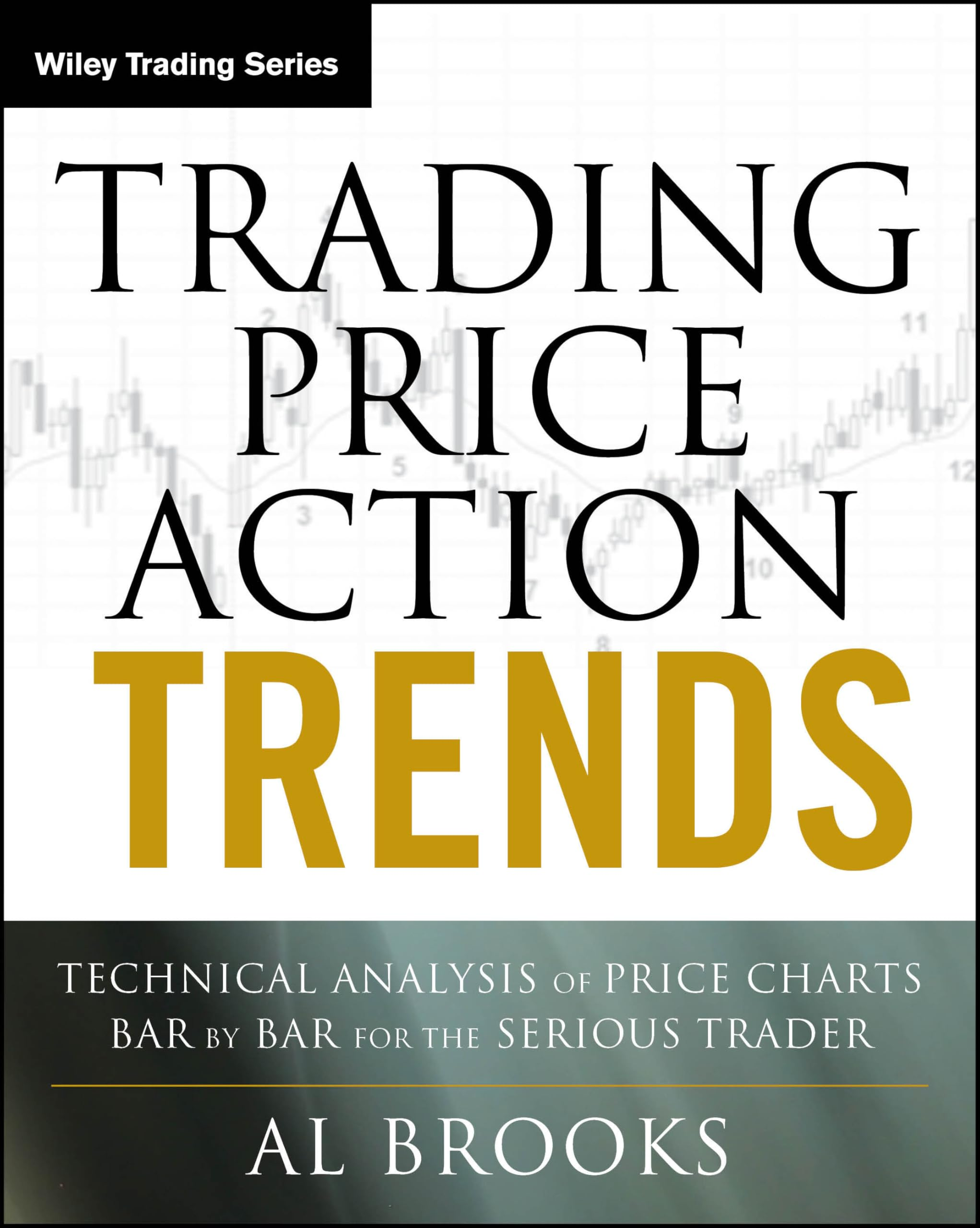
We can strongly recommend Trading Price Action Trends to experienced traders who want to understand markets at a structural level (reading every bar, every candle, and every pattern as a direct expression of institutional buying and selling without any indicator overlay). Al Brooks has traded the E-mini S&P 500 futures exclusively on 5-minute charts for over 30 years. This 3-part series is the product of that career.
Brooks’ core argument is that price action is the purest form of market information, and that everything a trader needs to know about the next likely move is already visible in the current price chart. The first volume (Trends) covers how to identify the type of trend unfolding and apply techniques specific to that trend type. Brooks classifies trends into multiple categories, each with distinct characteristics, signal patterns, and entry algorithms.
The emphasis on understanding what institutions are doing (because price action reflects their aggregate behaviour) is the framework that connects every concept in the series.
We like the depth. No other book analyses price action at this granularity. The series functions as a professional-level reference library for any chart-based day trader. We don’t like that Brooks’ writing style is dense, technical, and demanding. The community consensus on Forex Factory and Reddit is clear: this series requires significant commitment. Traders who approach it casually find it frustrating. Traders who approach it as a structured curriculum, however, get considerably more from it than from any other price action resource available.
Pros
- The most comprehensive price action methodology in any published trading book
- Directly applicable to E-mini futures, forex, stocks, and any liquid market
- Written by a trader with 30+ years of real, live price action trading experience
- Consistently referenced by experienced traders on Forex Factory and Reddit as the definitive resource
Cons
- Dense, technical writing that requires multiple readings and significant screen time to apply
- 3-volume series, total commitment is substantial (1,400+ combined pages)
- Not suitable for beginners, assumes solid foundational knowledge of technical analysis
What Readers Say
Very detailed and informative, but definitely not an easy read… you have to study it more than once to really understand it.
– Goodreads reviewer
Book Summary
Trading Price Action Trends teaches traders to read price charts bar by bar, identifying in real time whether institutions are buying or selling, and whether the current market state is trending, ranging, or transitioning. Brooks focuses primarily on 5-minute charts because that timeframe contains enough noise to challenge pattern recognition, but also enough structure to produce high-probability setups. The concept of always-in direction (knowing at every point in the session whether the market is more likely to move up or down) is the central skill the series develops. Volume 2 covers trading ranges and order management. Volume 3 covers reversals, daily charts, and options setups, completing the full cycle of market states.
| Detail | Information |
|---|---|
| Author | Al Brooks |
| Published | 2011–2012 (3-volume series) |
| Publisher | Wiley |
| Pages | ~480 per volume (3 volumes) |
| Price range | $50 – $75 per volume (print) | $35 – $55 per volume (ebook) |
| Best for | Experienced traders seeking the deepest available price action methodology |
| Goodreads rating | 4.06 / 5 (Trends volume, 240+ ratings) |
| Focus | Bar-by-bar price action, trend classification, institutional behaviour, 5-minute charts |
| Where to buy | Amazon |
8. Market Wizards by Jack D. Schwager
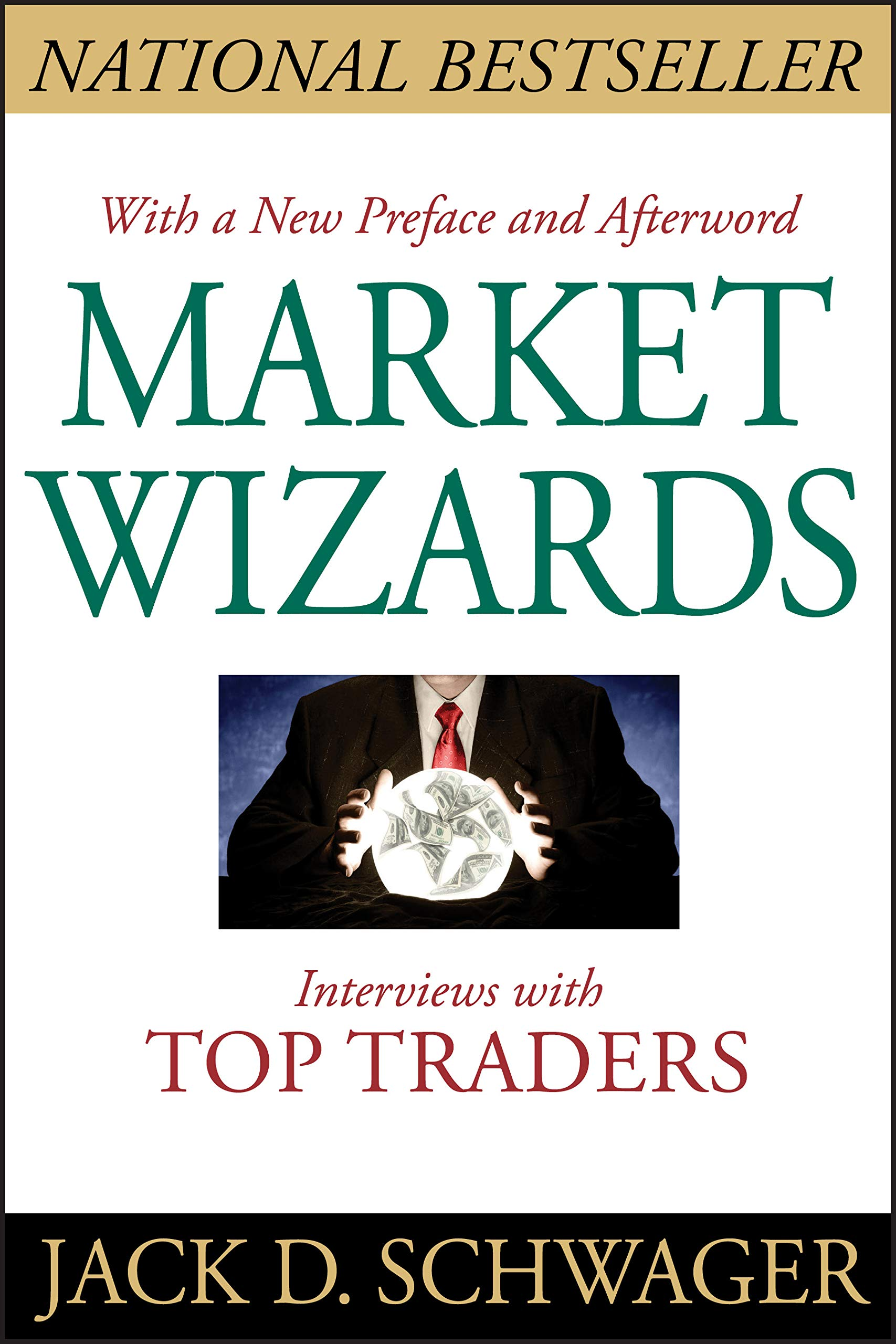
Schwager’s is the book that has shaped the mindset of more successful traders than any other. At WR Trading, we include Market Wizards on every reading list we give, not because it teaches a day trading strategy, but because it reveals the psychological makeup and risk philosophy that separates consistently profitable traders from those who eventually blow their accounts.
Jack Schwager interviews 17 extraordinary traders across futures, equities, forex, and global macro. The book has been continuously in print for 35+ years, and has spawned 4 sequels. For day traders specifically, 3 insights recur across nearly every interview. First, position sizing matters more than entry selection (every wizard describes significant losing streaks, and surviving them required that they never risked more than they could afford on any single trade). Second, patience is a defining skill (every trader in the book describes long stretches of sitting on their hands, waiting for their specific setups).
Third, the ability to accept a loss without immediately needing to recover it is a separating characteristic of professional traders.
We like that the book presents 17 completely different approaches to trading, all of them profitable, proving that no single path to success exists. The common factors are risk management and discipline, not strategy. We like that some interviews cover market environments from the 1970s and 1980s a lot less, as they feel less directly relevant to modern intraday trading. The chapters featuring Paul Tudor Jones, Ed Seykota, and futures trader Richard Dennis are the most frequently cited by day traders across Reddit and trading forums.
Pros
- 17 different profitable approaches, eliminates the misconception that only one method works
- Consistently cited across r/Daytrading and other communities as career-changing
- Paul Tudor Jones and Ed Seykota chapters directly relevant to day trader psychology
- 35+ years continuously in print, the most tested endorsement in trading literature
Cons
- Not day-trading specific, strategies span futures, equities, and macro
- Some interview contexts reference pre-1990s market conditions
- Less useful for beginners without an existing technical or strategic foundation
What Readers Say
The best part of this book is hearing directly from successful traders… you realize there’s no single way to succeed, but there are common principles they all follow.
– Goodreads reviewer
Book Summary
Market Wizards is an interview-format study of what separates traders who win consistently from those who do not. The answer is never a specific strategy, but rather always discipline, a defined edge, and the psychological ability to execute that edge consistently under pressure. Schwager’s 17 traders use different strategies, different timeframes, and different markets. The common thread is their approach to capital preservation. Every trader prioritizes protecting what they have over maximizing what they might make. The book is most transformative for traders who have already developed a basic strategy but are struggling to execute it consistently, which describes most intermediate day traders.
| Detail | Information |
|---|---|
| Author | Jack D. Schwager |
| Published | 1989; updated 2012 |
| Publisher | Wiley |
| Pages | 485 |
| Price range | $20 – $35 (print) | $12 – $20 (ebook) |
| Best for | All levels, most impactful after 6+ months of active trading experience |
| Goodreads rating | 4.1+ / 5 (tens of thousands of ratings across the series) |
| Focus | Trader psychology, risk management, position sizing, professional discipline |
| Where to buy | Amazon |
9. A Beginner’s Guide to Day Trading Online by Toni Turner
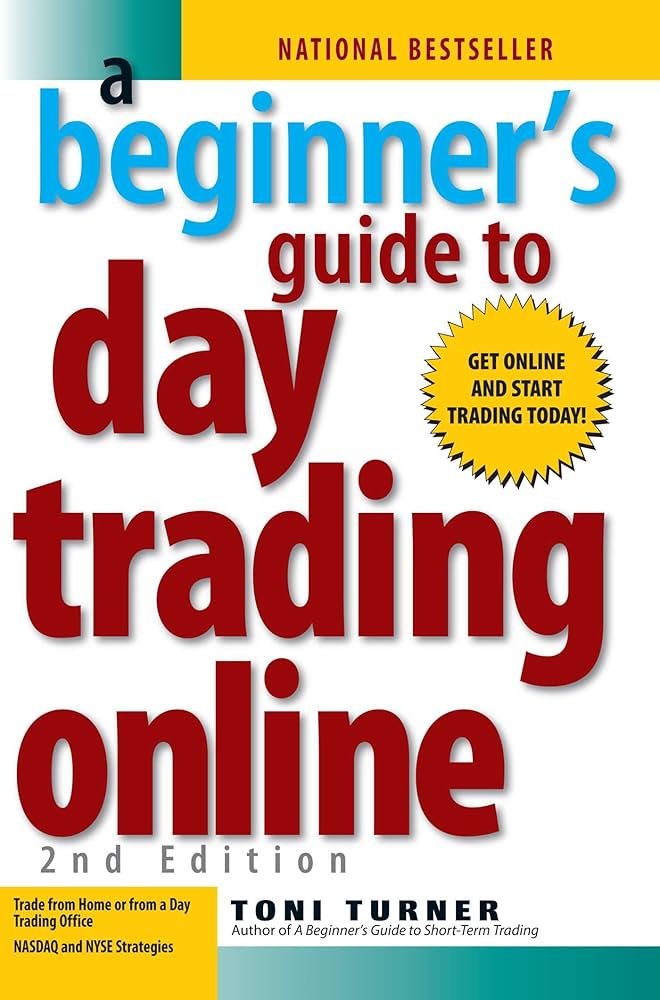
In this book, you’ll find the most accessible entry point into day trading for traders with no prior market experience. We recommend A Beginner’s Guide to Day Trading Online as the first book for anyone who needs to build foundational market knowledge before tackling more strategy-focused resources. Toni Turner is an American trading educator who developed this book specifically to bridge the gap between oversimplified introductions and materials that assume too much.
Turner covers the 4 elements every new day trader needs before placing a first live trade:
- Understanding how markets work (exchanges, market makers, bid/ask spreads, order types)
- Building a watchlist and identifying stocks worth trading,
- Basic technical analysis (trendlines, support and resistance, moving averages)
- Basic risk management (stop-loss orders, position sizing, daily loss limits).
Each chapter ends with quizzes and checklists that reinforce the material, a format that accelerates retention for new learners.
We like the clarity and the honest tone. Turner doesn’t oversell day trading as a path to easy wealth. We don’t like that some platform-specific references are dated (the 2nd edition was published in 2007). The foundational concepts, however (market mechanics, order types, basic chart reading, and risk discipline) have not changed. Experienced traders who revisit this book note that the fundamentals hold up well even if the technology references have aged.
Pros
- The most accessible introduction to day trading for complete beginners
- Covers market mechanics, watchlist building, basic technical analysis, and risk management in sequence
- Chapter-end quizzes and checklists accelerate retention of foundational concepts
- Consistently recommended as the first read before Aziz or Elder on Amazon and other forums
Cons
- 2nd edition published 2007, some platform and technology references are dated
- Too basic for anyone beyond complete beginner stage
- US-equity focused, limited coverage of futures, forex, or crypto markets
What Readers Say
A very clear and easy-to-understand introduction… great for someone who is completely new and trying to learn the basics step by step.
– Goodreads reviewer
Book Summary
A Beginner’s Guide to Day Trading Online covers the full range of knowledge a new trader needs before opening a live account. Turner identifies 3 primary setup types beginners should focus on: trend continuation, support and resistance bounces, and momentum breakouts. She introduces the trading journal as the primary learning tool, maintaining that recording 5 data points per trade (entry price, exit price, strategy used, result, and lesson) accelerates improvement faster than almost any other practice. Stocks trading within 20% of 52-week highs or lows are presented as the most reliable source of intraday patterns for new traders developing their pattern recognition.
| Detail | Information |
|---|---|
| Author | Toni Turner |
| Published | 2nd edition 2007 (updated editions as A Beginner’s Guide to Short-Term Trading) |
| Publisher | Adams Media |
| Pages | ~320 |
| Price range | $15 – $25 (print) | $10 – $18 (ebook) |
| Best for | Complete beginners with no prior market or trading knowledge |
| Focus | Market mechanics, watchlist building, basic technical analysis, risk management |
| Community status | Most consistently recommended beginner day trading book across Amazon and trading forums |
| Where to buy | Amazon |
10. Reminiscences of a Stock Operator by Edwin Lefèvre
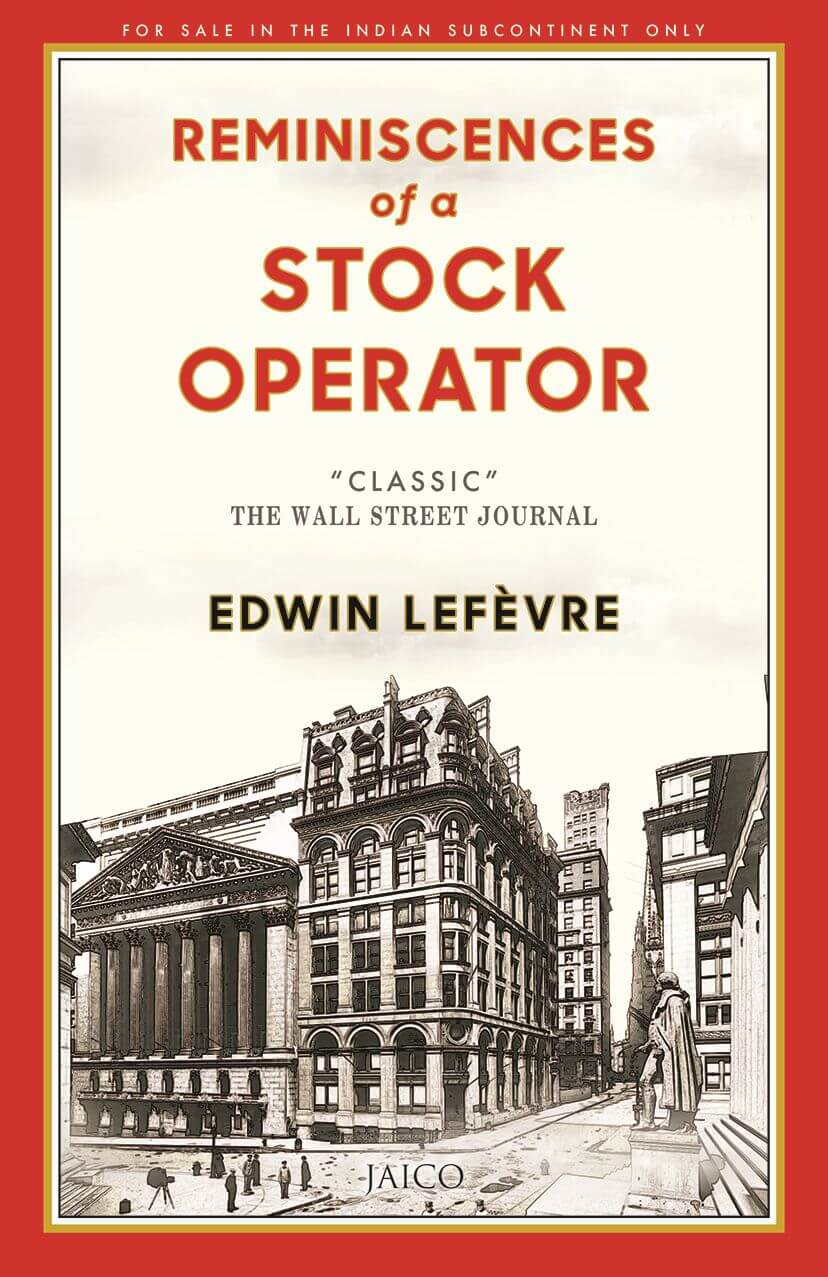
Find the original trading classic here, first published in 1923, over 100 years in print, and still one of the most widely read books across every serious trading community worldwide. We can recommend Reminiscences of a Stock Operator to every trader who wants to understand the timeless human psychology that drives markets, and who wants a foundation that no amount of technical analysis can fully replace.
The book is the fictionalized biography of Jesse Livermore, one of the most extraordinary traders in history. Livermore built and lost fortunes multiple times across stocks and commodities in the early 20th century. The book follows his progression from bucket-shop tape reader to the man who made millions short-selling the 1929 crash, listing the lessons he draws from both the successes and the catastrophic failures.
Day traders will recognise every psychological pattern Livermore describes: the temptation to average down on losing trades, the impulse to take profits too early on winners, the destructive influence of tips and outside opinions, the overconfidence that follows a winning streak.
We like that this book teaches market wisdom through narrative, through the lived experience of trading, rather than rules and frameworks. The result is a level of internalization that technical manuals rarely achieve. Less grand is the fact that the book’s age means some market mechanics and terminology are outdated. The psychological lessons, however, are fully evergreen, and at under $15 in most editions, Reminiscences of a Stock Operator is the highest-value book on this list.
Pros
- Over 100 years in print, the most time-tested endorsement in all of trading literature
- Teaches market wisdom through narrative, internalization that rules-based books cannot produce
- Timeless lessons on trend following, position management, and the dangers of tips and averaging down
- Under $15 in most editions, the highest value-for-money book on this list
Cons
- Published 1923, some market mechanics and terminology are dated
- No structured methodology, trading framework, or risk management system
- Most impactful after a trader already has some live market experience
What Readers Say
Even though it was written nearly a century ago, the lessons about trading psychology and discipline are still completely relevant today.
– Goodreads reviewer
Book Summary
Reminiscences of a Stock Operator follows Jesse Livermore’s trading career from reading ticker tape in bucket shops as a teenager, to his famous short positions during the 1907 panic and the 1929 crash. The 5 most important lessons Livermore communicates are directly applicable to modern day traders.
- First, the big money comes from the big move, not from constant activity.
- Second, being right about direction is worthless unless position size reflects your conviction.
- Third, trading against the primary trend produces more losses than any other single behaviour.
- Fourth, tips and outside opinions destroy accounts faster than poor technical analysis.
- Fifth, the market has always existed to separate emotional traders from their money. Understanding this is the beginning of real discipline.
| Detail | Information |
|---|---|
| Author | Edwin Lefèvre (based on Jesse Livermore) |
| Published | 1923; republished in multiple editions |
| Publisher | Various, widely available |
| Pages | ~290 (varies by edition) |
| Price range | $8 – $15 (print) | $3 – $10 (ebook) |
| Best for | All levels, most impactful after 3–6 months of real trading experience |
| Focus | Trading mindset, trend following, position management, emotional discipline |
| Status | Over 100 years in print, the original and most-read trading classic |
| Where to buy | Amazon |
How To Find The Best Books For Day Trading
Finding the best books for day trading education can be challenging, since the category is crowded with titles that are generic, outdated, or written by authors with no verifiable track record of live, profitable trading. At WR Trading, we read and tested every book on this list against a defined set of criteria before recommending it:
- Direct applicability to intraday trading and ease of understanding
- Author credentials and a verifiable track record
- Honesty about the realities of day trading
- Validation from active trading communities
- Reasonable purchase price, affordability
- Appropriate depth for a defined skill level
We started with a long list of over 30 frequently recommended day trading titles, drawn from community recommendations, bestseller lists, and books referenced repeatedly within other books on the subject. Each title was read in full by a member of the WR Trading team with live trading experience. We did not rely on summaries, excerpts, or third-party reviews as a substitute for reading the books themselves.
Each book was then scored against the 5 criteria above. Books that failed to meet the threshold on author credentials or honesty were eliminated first, as these are non-negotiable. Books that passed those filters were then ranked by their community validation scores and assessed for skill-level fit. Where two books covered similar ground, we selected the one with stronger community validation, more specific actionable content, or a more clearly defined target reader. These final 10 represent the titles that, in our assessment, will produce the most measurable benefit for traders at each stage of development.
For further reading, see our top books for forex and psychology:
Can a Day Trading Book Replace Day Trading Mentoring?
No. A day trading book cannot replace day trading mentoring, and we’re honest about why.
Books deliver knowledge in one direction. They don’t watch you trade, they do not identify your specific psychological patterns, and they won’t correct mistakes in real time. The 10 books in this guide are the best available, but even the best of them have 3 critical limitations: they describe principles rather than demonstrate them, they cannot simulate the psychological pressure of real capital at risk, and they reflect one trader’s experience, which may not match the setups, markets, or mistakes you face.
Day trading has a failure rate above 80% among retail traders. Books alone don’t change that statistic. The traders who improve fastest combine structured reading with direct feedback from an experienced trader who has traded live, profitably, and consistently.
At WR Trading, our mentoring program provides exactly that feedback loop. Traders who arrive with the reading foundation from books like those in this guide learn faster, because they bring vocabulary and context. Mentoring then converts that foundation into a live, consistent strategy. The books are the starting point. WR Trading mentoring is where the real improvement happens.

